The Food and Agriculture Organization of the United Nations (FAO) and the World Health Organization (WHO) will host a webinar on May 10, 2024 for stakeholders to learn more about and explore ways to take part in World Food Safety Day on June 7.
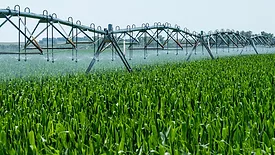
The U.S. Food and Drug Administration (FDA) has published the long-anticipated Pre-Harvest Agricultural Water Final Rule, fulfilling Subpart E of the Food Safety Modernization Act (FSMA) Produce Safety Rule.
The UK Food Standards Agency (FSA) has granted its first positive safety assessment under novel foods regulations to a cannabidiol (CBD) product intended for use as a novel food supplement.
Thermo Fisher Scientific has introduced a new semi-quantitative analysis tool that simplifies inductively coupled plasma-optical emission spectroscopy (ICP-OES), enabling the identification of unknown samples.
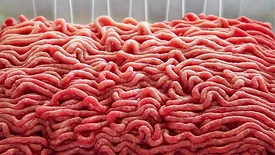
While stressing that the U.S. meat supply is safe, USDA has revealed that it is testing ground beef at retail for the presence of Highly Pathogenic Avian Influenza (HPAI) H5N1—also known as “bird flu”—in light of the ongoing outbreak among cattle.
The Food and Agriculture Organization of the United Nations (FAO) has announced the launch of the Reduce the Need for Antimicrobials on Farms for Sustainable Agrifood Systems Transformation (RENOFARM) initiative, a global 10-year effort to mitigate the growing public health threat that is antimicrobial resistance (AMR).
The Alabama House of Representatives recently passed Senate Bill 23 banning the production or sale of cell-based meat products in the state. The bill has been returned to the Senate for concurrence.
In this bonus episode of Food Safety Matters, we speak with Dr. Alissa Welsher, Associate Senior Consultant at Elanco Poultry Food Safety, about the importance of pest management to poultry safety; specifically, for the control of darkling beetles, which can be an important source of Salmonella in poultry production operations.
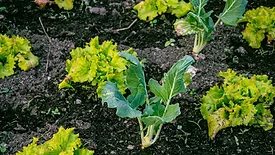
To help predict and mitigate the presence of Escherichia coli and other foodborne pathogens on lettuce, a new weather-based model has been developed by USDA-ARS researchers and collaborators.
USDA-FSIS has finalized its determination to declare Salmonella an adulterant in raw, breaded and stuffed chicken products at levels exceeding 1 colony forming unit per gram (CFU/g).