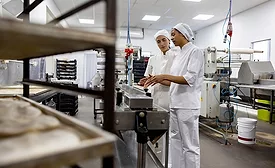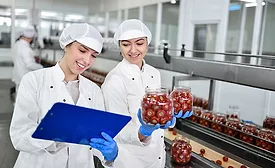
In the ever-evolving world of food manufacturing, employee training and education play a pivotal role in achieving operational excellence, maintaining the highest quality standards, ensuring food safety, and establishing a robust food safety culture within an organization.
The cannabis industry is no exception to the potential risks of PFAS contamination, ranging from possible health and safety implications to a business' litigation risk.
For those leading the food and beverage industry, there is tremendous opportunity for growth—but with growth comes risks that can negatively impact operations, profitability, and reputation.
With each passing year, new and emerging technologies and techniques that have promise for advancing food safety are developed and validated. This article summarizes the top food safety innovations of 2023, based on audience interest.
Concerns around food safety and scalability have surfaced since the successful launch of cultivated meat products in the U.S. This article summarizes recent regulatory developments that provide insight on how the current U.S. regulatory framework addresses food safety within the cultivated meat space.
The vTPA approach is valuable at a time when public interest in safer food is increasing, but competent authorities struggle to obtain more resources from governments
This article sheds light on some critical components of successful voluntary third-party assurance (vTPA) program implementation, particularly from an accreditation and certification service perspective. It discusses the role of accreditation and certification services and the prerequisites for successfully implementing the vTPA approach with the aim of supporting competent authorities in this process.
This article provides a future-oriented perspective on comprehensive food safety programs that harness multi-layered sensor technology and artificial intelligence (AI). The program described begins with biosurveillance at the producer level and seamlessly extends to the retail food sector.
Brands, retailers, and post-consumer package handlers are focused on adding value with PFAS-free packaging. This article discusses how PFAS alternatives are gaining prominence, with PFAS-free packaging entering the food packaging industry ahead of schedule.
Due to the well-known risks of working with pathogens in an in-plant food laboratory, there has been a dramatic shift to outsourcing for pathogen samples
Ongoing debates about the use of rapid test methods in food safety have led to the rise of the question: Has the vast increase in outsourcing testing to contract labs made rapid methods less useful, or is the ease of use and speed of the methods still important (if not essential) for better management and decision-making in food safety? Food Safety Insights asks food safety professionals their opinions on this question.
General cleaning/sanitizing elements of Standard Operating Procedures (SOPs) should not be integrated into the "regulatory" requirements of Sanitation SOPs (SSOPs), but should be maintained as a separate plant operational set of documents. To further explain this the rationale for keeping these separate, this article reviews SSOPs to define their requirements and how these differ from general SOPs.