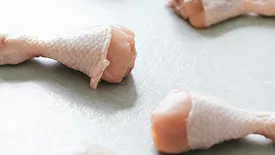
Consumer Reports recently released a report revealing the “most contaminated” poultry plants in the U.S., based on an analysis of USDA-FSIS Salmonella testing data.
A new study by USDA researchers has shown that long-read whole genome sequencing (WGS) could detect Salmonella attachment to food-contact surfaces earlier than traditional culture-based methods, allowing for sanitation interventions to be applied before the maturation of robust and difficult-to-remove biofilms.
Senator Richard Blumenthal (D-CT) has written a letter to U.S. Secretary of Agriculture Brooke Rollins, urging her to rescind the decision to terminate two key food safety scientific advisory committees, NACMCF and NACMPI.
Two key advisory committees, responsible for providing impartial scientific advice to federal public health agencies (USDA, FDA, CDC) relative to food safety, have been terminated: the National Advisory Committee on Microbiological Criteria for Foods (NACMCF) and National Advisory Committee on Meat and Poultry Inspection (NACMPI).
Following mass layoffs that swept regulatory agencies, including those responsible for food safety and foodborne illness response, the U.S. Office of Personnel Management (OPM) has walked back its orders to dismiss probationary employees. The change was prompted by a court decision that deemed OPM’s orders to dismiss staffers as unlawful.
The Association of Food and Drug Officials (AFDO) is launching a webinar series, titled, Striving and Surviving, aimed at helping U.S. regulatory professionals deal with budget cuts and general uncertainty.
Since the inauguration of President Trump, there has been an avalanche of changes at federal regulatory agencies responsible for U.S. food safety and foodborne illness response (FDA, USDA, and CDC), including mass layoffs, the resignation and new appointments of top officials, a communications freeze, and more.
USDA has announced the availability of financial investments to combat the ongoing highly pathogenic avian influenza H5N1 outbreak, including $500 million for farm biosecurity and $100 million for the development of chicken vaccines and other therapeutics.
A partisan letter signed by 85 members of Congress has been sent to President Trump, expressing concerns about the communications freeze ordered for public health agencies like CDC and FDA, especially in light of the ongoing avian influenza H5N1 outbreak.
According to multiple sources, FDA is looking to reinstate staffers who were fired by the presidential administration last week, including at least ten people who are responsible for reviewing the safety of food ingredients. USDA is also working to rehire terminated employees responsible for avian influenza response.
 RSS
RSS