Food Safety
search
Ask Food Safety AI
cart
facebook twitter linkedin instagram youtube
  • Sign In
  • Create Account
  • Sign Out
  • My Account
Food Safety
  • NEWS
    • Latest News
    • White Papers
  • PRODUCTS
  • TOPICS
    • Contamination Control
    • Food Types
    • Management
    • Process Control
    • Regulatory
    • Sanitation
    • Supply Chain
    • Testing and Analysis
  • PODCAST
  • EXCLUSIVES
    • Food Safety Five Newsreel
    • eBooks
    • FSM Distinguished Service Award
    • Interactive Product Spotlights
    • Videos
  • BUYER'S GUIDE
  • MORE
    • NEWSLETTERS >
      • Archive Issues
      • Subscribe to eNews
    • Store
    • Sponsor Insights
    • ASK FSM AI
  • WEBINARS
  • FOOD SAFETY SUMMIT
  • EMAG
    • eMagazine
    • Archive Issues
    • Editorial Advisory Board
    • Contact
    • Advertise
  • SIGN UP!
NewsContamination ControlFood TypeRegulatoryMicrobiological ControlMeat/PoultryUSDA

GAO Says USDA-FSIS Should Work on Additional Standards for Salmonella, Campylobacter
By Food Safety Magazine Editorial Team
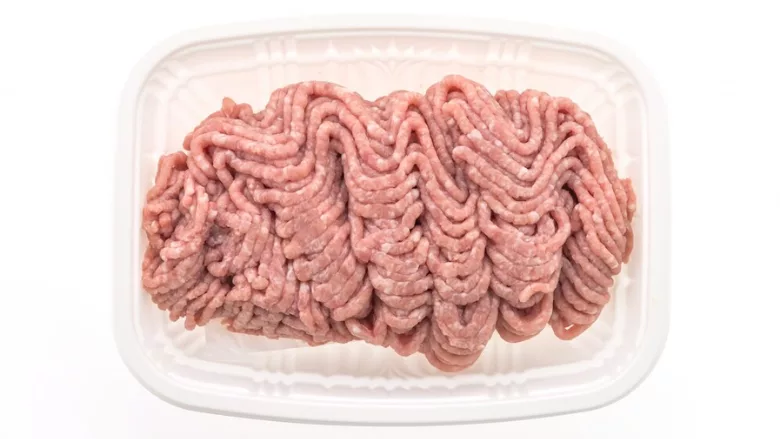
packaged raw ground beef

Image credit: mrsiraphol via Freepik

January 24, 2025

A new report from the U.S. Government Accountability Office (GAO) acknowledges the recent efforts made by the U.S. Department of Agriculture’s Food Safety and Inspection Service (USDA-FSIS) to develop a regulatory framework for Salmonella in raw poultry, but says further action is needed, recommending that the agency develop and update additional standards for Salmonella and Campylobacter.

Additionally, GAO recommended that the memorandum of understanding (MOU) between FSIS and USDA’s Animal and Plant Health Inspection Service (APHIS) for coordinating foodborne illness outbreak response be improved.

The GAO report also underlined FSIS’ difficulty with improving the sanitation awareness and practices among employees in both small and large plants. GAO suggested actions FSIS could take to support plants in achieving compliance with sanitation requirements, such as providing educational materials or signage.

Delayed Work on Proposed Pathogen Standards for Meat and Poultry Products

Improving federal food safety oversight has been on GAO’s “high risk” list of programs and operations since 2007. GAO previously reported on USDA’s actions to reduce foodborne pathogens and FSIS’ challenges in 2014 and 2018, finding that, in 2018, FSIS implemented recommendations from the 2014 report but had not yet set pathogen standards for many widely available products. Since 2018, FSIS has designated Salmonella as an adulterant in not ready-to-eat (not RTE), raw, breaded and stuffed chicken products, and although the agency has progressed the development of a new regulatory framework for Salmonella in raw poultry, FSIS paused work on several other standards. According to the GAO report, work on the following proposed standards has been paused:

  • Proposed standard for Salmonella in raw ground beef and beef trimmings, proposed in 2019 and last updated in 1996, when the initial standard was set
  • Proposed standard for Campylobacter in not RTE comminuted chicken, proposed in 2019 and last updated in 2016
  • Proposed standard for Campylobacter in not RTE comminuted turkey, proposed in 2019 and last updated in 2011 and 2016, for carcasses and comminuted turkey, respectively
  • Proposed standard for Salmonella in raw, comminuted pork and pork cuts, proposed in 2022 with no existing standards.

FSIS told GAO that, after finalizing the framework for Salmonella in raw poultry, the agency will use a similar approach to the development of the other standards; however, FSIS did not have an estimate for when the Salmonella framework would be finalized, nor did the agency have a prioritization plan or timeline for finishing the other standards. In this context, GAO recommended to FSIS that the agency develop a prioritization plan for tackling the remaining pathogen standards, and to inform the prioritization plan, review the public health impacts of delaying proposed pathogen standards for Salmonella and Campylobacter.

Unclear Pathogen Outbreak Investigation Responsibilities Between FSIS and APHIS

The GAO report also called attention to another hurdle FSIS faces in protecting the U.S. meat and poultry supply from foodborne pathogens—its limited control outside of the slaughter and processing plants it oversees. Specifically, USDA-APHIS has jurisdiction over farms, where pre-slaughter contamination of food animals can occur. In 2014, FSIS and APHIS signed an MOU for coordinating responses to foodborne illness outbreaks, but it does not identify or detail the agencies’ responsibilities in addressing and responding to specific pathogens. Therefore, GAO recommends that FSIS and APHIS update their MOU, or create a new agreement, to clearly identify pathogens of concern and each agency’s responsibilities in coordinating and responding to these pathogens’ occurrence during outbreak investigations.

Looking for quick answers on food safety topics?
Try Ask FSM, our new smart AI search tool.
Ask FSM →


KEYWORDS: report U.S. Government Accountability Office (GAO)

Share This Story

Fsm purple logo 200x200

The Food Safety Magazine editorial team comprises Bailee Henderson, Digital Editor ✉ and Adrienne Blume, M.A., Editorial Director.

Recommended Content

JOIN TODAY
to unlock your recommendations.

Already have an account? Sign In

  • people holding baby chicks

    Serovar Differences Matter: Utility of Deep Serotyping in Broiler Production and Processing

    This article discusses the significance of Salmonella in...
    Meat/Poultry
    By: Nikki Shariat Ph.D.
  • woman washing hands

    Building a Culture of Hygiene in the Food Processing Plant

    Everyone entering a food processing facility needs to...
    Training
    By: Richard F. Stier, M.S.
  • graphical representation of earth over dirt

    Climate Change and Emerging Risks to Food Safety: Building Climate Resilience

    This article examines the multifaceted threats to food...
    Management
    By: Maria Cristina Tirado Ph.D., D.V.M. and Shamini Albert Raj M.A.
Manage My Account
  • eMagazine Subscription
  • Subscribe to Newsletters
  • Manage My Preferences
  • Website Registration
  • Subscription Customer Service

More Videos

Sponsored Content

Sponsored Content is a special paid section where industry companies provide high quality, objective, non-commercial content around topics of interest to the Food Safety Magazine audience. All Sponsored Content is supplied by the advertising company and any opinions expressed in this article are those of the author and not necessarily reflect the views of Food Safety Magazine or its parent company, BNP Media. Interested in participating in our Sponsored Content section? Contact your local rep!

close
  • the use of dual-energy X-ray food inspection technology to identify foreign contaminants.
    Sponsored byEagle by METTLER TOLEDO

    Precision Inspection Starts with the Right X-ray Detector

  • This image depicts a worker cleaning stainless steel machinery in a food processing plant
    Sponsored byCintas

    Employee Uniforms: A Frontline Defense Against Food Contamination

  • This image depicts a healthcare professional managing a large volume of paperwork and transitioning to a digital workflow.
    Sponsored bySafetyChain

    The Invisible Plant Tax Starts with Your Records

Popular Stories

Don Prater at the 2026 Food Safety Summit

Donald Prater Becomes New Head of FDA Human Foods Program

town hall panelists on stage at the 2026 food safety summit

Top U.S. Food Safety Officials Discuss Regulatory Landscape at Food Safety Summit

digital 3d rendering of a biofilm

Plasma-Activated Mist Shows Promise for Biofilm Removal in Food Facilities


Events

May 28, 2026

Advanced Sanitation Strategies for Allergen Risk Reduction in Food Processing

Live: May 28, 2026, at 2:00 pm EDT: From this webinar, attendees will learn why validation and verification are necessary for allergen control, and how analytical tools can support allergen management programs.

June 3, 2026

How to Build a Better Food Safety Training Program

Live: June 3, 2026 at 2:00 pm EDT: Join this webinar to learn how AI is impacting food safety training, and how you can leverage AI in your programs.

June 4, 2026

Building a Stronger Food Safety Program in a Changing GFSI Landscape

Live: June 4, 2026 at 11:00 am EDT: Attend this webinar to understand how GFSI requirements are evolving and what those changes signal for quality programs at food and beverage facilities.

View All

Products

Global Food Safety Microbial Interventions and Molecular Advancements

Global Food Safety Microbial Interventions and Molecular Advancements

See More Products

Related Articles

  • black and white block numbers 2025

    USDA-FSIS Work Plans for 2025 Prioritize Regulating Salmonella in Poultry

    See More
  • raw chicken cutlets

    USDA-FSIS Releases New Guidelines on Controlling Salmonella and Campylobacter in Raw Poultry

    See More
  • whole roast chicken on wood table in between fork and knife

    In a 2023 Recap, USDA-FSIS Says it Aims to Publish Formal Regulatory Proposal for Salmonella in Poultry by Early 2024

    See More

Related Products

See More Products
  • 1118396308.jpg

    High Throughput Analysis for Food Safety

  • 1119160553.jpg

    Food Safety: Innovative Analytical Tools for Safety Assessment

  • 1119053595.jpg

    Food Safety for the 21st Century: Managing HACCP and Food Safety throughout the Global Supply Chain, 2E

See More Products

Events

View AllSubmit An Event
  • March 3, 2026

    FDA/USDA Regulatory Updates: Food Safety Work Plans for 2026

    On Demand: In this high-level, exclusive webinar, FDA Deputy Commissioner for Human Foods Kyle Diamantas and USDA Under Secretary for Food Safety Mindy Brashears, Ph.D. will share their agencies' regulatory priorities and work plans for 2026 and beyond.
View AllSubmit An Event

Related Directories

  • Gold Standard Diagnostics

    Gold Standard Diagnostics develops and markets rapid test kits and analyzers for a wide range of food contaminants including: allergens, pathogens, patulin and mycotoxins, glyphosate and pesticides, VDRs, GMOs and more. Get accurate results in minutes on-site with Gold Standard Diagnostics test kits.
  • WorkForge

    WorkForge is reshaping the landscape of learning and development in the food manufacturing industry. Our comprehensive solution provides a centralized hub for off-the-shelf and customizable content, an advanced Learning Management System (LMS), and expert consulting services. WorkForge creates bespoke learning experiences where employees can access tailored training at their convenience, promoting universal learning across diverse environments and devices.
  • Clean Works Corp.

    Clean Works is at the forefront of pioneering decontamination solutions that set the industry standard. Food sanitation solutions, award-winning gas-phase homogenous technology has been rigorously tested and has consistently demonstrated its effectiveness in eliminating up to 99.99% of pathogens and food-spoiling organisms, ensuring your produce is safe and fresh. We have successfully commercialized our technology in six countries, making a global impact.
×

Never miss the latest news and trends driving the food safety industry

Newsletters | Website | eMagazine

JOIN TODAY!
  • RESOURCES
    • Advertise
    • Contact Us
    • Directories
    • Store
    • Want More
  • SIGN UP TODAY
    • Create Account
    • eMagazine
    • Newsletters
    • Customer Service
    • Manage Preferences
  • SERVICES
    • Marketing Services
    • Reprints
    • Market Research
    • List Rental
    • Survey/Respondent Access
  • STAY CONNECTED
    • LinkedIn
    • Facebook
    • Instagram
    • X (Twitter)
  • PRIVACY
    • PRIVACY POLICY
    • TERMS & CONDITIONS
    • DO NOT SELL MY PERSONAL INFORMATION
    • PRIVACY REQUEST
    • ACCESSIBILITY

Copyright ©2026. All Rights Reserved BNP Media, Inc. and BNP Media II, LLC.

Design, CMS, Hosting & Web Development :: ePublishing