Current food safety oversight is spread across multiple federal, state, and local agencies, which Cotton says decreases efficacy, creates gaps, and slows response times to potential public health risks.
In a move that could have wide-ranging impacts to the USDA's food safety, nutrition, research, and farm services programs, more than 11,300 employees have signed up for the Trump Administration's second round of deferred resignations.
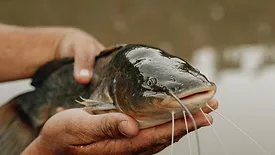
USDA’s Food Safety and Inspection Service (USDA-FSIS) sampled and tested meat, chicken, and Siluriformes fish (catfish) for 16 per- and polyfluoroalkyl substances (PFAS), detecting “forever chemicals” in less than 0.2–0.3 percent of all sample types except wild-caught catfish, of which nearly half contained at least one PFAS.
USDA’s Food Safety and Inspection Service (USDA-FSIS) has withdrawn the long-awaited proposed regulatory framework for Salmonella in raw poultry, which was designed to reduce the cases of human salmonellosis attributable to poultry consumption, saying that additional consideration is needed based on public comments.
The D.C. Section of Institute of Food Technologists (DC-IFT) is hosting “Food Policy Impact 2025,” a two-day event that will explore the future of food policies and their impact on food, nutrition, and health.
Less than two months after the filing of a first-of-its-kind lawsuit against ultra-processed food manufacturers, President Trump released an Executive Order establishing the Make America Healthy Again Commission.
In May 2024, USDA-FSIS published a final determination setting levels at which Salmonella would be consideredan adulterant in not-ready-to-eat (NRTE), breaded and stuffed chicken products, which also established a verification sampling program and a requirement for establishments to reassess their HACCP plans. FSIS has delayed the date for its sampling program and the HACCP reviews from May to November, 2025.
A coalition of 24 prominent food industry and consumer protection organizations, as well as seven expert individuals, sent a letter to USDA Secretary Brooke Rollins urging her to reinstate two key federal food safety scientific advisory committees, NACMCF and NACMPI.
 RSS
RSS