Designed to address fragmented measurement, data, and compliance workflows across product development and manufacturing operations, AQUALAB 5TE combines water activity and moisture content measurement in a single 60-second test.
Hyperspectral imaging captures information across a range of wavelengths, enabling the assessment of product characteristics that may not be visible through conventional imaging.
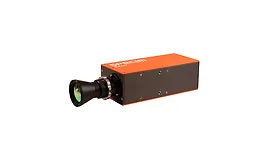
The SX10 is a visible and near-infrared (VNIR) hyperspectral camera designed for research and industrial imaging applications, including food research.
MicroTally’s MicroCap sampler grabs microorganisms from product surfaces as finished product passes through the weigh station. The device can operate unattended for up to two hours.
Developed in partnership with USDA-FSIS, the assay detects Salmonella spp. while targeting up to three proprietary genetic markers associated with pathogenicity, supporting surveillance and research into risk-based approaches to Salmonella control.
Researchers from the Helmholtz Center for Environmental Research and the Food Packaging Forum have proposed a panel of 15 high-throughput in vitro bioassays to screen chemicals for biological activity associated with cancer, brain-related harms, cardiovascular disease, and other disorders.
GeNi is intended to serve as a centralized hub for interlaboratory data, enabling participants to benchmark testing performance, identify best practices, improve data comparability, and support greater consistency in testing methods across industry.
The program, which was explored after the Boar’s Head outbreak of 2024 spurred the agency to reevaluate its inspection and Listeria monitoring protocols, was piloted in FY 2026 and will be expanded to FSIS districts nationwide.
The researchers concluded that integrating multiple sampling matrices and detection methods could improve understanding of Campylobacter occurrence in commercial broiler production and support preharvest surveillance.
This episode of Food Safety Five covers new research on the impact of spray application on sanitizer efficacy, ROI of WGS for foodborne pathogen surveillance, effect of common food additives on gut health and implications for safety assessment, and contribution of industrial poultry farming to global Campylobacter spread.
 RSS
RSS