Under the terms of the partnership, LuminUltra will serve as an official North American distributor of Kikkoman Biochemifa’s microbiological monitoring technologies for food safety and hygiene.
Polycyclic aromatic hydrocarbons (PAHs) are carcinogenic compounds formed during cooking. A new Seoul Tech
study has demonstrated the effectiveness of a streamlined analytical method to detect PAHs, which holds distinct advantages over conventional techniques.
The turkey industry advocacy group has issued a request for research proposals that will help define microbiologically independent lots of raw ground turkey, informing best practices that enhance food safety and regulatory compliance.
In a new peer-reviewed paper, experts emphasized the need for a paradigm shift in how the entire frozen berry supply chain can manage enteric virus safety, shifting from reliance on detection to a focus on prevention strategies.
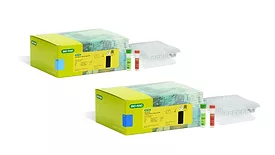
Bio-Rad Laboratories’ new EZ-Check Salmonella Kit is a rapid, polymerase chain reaction (PCR)-based detection method for Salmonella in food and environmental matrices.
This episode of Food Safety Five discusses two scientific developments that could help address the risk posed by Cronobacter in powdered infant formula: an AI-powered analysis of genetic data for C. sakazakii, providing new insight into why it persists in low-moisture foods, and the development of a promising new assay.
Air and its physical characteristics contribute to cross-contamination; capturing bioaerosols helps assess the air bioburden and prevent recontamination
A new study led by the University of South Australia offers a promising real-time mycotoxin detection method for the food industry that is based in artificial intelligence (AI) technology, and overcomes some of the limitations of traditional detection methods.
Researchers in China have developed a new onsite rapid test, based in fluorescence RNA-targeted isothermal amplification assay (SAT) technology, that can quickly detect and identify Cronobacter species in powdered infant formula. It offers significantly greater sensitivity and much more rapid results than polymerase chain reaction (PCR), without producing false positives.