Food Safety
search
Ask Food Safety AI
cart
facebook twitter linkedin instagram youtube
  • Sign In
  • Create Account
  • Sign Out
  • My Account
Food Safety
  • NEWS
    • Latest News
    • White Papers
  • PRODUCTS
  • TOPICS
    • Contamination Control
    • Food Types
    • Management
    • Process Control
    • Regulatory
    • Sanitation
    • Supply Chain
    • Testing and Analysis
  • PODCAST
  • EXCLUSIVES
    • Food Safety Five Newsreel
    • eBooks
    • FSM Distinguished Service Award
    • Interactive Product Spotlights
    • Videos
  • BUYER'S GUIDE
  • MORE
    • NEWSLETTERS >
      • Archive Issues
      • Subscribe to eNews
    • Store
    • Sponsor Insights
    • ASK FSM AI
  • WEBINARS
  • FOOD SAFETY SUMMIT
  • EMAG
    • eMagazine
    • Archive Issues
    • Editorial Advisory Board
    • Contact
    • Advertise
  • SIGN UP!
NewsContamination ControlFood TypeSupply ChainTesting & AnalysisMicrobiological ControlMicrobiological Testing & AnalysisProduceGrowers/GAPs

In-Field Rapid Test Detects Fecal Contamination of Produce with Near-Total Accuracy
By Food Safety Magazine Editorial Team
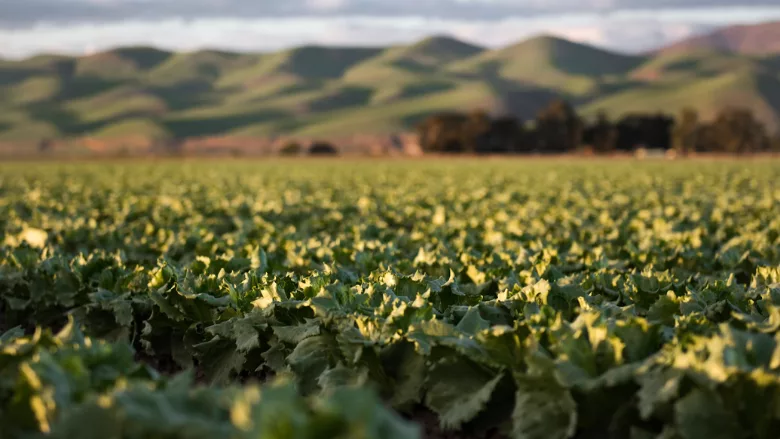
leafy greens growing california

Image credit: Tim Mossholder via Unsplash

June 24, 2024

Researchers from Purdue University have developed a new biosensor-based rapid test that can detect fecal contamination of produce in-field with 90–100 percent accuracy.

The solution leverages technology that has also been used for bovine respiratory disease and COVID-19 tests, called loop-mediated isothermal amplification (LAMP). The new, paper-based biosensor is the first demonstration of a portable LAMP testing platform implemented on a fresh produce farm. The sensor uses fecal indicator Bacteroidales as a risk marker, which is a microbe found in swine, poultry, and cattle excrement.

The assay kit comprises a drop dispenser, paper-based devices, and a heating imager, which growers can use and glean results from entirely in-field. After swabbing a collection flag, the user puts it in a drop dispenser, which is preloaded with liquid to dispense a specific volume. The liquid dispenses into the paper devices that contain the compounds needed to detect DNA in the samples, which are then entered into a heating imager. After one hour in the imager, the test reveals how much Bacteriodales is present.

The levels of Bacteroidales present in a crop field indicates the levels of food safety risk. High levels of contamination would be indicated by 1,000 copies of Bacteroidales DNA per square centimeter (cm2) on a test pad, with one copy corresponding to one cell from any of a broad class of bacteria. Low levels would be ten copies per cm2.

To test the technology, Purdue researchers used it on a commercial lettuce farm in Salinas, California, and in a field next to the Purdue Animal Sciences Research and Education Center in West Lafayette, Indiana. Small, plastic flags were placed throughout the testing area, which were left to collect bioaerosol samples for a week. All of the flags were brought to the laboratory for quantitative polymerase chain reaction (qPCR) analysis to determine the levels of Bacteriodales present.

The field test results were confirmed to be 100 percent accurate by the laboratory tests. However, the field tests lacked samples containing an intermediate range of contamination, which would have yielded most of the mismatches. Still, the assay can detect as few as three copies of Bacteroidales DNA per cm2, and the researchers estimate that tests involving a full range of contamination would achieve agreement with laboratory testing of above 90 percent.

Funding for the project was provided by the Center for Produce Safety, the California Department of Food and Agriculture, and the U.S. Department of Agriculture’s Agricultural Marketing Service. Researcher Mohit Verma, Ph.D., Associate Professor of Agricultural and Biological Engineering at Purdu, disclosed the new innovation to the Purdue Innovates Office of Technology Commercialization, which has applied for a patent to protect the intellectual property. Purdue issued a license for the technology to Verma’s company, Krishi, which is currently raising capital for commercialization.

Looking for quick answers on food safety topics?
Try Ask FSM, our new smart AI search tool.
Ask FSM →


KEYWORDS: biosensors fecal contamination Purdue University sensor technology study

Share This Story

Fsm purple logo 200x200

The Food Safety Magazine editorial team comprises Bailee Henderson, Digital Editor ✉ and Adrienne Blume, M.A., Editorial Director.

Recommended Content

JOIN TODAY
to unlock your recommendations.

Already have an account? Sign In

  • people holding baby chicks

    Serovar Differences Matter: Utility of Deep Serotyping in Broiler Production and Processing

    This article discusses the significance of Salmonella in...
    Methods
    By: Nikki Shariat Ph.D.
  • woman washing hands

    Building a Culture of Hygiene in the Food Processing Plant

    Everyone entering a food processing facility needs to...
    Training
    By: Richard F. Stier, M.S.
  • graphical representation of earth over dirt

    Climate Change and Emerging Risks to Food Safety: Building Climate Resilience

    This article examines the multifaceted threats to food...
    Risk Assessment
    By: Maria Cristina Tirado Ph.D., D.V.M. and Shamini Albert Raj M.A.
Manage My Account
  • eMagazine Subscription
  • Subscribe to Newsletters
  • Manage My Preferences
  • Website Registration
  • Subscription Customer Service

More Videos

Sponsored Content

Sponsored Content is a special paid section where industry companies provide high quality, objective, non-commercial content around topics of interest to the Food Safety Magazine audience. All Sponsored Content is supplied by the advertising company and any opinions expressed in this article are those of the author and not necessarily reflect the views of Food Safety Magazine or its parent company, BNP Media. Interested in participating in our Sponsored Content section? Contact your local rep!

close
  • NEVIFIT 3 Compartment BPA-FREE
    Sponsored byCorbion

    The Risks of Ready-to-Eat: Five Ways to Protect Today's Prepared Meals

  • a group of workers in a food production facility
    Sponsored bySkillUp by Registrar Corp

    How to Build a Better Training Program: Data and Insights from the Global Food Safety Training Survey

  • the use of dual-energy X-ray food inspection technology to identify foreign contaminants.
    Sponsored byEagle by METTLER TOLEDO

    Precision Inspection Starts with the Right X-ray Detector

Popular Stories

green powder/moringa in wooden mortar

FDA Opens Third Salmonella–Moringa Outbreak Investigation of the Year

FoodSafetyMattersFinal-900x550-(002).jpg

Ep. 218. Dr. Brady Carter: Water Activity, Shelf-Life Validation, and Food Safety Controls

fermented meat

Study is First to Analyze Trends in Foodborne Illness Outbreaks Linked to Non-Dairy Fermented Products

a practical guide to spoilage investigation webinar

Events

June 4, 2026

Building a Stronger Food Safety Program in a Changing GFSI Landscape

Live: June 4, 2026 at 11:00 am EDT: Attend this webinar to understand how GFSI requirements are evolving and what those changes signal for quality programs at food and beverage facilities.

June 10, 2026

A Practical Guide to Spoilage Investigation and Prevention

Live: June 10, 2026 at 11:00 am EDT: Join this webinar to learn how to identify spoilage root causes, reduce risk, and apply data-driven strategies for prevention.

June 16, 2026

Sustainable Food Contact Materials: Where Regulation Meets Analytical Testing

Live: June 16, 2026 at 11:00 am EDT: This webinar explores how sustainability regulations are changing food contact material requirements, including packaging compliance, unintended substances, and per- and polyfluoroalkyl substances.

View All

Products

Global Food Safety Microbial Interventions and Molecular Advancements

Global Food Safety Microbial Interventions and Molecular Advancements

See More Products

Related Articles

  • glass of milk and glass bottles of milk arranged against a pink background still life

    Novel Test Detects Bacteria in Milk with 98 Percent Accuracy Using AI, Sensor Technology

    See More
  • researcher holding test tube in water

    Scientists Develop New Species-Specific Method for Detecting Fecal Contamination in Water

    See More
  • small pile of strawberries white background

    EWG Publishes 2024 Dirty Dozen List of Produce Most Contaminated With Pesticides

    See More

Related Products

See More Products
  • 9781138070912.jpg

    Trends in Food Safety and Protection

  • 9781498721776.jpg

    Handbook of Food Processing: Food Safety, Quality, and Manufacturing Processes

  • 1444333348.jpg

    Handbook of Food Safety Engineering

See More Products

Events

View AllSubmit An Event
  • October 30, 2025

    Preventing Foreign Material Contamination with the FM Maturity Model

    On Demand: From this webinar, attendees will learn best practices for prevention of FM contamination at the corporate and plant levels.
View AllSubmit An Event

Related Directories

  • Gold Standard Diagnostics

    Gold Standard Diagnostics develops and markets rapid test kits and analyzers for a wide range of food contaminants including: allergens, pathogens, patulin and mycotoxins, glyphosate and pesticides, VDRs, GMOs and more. Get accurate results in minutes on-site with Gold Standard Diagnostics test kits.
  • Anritsu - Product Inspection & Detection

    Anritsu manufactures product inspection and detection equipment for food and pharma industries. Part of the Product Quality Assurance division of Anritsu Corp., we advance quality control programs with high-performing and reliable solutions. Our X-Ray Systems, Checkweighers, Metal Detectors, Combo Systems, Rejectors, and QuiCCA Software provide a superior ROI and ensure compliance with stringent quality control programs while protecting your brand. Our local branches in the US, Europe, Brazil, and Mexico are equipped with in-house service & parts dept., we deliver, install, and maintain in record time. With over 200,000 installations, we are the brand that is trusted to protect the safety and security of your customers.
  • Romer Labs

    Romer Labs is a global leader in innovative diagnostic solutions for food and feed safety. With a focus on mycotoxins, food allergens, GMOs, and microbial contaminants, we strive to meet the ever-changing demands of our customers. Furthermore, we operate a global network of 6 ISO accredited laboratories.
×

Never miss the latest news and trends driving the food safety industry

Newsletters | Website | eMagazine

JOIN TODAY!
  • RESOURCES
    • Advertise
    • Contact Us
    • Directories
    • Store
    • Want More
  • SIGN UP TODAY
    • Create Account
    • eMagazine
    • Newsletters
    • Customer Service
    • Manage Preferences
  • SERVICES
    • Marketing Services
    • Reprints
    • Market Research
    • List Rental
    • Survey/Respondent Access
  • STAY CONNECTED
    • LinkedIn
    • Facebook
    • Instagram
    • X (Twitter)
  • PRIVACY
    • PRIVACY POLICY
    • TERMS & CONDITIONS
    • DO NOT SELL MY PERSONAL INFORMATION
    • PRIVACY REQUEST
    • ACCESSIBILITY

Copyright ©2026. All Rights Reserved BNP Media, Inc. and BNP Media II, LLC.

Design, CMS, Hosting & Web Development :: ePublishing