Food Safety
search
Ask Food Safety AI
cart
facebook twitter linkedin
  • Sign In
  • Create Account
  • Sign Out
  • My Account
Food Safety
  • NEWS
    • Latest News
    • White Papers
  • PRODUCTS
  • TOPICS
    • Contamination Control
    • Food Types
    • Management
    • Process Control
    • Regulatory
    • Sanitation
    • Supply Chain
    • Testing and Analysis
  • PODCAST
  • EXCLUSIVES
    • Food Safety Five Newsreel
    • eBooks
    • FSM Distinguished Service Award
    • Interactive Product Spotlights
    • Videos
  • BUYER'S GUIDE
  • MORE
    • ENEWSLETTER >
      • Archive Issues
      • Subscribe to eNews
    • Store
    • Sponsor Insights
    • ASK FSM AI
  • WEBINARS
  • FOOD SAFETY SUMMIT
  • EMAG
    • eMagazine
    • Archive Issues
    • Editorial Advisory Board
    • Contact
    • Advertise
  • SIGN UP!
NewsContamination ControlFood TypeRegulatoryChemicalMeat/PoultryUSDA

After Sampling Shows Drugs in 20 Percent of 'Antibiotic-Free' Meat, USDA to Crack Down on Label Claims
By Food Safety Magazine Editorial Team
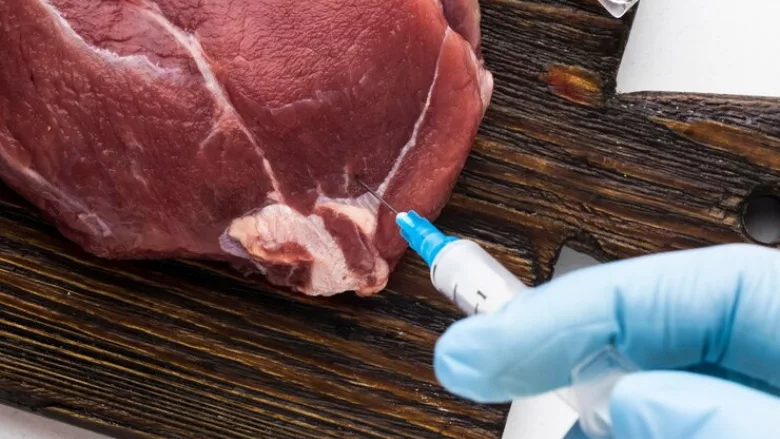
gloved hand injecting needle into meat

Image credit: Freepik

August 29, 2024

The U.S. Department of Agriculture (USDA) has released an updated guideline to help industry strengthen animal-raising and environment-related label claims on meat and poultry products. With regard to food safety, such claims include “raised without antibiotics.” Other such claims include “grass-fed,” free-range,” “raised using regenerative agriculture practices,” and “climate-friendly.”

USDA has raised specific concern over negative antibiotic claims, and in addition to the updated guidance, may take future action to ensure label claims are truthful, such as random sampling activities and possible rulemaking.

Documentation is required to be submitted by companies to support these voluntary label claims, which is reviewed by USDA’s Food Safety and Inspection Service (FSIS). The claims can only be included on the labels of meat and poultry products sold to consumers after they are approved by the agency.

To help ensure that animal-raising and environment label claims are truthful, the guideline strongly encourages the use of third-party certification to verify that the standards required to uphold claims are being met on the farm. The revised guideline also emphasizes more robust documentation for environment-related and animal-raising claims.

The updated guideline also recommends that establishments using “negative” antibiotic claims (e.g., “raised without antibiotics” or “no antibiotics ever”) implement routine sampling and testing programs to detect antibiotic use in animals prior to slaughter, or obtain third-party certification that includes testing.

Updated Guidance Prompted by Antibiotic Residues in Products With Negative Antibiotic Claims, Future Action Possible

In light of concerns about negative antibiotic claims, FSIS recently conducted a study in partnership with USDA’s Agricultural Research Service (ARS) to assess the veracity of these claims. FSIS collected liver and kidney samples from 196 eligible cattle at 84 slaughter establishments in 34 states, and ARS analyzed the samples using a method that targeted more than 180 veterinary drugs including various major classes of antibiotics. The study found antibiotic residues in approximately 20 percent of samples tested from the “raised without antibiotics” market. A peer-reviewed paper with complete results from the study will be published in the near future.

Looking for quick answers on food safety topics?
Try Ask FSM, our new smart AI search tool.
Ask FSM →

Due to the findings of the study, FSIS may conduct additional sampling and testing activities in the future, making use of its authority to collect samples any time there is reason to believe a product is mislabeled with any claim covered by the guidance. Moreover, FSIS may consider future additional actions, including random sampling and rulemaking, to further strengthen the substantiation of animal-raising and environment-related claims.

Antibiotic use in food animals is a pressing concern to consumers and public health. The presence of excessive drug residues in meat can facilitate the spread of antimicrobial resistance (AMR). 

The updated guideline will be available for public comment for 60 days after its publication in the Federal Register.


KEYWORDS: antibiotics guidance labeling

Share This Story

Fsm purple logo 200x200

The Food Safety Magazine editorial team comprises Bailee Henderson, Digital Editor ✉; Adrienne Blume, M.A., Editorial Director; and Stacy Atchison, Publisher.

Recommended Content

JOIN TODAY
to unlock your recommendations.

Already have an account? Sign In

  • people holding baby chicks

    Serovar Differences Matter: Utility of Deep Serotyping in Broiler Production and Processing

    This article discusses the significance of Salmonella in...
    Meat/Poultry
    By: Nikki Shariat Ph.D.
  • woman washing hands

    Building a Culture of Hygiene in the Food Processing Plant

    Everyone entering a food processing facility needs to...
    Sanitation
    By: Richard F. Stier, M.S.
  • graphical representation of earth over dirt

    Climate Change and Emerging Risks to Food Safety: Building Climate Resilience

    This article examines the multifaceted threats to food...
    Risk Assessment
    By: Maria Cristina Tirado Ph.D., D.V.M. and Shamini Albert Raj M.A.
Manage My Account
  • eMagazine Subscription
  • Subscribe to eNewsletter
  • Manage My Preferences
  • Website Registration
  • Subscription Customer Service

More Videos

Sponsored Content

Sponsored Content is a special paid section where industry companies provide high quality, objective, non-commercial content around topics of interest to the Food Safety Magazine audience. All Sponsored Content is supplied by the advertising company and any opinions expressed in this article are those of the author and not necessarily reflect the views of Food Safety Magazine or its parent company, BNP Media. Interested in participating in our Sponsored Content section? Contact your local rep!

close
  • Salmonella bacteria
    Sponsored byThermoFisher

    Food Microbiology Testing Methods: Salmonella species

  • a diagram explaining indicator organisms
    Sponsored byHygiena

    How Proactive Listeria Testing Helps Prevent Six- and Seven-Figure Recalls

  • woman grocery shopping
    Sponsored byCorbion

    Designing Safety Into Every Bite: Proactive Risk Mitigation for Refrigerated Foods

Popular Stories

baby eating bottle

Infant Botulism Spike Exceeds 100 Cases, Extent of ByHeart's Involvement Unclear

NRTE breaded stuffed chicken

USDA Indefinitely Delays Enforcement of Salmonella as Adulterant in Raw Breaded, Stuffed Chicken

digital map of europe

EU Publishes Food Fraud Tool Mapping Thousands of Cases Since 2016

Events

December 11, 2025

How to Develop and Implement an Effective Food Defense Strategy

Live: December 11, 2025 at 2:00 pm EDT: From this webinar, attendees will learn common areas where companies encounter challenges in their food defense strategies and how to address them.

May 11, 2026

The Food Safety Summit

Stay informed on the latest food safety trends, innovations, emerging challenges, and expert analysis. Leave the Summit with actionable insights ready to drive measurable improvements in your organization. Do not miss this opportunity to learn from experts about contamination control, food safety culture, regulations, sanitation, supply chain traceability, and so much more.

View All

Products

Global Food Safety Microbial Interventions and Molecular Advancements

Global Food Safety Microbial Interventions and Molecular Advancements

See More Products

Related Articles

  • assorted cured rte meats

    USDA-FSIS Begins New RTE Sampling Program to Verify Allergen Label Claims

    See More
  • carrots on conveyor food factory

    Less Than 20 Percent of Producers are Very Confident in FM Detection Systems, Survey Shows

    See More
  • vacuum sealed meat

    Spoilage Bacteria Pseudomonas Able to Grow on Meat After Heat Treatment, in Vacuum-Sealed Packaging, Study Shows

    See More

Related Products

See More Products
  • food-safety-making.jpg

    Food Safety: Making Foods Safe and Free From Pathogens

  • 9781138070912.jpg

    Trends in Food Safety and Protection

  • 9781498721776.jpg

    Handbook of Food Processing: Food Safety, Quality, and Manufacturing Processes

See More Products

Related Directories

  • QualiTru Sampling Systems

    Since 1983, QualiTru Sampling Systems® (formerly QMI) has been the leader in the science of aseptic liquid sampling with innovative, easy-to-use, versatile and cost‑effective sampling systems that help the dairy, beverage and liquid food industries produce safe, quality products across the U.S. and in over 30 countries worldwide.
×

Never miss the latest news and trends driving the food safety industry

eNewsletter | Website | eMagazine

JOIN TODAY!
  • RESOURCES
    • Advertise
    • Contact Us
    • Directories
    • Store
    • Want More
  • SIGN UP TODAY
    • Create Account
    • eMagazine
    • eNewsletter
    • Customer Service
    • Manage Preferences
  • SERVICES
    • Marketing Services
    • Reprints
    • Market Research
    • List Rental
    • Survey/Respondent Access
  • STAY CONNECTED
    • LinkedIn
    • Facebook
    • Instagram
    • X (Twitter)
  • PRIVACY
    • PRIVACY POLICY
    • TERMS & CONDITIONS
    • DO NOT SELL MY PERSONAL INFORMATION
    • PRIVACY REQUEST
    • ACCESSIBILITY

Copyright ©2025. All Rights Reserved BNP Media.

Design, CMS, Hosting & Web Development :: ePublishing