As the focus on per- and polyfluoroalkyl substances (PFAS) intensifies, multiple states and some U.S. federal agencies are implementing or considering implementation of restrictions or bans on the products use in food contact articles. This article focuses on the restrictions and bans in the U.S. that impact the use of PFAS in food packaging, and includes a discussion of the challenges manufacturers face due to inconsistent science and policy decision related to the use of these chemicals in food packaging.
Recyclable. Recycled content. Compostable. Made from bio-materials. Which of these makes for the safest, most sustainable package? These can be misleading questions, especially when it comes to food packaging. Many sustainable packaging goals and trends can affect food safety work. Also, the concept of food safety as the primary element in sustainable packaging decisions must logically flow through an organization from the top down, through the key relevant vertical groups.
Antares Vision Group (AVG) recently introduced a new series of inspection technology that incorporates multiple inspection controls into single machines.
Clean labeling is on the rise. Food producers must consider the packaging techniques and technologies that are used during manufacturing in order to label products as "clean."
The IAFNS 2022 Annual Meeting and Science Symposium featured a panel that addressed emerging food safety concerns associated with new modes of food retail, such as e-commerce, ghost kitchens, and delivery services.
Cascades continues to expand within the isothermal packaging market by enhancing its home delivery meal box technology and opening a new production facility in York, Pennsylvania.
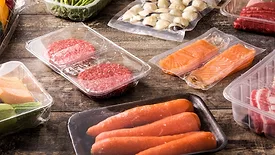
Efforts to reduce food waste may include the use of active and intelligent (A&I) packaging. Literature has pointed out the links between climate change, natural resource depletion, and food waste, and suggests that using A&I packaging to prolong product freshness and slow down spoilage of perishable fruit and meat has the diversion potential of 72,000 tons and an economic value of $167 million. As innovations in packaging advance, if allowed to do so, the impact of these products could be of greater benefit, not only in reducing food waste but also in improving food safety.
This article provides an overview of the status of the rules and regulations regarding nutritional labeling of food packaged at the global level and its impact on consumers' understanding. New and consumer-friendly proposed solutions (e.g., Nutri-Score, also known as the five-color nutrition label) are also presented.