Innovation at the Intersection of Food Packaging and Food Safety
Several food packaging options have emerged that directly contribute to producing a high-quality and safe food product
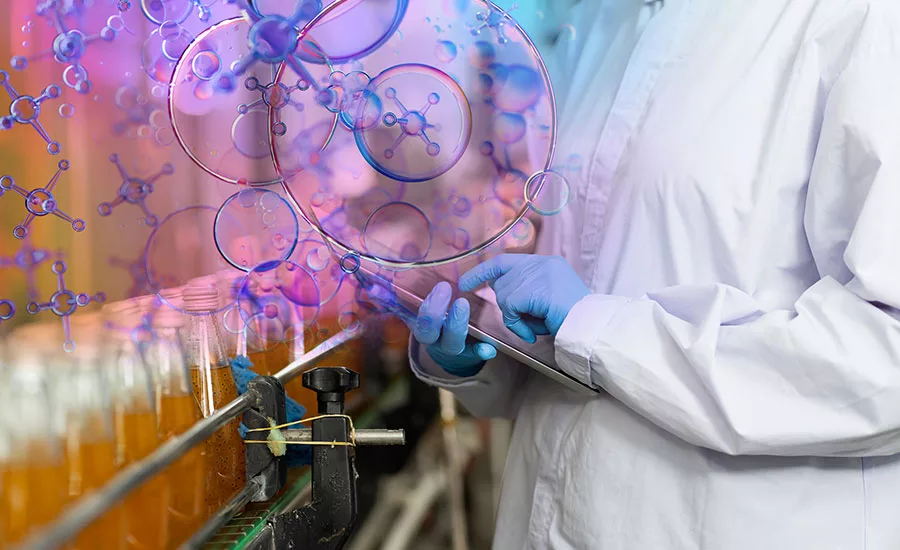
Most food manufacturers and food product development teams spend a considerable amount of time determining the formulation of the food product and the processing to be utilized, which are key factors to guarantee the safety and quality of the product; however, many of them neglect to consider packaging until much later in the food product development process continuum. Therefore, the science of food packaging can be easily overlooked during food manufacturing, even though it can drastically influence the safety, quality, and shelf life of the food being produced.
Packaging technologies have become highly complex, and several food packaging options have emerged that directly contribute to producing a high-quality and safe food product. In fact, emerging food packaging technologies have been previously defined as "science-based packaging innovations that have passed the early stages of development and show promise to enhance food quality and safety, and improve the sustainability of the food system in general."1 Indirectly, successful packaging technologies contribute to more sustainable food production by reducing food and packaging material waste. The sustainability component is very attractive to the food manufacturer, but, more importantly, to consumers.2
In terms of food safety, the force that drives packaging innovation is the heavy burden of foodborne illnesses on the food industry and the country as a whole. According to the Centers for Disease Control and Prevention (CDC) estimates, 48 million people get sick, 128,000 are hospitalized, and 3,000 die each year as a result of foodborne illnesses in the U.S.3 The global burden of foodborne illnesses is even more alarming. According to World Health Organization (WHO) estimates, 600 million cases of foodborne illnesses and 420,000 deaths could occur in a year.4 One way to address this problem is through protective packaging technologies.
Several protective packaging innovations are worth mentioning. Innovative packaging technologies that contribute to food safety include, but are not limited to, antimicrobial packaging, controlled-release packaging, nanotechnology, and biosensors.1 These technologies can aid in the control of not only spoilage microorganisms, which make the food product undesirable (but not necessarily unsafe), but also pathogenic organisms, which can cause illness and even death in humans. In the current economy, it may be difficult to make the decision to transition from a traditional packaging solution to an alternative; however, when product food safety is jeopardized and consumers are at potential risk, the food industry must do everything it can to prevent adverse scenarios. To this end, a short review of technologies that can improve the overall food safety of consumer goods is presented here.
Biosensors
Sensors are defined as a device used to detect, locate, or quantify a source of matter.1,5 Biosensors have receptors for biological materials or reactions that occur in food products. Monitoring the enzymatic, antigen, hormonal, or nucleic acid activity that occurs in a food product through the supply chain from the manufacturer to consumers can be key in the avoidance of foodborne illnesses and related hospitalizations. Biosensors can be designed to detect specific pathogens such as Salmonella, E. coli, Listeria, or Campylobacter or their metabolites.10 Wang et al.11 published a comprehensive review of the latest advances in biosensors used in agriculture and food safety. The authors specifically mentioned an E. coli-specific RNA-cleaving fluorogenic DNAzyme probe that was covalently attached to the food packaging film, and this sensor had the capacity to detect microbial contamination in foods without removing samples or sensors from the packaging. According to the authors, the system is very specific, stable under different conditions, and able to detect considerably low E. coli populations in meat and apple juice. This is one example of how a biosensor can provide direct information on whether the safety of a food product has been jeopardized after it has left the manufacturing facility.
Controlled Release Packaging (CRP)
While the complete elimination of quality loss in food products is virtually impossible, effective solutions exist to increase safe delivery and preservation. CRP uses the package itself to release active compounds such as antimicrobials, antioxidants, or insect repellents.7,8 The main advantage of utilizing CRP materials is being able to provide a sustained amount of active compounds to protect foods from degradation or microbial growth reactions. The release of active compounds follows a predetermined pattern throughout the entire expected storage time of the food product. For example, in the case where microbial growth can occur on a food's surface, CRP antimicrobials would be released directly on the surface of the food and be able to minimize that concern. When all possible measures are utilized to ensure food safety in the formulation of a food product, CRP technology can be utilized to provide another level of protection.
Intelligent Packaging Indicators
Different forms of intelligent packaging can provide indicators of the environmental conditions that can lead to changes in the characteristics of the food. Some examples include time-temperature indicators, gas leakage indicators, and relative humidity sensors.1,12 This type of technology provides information that can be used to determine if a product has undergone extreme abuse that compromises food safety and/or quality. Compared to traditional data carriers, these systems are not only used to track the product's quality and safety throughout the distribution chain; they can also help prevent food waste.
Looking for quick answers on food safety topics?
Try Ask FSM, our new smart AI search tool.
Ask FSM →
Nanotechnology
Critical concepts in food packaging include migration and permeability. Food manufacturers must ensure that no harmful compounds migrate from the packaging to the food and no harmful interactions occur between chemical compounds in the food and packaging. Nanotechnology and nanoparticle-based applications have been developed to provide efficient and adequate barriers to migration and undesirable gas diffusion.13,14 Permeability to oxygen or moisture for some foods can contribute to the growth of foodborne pathogens such as Listeria and Bacillus species. Specifically, nanoparticles can enhance overall antibacterial activity in food products due to their high surface area coverage upon application. Nanotechnology can also be applied to the packaging material itself, and it typically serves as an oxygen scavenger and/or moisture inhibitor. Whether the mechanism of nanotechnology is applied to the food product or packaging material, the results of several technologies provide stable and long-term biocidal activity.13,14
These new packaging technologies show promise in serving a larger role in the distribution of safe food products. While traditional food safety prevention activities such as sanitization and cleaning will remain indispensable, packaging technologies can significantly aid food safety initiatives if time is dedicated to carefully considering the available options that address the specific needs of individual food manufacturing facilities.
References
- Yam, K. L. and D. S. Lee. "Chapter 1: Emerging Food Packaging Technologies: An Overview." Emerging Food Packaging Technologies: Principles and Practices. Sawston, Cambridge: Woodhead Publishing, 2012. https://www.sciencedirect.com/science/article/pii/B9781845698096500014?via%3Dihub.
- Lindh, H., A. Olsson, and H. Williams. "Consumer Perceptions of Food Packaging: Contributing to or Counteracting Environmentally Sustainable Development?" Packaging Technology and Science 29, no. 1 (2016): 3–23. https://onlinelibrary.wiley.com/doi/10.1002/pts.2184.
- Centers for Disease Control and Prevention (CDC). "Burden of Foodborne Illness: Overview." 2018. https://www.cdc.gov/foodborneburden/estimates-overview.html.
- World Health Organization (WHO). "Food Safety." 2022. https://www.who.int/news-room/fact-sheets/detail/food-safety.
- López-Carballo, G., J. Gómez-Estaca, R. Catalá, P. Hernández-Muñoz, and R. Gavara. "Chapter 3: Active Antimicrobial Food and Beverage Packaging." Emerging Food Packaging Technologies: Principles and Practices. Sawston, Cambridge: Woodhead Publishing, 2012. https://www.sciencedirect.com/science/article/pii/B9781845698096500038?via%3Dihub.
- Sand, Claire. "Antimicrobial Packaging on the Rise Again." Food Technology Magazine 74, no. 10 (2020). https://www.ift.org/news-and-publications/food-technology-magazine/issues/2020/october/columns/packaging-antimicrobial-packaging-on-the-rise-again.
- Yam, K. L. and X. Zhu. "Chapter 2: Controlled Release Food and Beverage Packaging." Emerging Food Packaging Technologies: Principles and Practices. Sawston, Cambridge: Woodhead Publishing, 2012. https://www.sciencedirect.com/science/article/pii/B9781845698096500026?via%3Dihub.
- Suppakul, P. "Controlled Release of Active Compounds." Reference Module in Food Science. 2016. https://www.sciencedirect.com/science/article/pii/B9780081005965032157?via%3Dihub.
- Malhotra, B., A. Keshwani, and H. Kharkwal. "Antimicrobial Food Packaging: Potential and Pitfalls." Frontiers in Microbiology. 2015. https://www.frontiersin.org/articles/10.3389/fmicb.2015.00611/full.
- Rodrigues, C., V. G. L. Souza, I. Coelhoso, and A. L. Fernando. "Bio-Based Sensors for Smart Food Packaging—Current Applications and Future Trends." Sensors 21, no. 6 (2021): 2148. https://www.ncbi.nlm.nih.gov/pmc/articles/PMC8003241/.
- Wang, X., Y. Luo, K. Huang, and N. Cheng, "Biosensor for agriculture and food safety: Recent advances and future perspectives." Advanced Agrochem 1, no. 1 (2022): 3–6. https://www.sciencedirect.com/science/article/pii/S277323712200003X?via%3Dihub.
- Muller P. and M. Schmid. "Intelligent Packaging in the Food Sector: A Brief Overview." Foods 8, no. 1 (2019): 16. https://www.ncbi.nlm.nih.gov/pmc/articles/PMC6352026/.
- Lagarón, J. M. and M. A. Busolo. "Chapter 4: Active Nanocomposites for Food and Beverage Packaging." Emerging Food Packaging Technologies: Principles and Practices. Sawston, Cambridge: Woodhead Publishing, 2012. https://www.sciencedirect.com/science/article/pii/B978184569809650004X?via%3Dihub.
- Duncan, T. V. "Applications of nanotechnology in food packaging and food safety: Barrier materials, antimicrobials and sensors." Journal of Colloid and Interface Science 363, no. 1 (2011): 1–24. https://pubmed.ncbi.nlm.nih.gov/21824625/.
Fernanda Santos, Ph.D., is a veterinarian, poultry scientist, and food safety specialist. During her veterinary training, her primary focus was zoonotic diseases and disease prevention. She then focused her work on pathogen growth in foods of animal origin. She has also studied alternative methods and nutritional strategies to improve performance and reduce Salmonella colonization in poultry. At North Carolina State University, her focus is food safety and course development. She is responsible for the graduate food safety minor and teaching several courses in the food science program, including food packaging and food laws and regulations. She has also created "The Discover Series," which is a series of food science-related courses that are taught not only to food science/nutrition students but also to any undergraduate student who seeks to understand the science behind foods and the controversial topics of food and nutrition.
Tina Truong is a graduate student at North Carolina State University pursuing a master's degree in Food Science. She graduated from California Polytechnic State University–San Luis Obispo with a bachelor's degree in Food Science and minor in Packaging Science. She has industry experience focused on packaging science, cheese, physical property analysis, and commercial dairy product manufacturing. She decided to pursue a career in food science during her childhood due to her love for the show, "How It's Made."