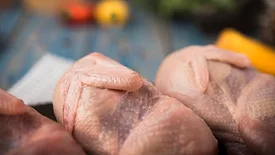
In response to USDA-FSIS’s proposed regulatory framework for Salmonella in raw poultry products, Consumer Reports has called the agency’s suggested enforceable standards “too lax,” and suggests specific changes, such as including S. Infantis as a serotype of public health concern.
A recent study has demonstrated that millions of nano- and microplastics are released by polymer-based commercial tea bags when infused with hot water, and that these plastic particles are readily taken up by human intestinal cells.
In response to external pressures, FDA has revoked its authorization for the use of red dye 3 in food. Despite its decision, the agency maintains that the available scientific information does not support claims of the colorant being harmful to human health through dietary exposure.
Uncovered through a FOIA request, an FDA Form 483 sent to Taylor Farms’ Colorado Springs facility documented questionable food safety and hygiene observations. The release of the FOIA-requested form comes from increased scrutiny following the facility's implication as the supplier of McDonald’s onions that caused an E. coli outbreak in late 2024.
Per the USDA-FSIS Annual Plan for Fiscal Year 2025, the agency will focus on its proposed framework for Salmonella in poultry, including its regulation of Salmonella as an adulterant in certain products. FSIS will also work on truthful labeling, modernizing laboratory methods, and other efforts.
USDA-FSIS published a summary of its review of the deadly Boar’s Head Listeria monocytogenes outbreak, along with newly announced long-term measures to review and modernize its L. monocytogenes regulations and ready-to-eat (RTE) sampling programs.
The U.S. Food and Drug Administration (FDA) has published a Long-Term National Strategy to Increase the Resiliency of the U.S. Infant Formula Market, building upon actions taken by the agency and implementing learnings from research conducted since the 2022 infant formula supply crisis.
The time is now for food safety professionals to heighten vigilance pertaining the dairy chain and raw milk—before the hypothetical risks of avian influenza H5N1 contamination become a reality. NEHA’s raw milk policy underscores the dangers of raw milk, advocating for policies that prioritize public health.
 RSS
RSS