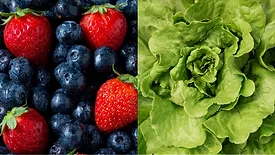
Funded by the Center for Produce Safety, researchers with the University of Barcelona and the Spanish Research Council are developing novel testing protocols for norovirus and hepatitis A on berries and leafy greens, enabling faster analysis and reducing false positives.
A recent report from the FAO/WHO Joint Expert Meeting on Microbiological Risk Assessment (JEMRA) summarizes the development of formal risk assessment models for Listeria monocytogenes in leafy greens, cantaloupe, frozen vegetables, and ready-to-eat (RTE) seafood.
The Canadian Food Inspection Agency (CFIA) recently conducted a targeted survey to assess the presence of phthalates in ready-to-eat (RTE) foods, vegetable fats, and vegetable oils, finding no detectable levels in 93 percent of samples.
Minnesota Senator Heather Gustafson has introduced SF 188, a bill that would require manufacturers of packaged foods to test their products for phthalates and disclose the results online.
This episode of Food Safety Five discusses a recent report showing that FDA has not met its mandated food inspection targets since 2018. Also covered are FDA’s new action levels for lead in foods for babies and children, and the success of Canadian regulations to control Salmonella in raw, frozen and breaded chicken products.
An EPA draft risk assessment suggests a risk to human health from the consumption of food grown on land fertilized by PFAS-contaminated biosolids. This risk only applies to certain “hot spots,” as the majority of food crops grown in the U.S. do not use biosolids as fertilizer.
Following the deaths of pet cats who ate raw food contaminated with Highly Pathogenic Avian Influenza (HPAI) H5N1, raw pet food manufacturers must now consider the virus as a hazard in their food safety plans, under FDA’s FSMA Preventive Controls for Animal Food rule.
An analysis of globally sourced table grapes conducted by the Chemical and Veterinary Analytical Institute of Stuttgart, Germany (CVUA Stuttgart) found notable levels of pesticides, which were significantly higher in grapes imported from outside the EU. Grapes from Türkiye were especially problematic.
Trustwell recently added an Allergen Identification feature to its Genesis Foods platform, which uses artificial intelligence (AI) to recognize and alert users of potential allergens for submitted ingredients, helping inform accurate labeling and potential corrective actions.
 RSS
RSS