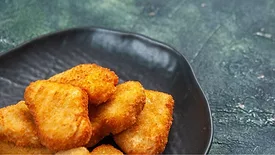
In Canada, the presence of Salmonella in raw, frozen and breaded chicken products, as well as human salmonellosis cases, decreased significantly after a specific requirement for these products was implemented in 2019, according to a recent study.
Penn State is offering an online, self-paced course for the food industry on the risks posed by Listeria monocytogenes and how the pathogen can be controlled.
California Governor Gavin Newsom has issued an executive order that mandates state agencies explore the safety of ultra-processed foods, food dyes, and "generally recognized as safe" (GRAS) ingredients, and recommend actions to mitigate the adverse health effects.
FDA has released four new guidance documents to help industry comply with food labeling regulations concerning allergens and plant-based alternatives to animal foods, as well as food safety regulations for ready-to-eat (RTE), low-moisture foods.
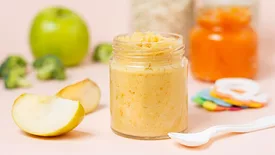
FDA issued a new final guidance for industry on the action levels for lead in processed food intended for babies and young children. Action levels are levels of a contaminant at which the agency may consider a food to be adulterated.
The European Food Safety Authority’s (EFSA’s) most recent report on emerging risk activities identifies food safety issues on the horizon posed by chemical and biological hazards, and new processes and technologies.
The U.S. Food and Drug Administration (FDA) has announced that the food contact notifications for 35 per- and polyfluoroalkyl substances (PFAS) are no longer effective, due to the abandonment of their uses by industry.
The U.S. Food and Drug Administration (FDA) recently began a national sampling and testing assignment for Highly Pathogenic Avian Influenza H5N1 (HPAI H5N1) in raw cow’s milk cheese.
A house cat in Oregon has died from eating raw cat food contaminated with Highly Pathogenic Avian Influenza H5N1 (HPAI H5N1), and a product recall was initiated. Additionally, cats in California contracted HPAI H5N1 from different raw pet food.
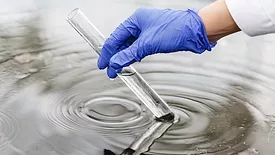
Scientists have developed a new method for detecting fecal contamination in water using human viral DNA, which can help improve the safety of water sources while also allowing for microbial source tracking of contamination.
 RSS
RSS