Earthjustice sued FDA on behalf of consumer advocates that previously petitioned FDA to revoke food contact authorizations for 28 phthalates, and were denied. Although FDA since revoked authorizations for many of those phthalates and says the rest are under review, the plaintiffs hope their lawsuit will force a long-overdue safety reassessment.
USDA is soliciting nominations for 30 new appointees to the National Advisory Committee on Microbiological Criteria for Foods (NACMCF), who will be tasked with reviewing USDA-FSIS’ regulatory approach for Listeria, among other charges.
On December 19, the European Commission officially adopted a sweeping ban on the use of Bisphenol A (BPA), as well as some other bisphenols considered harmful, in all food contact materials. Industry will be allowed an 18-month transition period.
In this bonus episode of Food Safety Matters, we speak to two MilliporeSigma food safety regulatory experts about the significance of Escherichia coli and Shiga toxin-producing E. coli (STEC) to food safety, as well as the importance of testing and the advanced testing solutions available for E. coli/STEC.
Boar’s Head has responded to a letter from 22 members of Congress probing the company about the recent, fatal listeriosis outbreak linked to its products. Representative Rosa DeLauro (D-CT), who signed the letter, called Boar’s Head’s response “not credible” and “a classic corporate dodge.”
The European Commission has updated its list of food imports from certain countries that are subjected to temporarily increased official controls due to contamination risk.
The FAO/WHO Joint Expert Meeting on Microbiological Risk Assessment (JEMRA) has published a report ranking the most important foodborne viruses and virus-food commodity pairings.
California has declared a state of emergency as the current outbreak of Highly Pathogenic Avian Influenza H5N1 (HPAI H5N1) continues to sweep North American dairy herds.
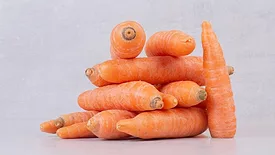
FDA has declared the outbreak of Escherichia coli infections linked to Grimmway Farms carrots to be over. Although the outbreak strain of E. coli did not match the Shiga toxin-producing E. coli strain found in environmental samples, traceback evidence implicates the recalled carrots as the vehicle of illness.
U.S. Food and Drug Administration (FDA) targeted testing of clams found a range of per- and polyfluoroalkyl substances (PFAS), with perfluorooctanoic acid (PFOA) present in all samples. Testing of domestic clams did not reveal a similar level of contamination.
 RSS
RSS