The resource provides recommendations and examples for implementing FSMA Preventive Controls for Human Foods Rule requirements to control known or reasonably foreseeable biological hazards in fresh-cut produce.
The report examines spore-forming, botulinum toxin-producing clostridia that pose persistent challenges for food production, including C. botulinum, C. perfringens, and C. difficile. It reviews disease burden, outbreak risks, prevention strategies, detection methods, and significant epidemiological data gaps.
Federally defining UPFs could allow U.S. regulatory agencies to pursue specific policies for the category. The importance of processing versus nutrient content and formulation in causing diet-related chronic diseases, as well as the value of defining UPFs, has been heavily debated.
Importantly, the proposal would not establish a premarket review and approval process for GRAS substances. Companies could still independently conclude that a substance is GRAS and market it while FDA evaluates the notice.
A new study found high levels of multidrug resistance and biofilm formation among Enterococcus spp. isolated from retail meat, market workers, and consumers. Genetic similarities among E. faecalis and E. faecium isolates from different sources suggested potential cross-transmission at the food–human
interface, although the researchers emphasized that direct transmission was not established.
The bipartisan Food Allergy Safety, Treatment, Education, and Research (FASTER) Act of 2026 would amend FDA's major food allergen labeling requirements to include barley, rye, and oats alongside wheat, in an effort to mitigate "hidden" exposure to gluten for consumers with celiac disease and gluten intolerance.
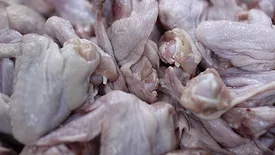
Hydrogen peroxide treatment, followed by catalase enzyme application to remove residual peroxide, significantly reduced Salmonella Typhimurium and Listeria monocytogenes on raw chicken wings while preserving the meat's overall color quality, although more research is needed on the effect on other organoleptic properties.
The Senate confirmed Erica Schwartz, M.D., J.D., M.P.H. as the new Director of CDC on August 5, making her the agency's first permanent leader in nearly a year. Dr. Schwartz previously served as Deputy Surgeon General during the first Trump administration and as Chief Medical Officer for the U.S. Coast Guard.
A new scientific review examines blue light-mediated photosensitization for antimicrobial intervention across various food sectors. The review notes the technology's promise as a nonthermal antimicrobial intervention for food safety and emphasizes the need for further studies to support scale-up across industry.
Two topics of increasing regulatory scrutiny—the "Generally Recognized as Safe" (GRAS) rule and a federal definition of ultra-processed food (UPFs)—have seen some movement at the U.S. Government's Office of Management and Budget, signaling progress on the Trump administration's food policy agenda.
 RSS
RSS