UK Researchers Receive £850,000 to Investigate How Campylobacter jejuni Survives, Adapts in Gut

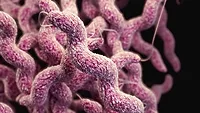
With an £850,000 award from the UK Research and Innovation (UKRI) Biotechnology and Biological Sciences Research Council (BBSRC), researchers at the London School of Hygiene and Tropical Medicine (LSHTM) will investigate how Campylobacter jejuni uses molecular “weapons” to outcompete other bacteria and adapt to different host environments.
By increasing the understanding of one of the survival mechanisms used by the important foodborne pathogen C. jejuni, the goal of the project is to support the development of new antimicrobials and vaccine targets that could reduce transmission through the food chain—an increasingly critical task given the rise of antimicrobial resistance (AMR) in Campylobacter.
Specifically, the Enterics Research Team led by Associate Professor Ozan Gundogdu, Ph.D. will investigate the Type VI Secretion System (T6SS), a bacterial “weapon” possessed by many disease-causing strains of Campylonacter jejuni. This weapon injects toxic effector proteins into rival bacteria, giving the pathogen a competitive advantage and supporting niche adaptation within complex gut environments. According to Dr. Gundgogdu, despite its major public health impact, relatively little is known about how Campylobacter causes disease compared to other gastroenteric (GI) pathogens—a gap he hopes to fill.
Joining the project as collaborators are Queen Mary University of London’s Ezra Askoy, Ph.D. and the Indian Institute of Science Education and Research Kolkata’s Amirul Islam Mallick, M.V.Sc., Ph.D.
Dr. Gundogdu and his team will explore how the T6SS and its effectors function in both chicken and human gut settings, and how they influence bacterial competition, gut microbial communities, and infection outcomes.
Looking for quick answers on food safety topics?
Try Ask FSM, our new smart AI search tool.
Ask FSM →