WorkForge Shift will include more than 770 ready-to-use courses across 15 subject areas, including food safety, occupational health and safety, and maintenance.
Organized through Cornell's Dry Sanitation Research Advisory Council and hosted by Kerry, the Cornell Advancing Dry Sanitation forum combined research presentations, industry experience, and interactive discussions across six themes: moisture management, emerging technologies, allergen control, hygienic design, sanitation validation, and priorities for future collaboration.
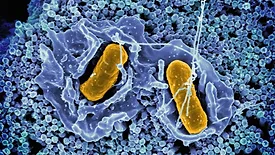
The company is seeking strategic partners to fund further development and help gain regulatory clearances for consumer testing products using its platform. The device could enable consumer testing for foodborne pathogens like Escherichia coli, Listeria monocytogenes, and Salmonella.
The multilingual text messaging solution enables growers to record and share traceability information directly from the field to support compliance with FDA's Food Traceability Rule (FSMA 204).
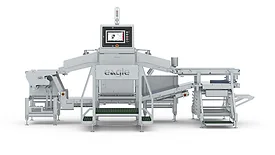
By combining inspection data analysis, equipment monitoring, performance verification, and automated reporting, SimulTask 6 is designed to help food processors integrate X-ray inspection information into their broader quality management operations.
Applications of the Curio HS headspace extraction platform include identifying off-flavors in beverages and dairy products, assessing compounds associated with ripeness, and detecting residual solvents in food packaging materials. The platform is currently available through an early access program.
The National Pest Management Association (NPMA) is urging commercial businesses to watch for early signs of rodent activity and take preventive steps before an infestation develops.
The positive displacement pumps are designed to improve volumetric efficiency, reduce energy consumption, and simplify maintenance in hygienic and high-purity food, beverage, and dairy processing applications.
The project will evaluate the resulting assay's potential applications in relevant food matrices, including chicken, turkey, pork, and beef, with the broader objective of improving the identification of Salmonella strains associated with human illness and outbreaks.
 RSS