Food Safety
search
Ask Food Safety AI
cart
facebook twitter linkedin instagram youtube
  • Sign In
  • Create Account
  • Sign Out
  • My Account
Food Safety
  • NEWS
    • Latest News
    • Sponsored Insights
    • Sponsored White Papers
  • PRODUCTS
  • TOPICS
    • Contamination Control
    • Food Types
    • Management
    • Process Control
    • Regulatory
    • Sanitation
    • Supply Chain
    • Testing and Analysis
  • PODCAST
  • EXCLUSIVES
    • Food Safety Five Newsreel
    • eBooks
    • FSM Distinguished Service Award
    • Interactive Product Spotlights
    • Videos
  • MORE
    • BUYER'S GUIDE
    • NEWSLETTERS >
      • Archive Issues
      • Subscribe to eNews
    • Store
    • ASK FSM AI
  • WEBINARS
  • FOOD SAFETY SUMMIT
  • FSM FEATURES
    • FSM Features Collection
    • eMag Archives
    • Editorial Advisory Board
    • Contact
    • Advertise
  • SIGN UP!
Home » agricultural

Articles Tagged with ''agricultural''

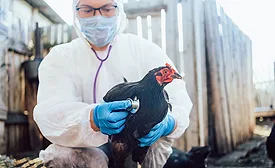
a person wearing a white protective suit, a face mask, safety glasses, and blue gloves, using a stethoscope to examine a black chicken

From Farm to Threat: Integrating Biosurveillance, Biointelligence, and Biosecurity (B3) into the Food Safety Enterprise—Part 1

The AU-BISR system connects the farm, the lab, and the decision-maker with actionable, early-warning intelligence for biological threats
Robert Norton
Robert A. Norton Ph.D.
Cris Young
Cristopher A. Young D.V.M., M.P.H., Diplomate A.C.V.P.M.
Soren P. Rodning D.V.M., M.S., Diplomate A.C.T.
September 30, 2026

This article introduces Auburn University’s AU-BISR System, which is governed by a unifying Biosurveillance, Biointelligence, and Biosecurity (B3) operational architecture. AU-BISR is a directly applicable early-warning architecture for the food system to prevent foodborne illnesses and recalls before they occur.


Read More
a wooden basket filled with fresh farm produce, including a sliced watermelon, cucumbers, yellow squash, and a melon, with a red tractor in the background

When Should You Start the Conversion of Agricultural Commodities to Food, Particularly for Fresh-Cut Items?

In fresh produce, and especially in fresh-cut products, there is no kill step; once contamination occurs, the risk remains
Eric Wilhelmsen
Eric Wilhelmsen Ph.D., CFS
September 9, 2026

This article explores the application of pre-wash and other food hygiene processes to raw agricultural products to implement food safety measures sooner in the production and processing of raw agricultural commodities. 


Read More
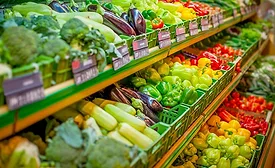
grocery store shelf display stocked with fresh vegetables like broccoli, zucchini, eggplant, and colorful peppers

Managing Risk From Seed to Shelf: A Comprehensive Approach to Fresh Produce Food Safety

The ability to effectively manage risk begins long before a product is harvested, transported, or processed
Michael Ciepiela
September 3, 2026

As regulatory requirements continue to evolve and consumer expectations increase, organizations across the fresh produce supply chain must adopt a proactive approach to risk management that emphasizes prevention, verification, transparency, and continuous improvement. 


Read More
 a person holding a wooden box containing various types of produce

Food Safety Five Ep. 35: Produce Safety Science and Small Growers’ Perspectives

Bailee Henderson headshot
Bailee Henderson
July 21, 2026

This episode of Food Safety Five highlights new research on cold storage practices for fresh-cut produce, food safety perspectives among small-scale produce growers exempt from FDA's FSMA Produce Safety Rule, and water management strategies that reduce arsenic in rice.


Read More
rice field growing

Study Shows Multiple Aeration Events During Rice Growing Reduces Arsenic Without Increasing Cadmium

FSM logo
Food Safety Magazine Editorial Team
June 25, 2026

The Arkansas-based study showed that repeated mid-season soil aeration events significantly reduced arsenic concentrations in rice grain without increasing cadmium levels, providing field-scale evidence that water management can help mitigate arsenic accumulation.


Read More
farmer checking rice crop

Sustainable Fertilizer Practice Causes Increased Cadmium in Rice, Study Shows

FSM logo
Food Safety Magazine Editorial Team
April 14, 2026

Large-scale recycled manure use—a circular agriculture approach used to combat soil acidification that reduces crop yield—can lead to the accumulation of cadmium in soil, which is then taken up by rice crops, affecting food safety.


Read More
a farmer overlooking his field

NASEM Publishes Report to Guide USDA’s Response to PFAS in Agricultural Systems

FSM logo
Food Safety Magazine Editorial Team
February 13, 2026

The National Academies of Sciences, Engineering, and Medicine (NASEM) has published a report on PFAS in agricultural systems to help guide USDA's response to the impacts of agricultural lands polluted by these “forever chemicals.”


Read More
NASDA President, Maine Agriculture Commissioner Amanda Beal, shares NASDA's 2026 policy priorities during the 2026 Winter Policy Conference.

NASDA’s 2026 Policy Priorities Focus on Pesticides, Animal Diseases, and Farm Bill Food Safety

FSM logo
Food Safety Magazine Editorial Team
February 4, 2026

The National Association of State Departments of Agriculture (NASDA) has set its federal policy priorities for 2026. Food safety-related issues are central to NASDA's 2026 advocacy work for the Farm Bill, animal diseases and traceability, and pesticides


Read More
hands open cupping soil

FAO: Harmonization Needed in Food Safety Risk Assessments for Environmental Inhibitors

FSM logo
Food Safety Magazine Editorial Team
January 20, 2026

Environmental inhibitors are compounds used in agriculture to reduce greenhouse gas emissions from animals or minimize nitrogen losses in soil. A new FAO report highlights the need for a harmonized approach to risk assessment of these compounds and suggests a potential framework.


Read More
irrigation pond

FAO/WHO Identify High-Priority Chemical Contaminants in Water Used for Agri-Food Production

FSM logo
Food Safety Magazine Editorial Team
January 2, 2026

FAO and WHO recently published a report identifying and prioritizing chemical contaminants that pose a food safety risk due to their presence in sources of water used in agri-food systems.


Read More
Previous 1 2 3 4 5 6 Next
Manage My Account
  • eMagazine Subscription
  • Subscribe to Newsletters
  • Manage My Preferences
  • Website Registration
  • Subscription Customer Service

More Videos

Sponsored Content

Sponsored Content is a special paid section where industry companies provide high quality, objective, non-commercial content around topics of interest to the Food Safety Magazine audience. All Sponsored Content is supplied by the advertising company and any opinions expressed in this article are those of the author and not necessarily reflect the views of Food Safety Magazine or its parent company, BNP Media. Interested in participating in our Sponsored Content section? Contact your local rep!

close
  • Top view portrait of two factory workers standing by conveyor belt during quality inspection at food production, copy space
    Sponsored byFlexXray

    Foreign Material By the Numbers: What the 2026 Benchmark Report Reveals

  • a conveyorized industrial metal detector system that appears to resemble a Loma Systems IQ4 Metal Detector setup with an integrated conveyor belt and control panel for food or package inspection.
    Sponsored byMettler Toledo

    Beyond Detection: How to Avoid Physical Contamination in Food Through a Smarter Inspection Strategy

  • The image displays a bottling plant production line, commonly used in the beverage industry for filling and packaging soft drinks.
    Sponsored byBIOIONIX

    Sustainability with ROI: A Beverage Producer Case Study in Water Savings

Popular Stories

Dr. Heidi Overton speaking at Senate hearing

In Senate Hearing, FDA Commissioner Nominee Says Lack of Resources Will Challenge GRAS Reform

rangpur lime

Pathogens Found on Brazilian Citrus Fruit Present Emerging Food Safety Concerns

lightbulb on a plate next to fork and knife representing food innovation ideas

EFSA Outlines Scientific Needs for Regulatory Preparedness, Risk Assessment

allergens ebook

Events

October 6, 2026

Advances in Environmental Monitoring Science and Strategy

Live: October 6, 2026 at 2:00 pm EDT: This webinar will cover how environmental monitoring science and EMP strategies support sanitation verification and the safe production of food.

October 15, 2026

How to Prevent Physical Contamination in Food Production and Strengthen Compliance

Live: October 15, 2026 at 2:00 pm EDT: Attend this webinar to gain insight into how product inspection helps protect your brand, reduce recall risk, and support compliance.

October 29, 2026

FDA Proposes Major GRAS Reform: What It Could Mean for Your Business

Live: October 29, 2026 at 2:00 pm EDT: Attend this webinar to examine potential implications for self-GRAS, Flavor and Extract Manufacturers Association (FEMA) GRAS, and food-contact substances.

View All

Products

Global Food Safety Microbial Interventions and Molecular Advancements

Global Food Safety Microbial Interventions and Molecular Advancements

See More Products

Never miss the latest news and trends driving the food safety industry

Newsletters | Website | FSM Features Collection

JOIN TODAY!
  • RESOURCES
    • Advertise
    • Contact Us
    • Directories
    • Store
    • Want More
  • SIGN UP TODAY
    • Create Account
    • eMagazine
    • Newsletters
    • Customer Service
    • Manage Preferences
  • SERVICES
    • Marketing Services
    • Reprints
    • Market Research
    • List Rental
    • Survey/Respondent Access
  • STAY CONNECTED
    • LinkedIn
    • Facebook
    • Instagram
    • X (Twitter)
  • PRIVACY
    • PRIVACY POLICY
    • TERMS & CONDITIONS
    • DO NOT SELL MY PERSONAL INFORMATION
    • PRIVACY REQUEST
    • ACCESSIBILITY

Copyright ©2026. All Rights Reserved BNP Media, Inc. and BNP Media II, LLC.

Design, CMS, Hosting & Web Development :: ePublishing