Food Safety
search
Ask Food Safety AI
cart
facebook twitter linkedin instagram youtube
  • Sign In
  • Create Account
  • Sign Out
  • My Account
Food Safety
  • NEWS
    • Latest News
    • White Papers
  • PRODUCTS
  • TOPICS
    • Contamination Control
    • Food Types
    • Management
    • Process Control
    • Regulatory
    • Sanitation
    • Supply Chain
    • Testing and Analysis
  • PODCAST
  • EXCLUSIVES
    • Food Safety Five Newsreel
    • eBooks
    • FSM Distinguished Service Award
    • Interactive Product Spotlights
    • Videos
  • BUYER'S GUIDE
  • MORE
    • NEWSLETTERS >
      • Archive Issues
      • Subscribe to eNews
    • Store
    • Sponsor Insights
    • ASK FSM AI
  • WEBINARS
  • FOOD SAFETY SUMMIT
  • EMAG
    • eMagazine
    • Archive Issues
    • Editorial Advisory Board
    • Contact
    • Advertise
  • SIGN UP!
NewsRegulatoryUSDA

NASDA’s 2026 Policy Priorities Focus on Pesticides, Animal Diseases, and Farm Bill Food Safety

By Food Safety Magazine Editorial Team
NASDA President, Maine Agriculture Commissioner Amanda Beal, shares NASDA's 2026 policy priorities during the 2026 Winter Policy Conference.
Image courtesy of NASDA
February 4, 2026

The National Association of State Departments of Agriculture (NASDA) has set its federal policy priorities for 2026, comprising five areas of focus.

In 2026, NASDA will focus on:

  • Agricultural labor reform
  • Animal disease preparedness and traceability
  • The Farm Bill
  • Pesticide regulations
  • Regional food procurement and distribution.

Food safety-related issues are central to NASDA's 2026 advocacy work for the Farm Bill, animal diseases and traceability, and pesticides.

The Farm Bill and Food Safety

NASDA’s food safety-related Farm Bill recommendations include:

  • Providing resources to assist farmers in complying with the Food Safety Modernization Act (FSMA)
  • Increasing funding for the U.S. Department of Agriculture’s Agricultural Research Service (ARS) and the National Institute of Food and Agriculture (NIFA)
  • Supporting robust animal disease prevention including the development of an early disease detection warning system for coordinated government–industry⁠ outbreak response
  • Maintaining the Comprehensive Food Safety Training Network for cybersecurity at the authorized level of $20 million per year
  • Strengthening U.S. Environmental Protection Agency (EPA) pesticide product labeling regulations and EPA pesticide risk mitigation efforts.

Better Federal–State Pesticides Co-Regulation Under FIFRA

Beyond its Farm Bill recommendations, NASDA is advocating for a predictable, enforceable, science- and risk-based pesticide regulatory framework to maintain agricultural productivity while minimizing adverse impacts on human health, the environment, and endangered animal species.

In 43 states and Puerto Rico, the state department of agriculture is a coregulatory partner with EPA and is responsible for administering, implementing, and enforcing the production, labeling, distribution, sale, use, and disposal of pesticides under the Federal Insecticide, Fungicide, and Rodenticide Act (FIFRA). Under FIFRA, EPA is required to assess a wide variety of potential human health and environmental effects when considering a pesticide product for registration or re-registration.

NASDA’s positions on FIFRA implementation support:

  • The science-based and comprehensive regulatory framework FIFRA provides for pesticide-related environmental and public health protection
  • State primacy in the enforcement of pesticide activities under FIFRA
  • EPA’s recognition that states are not stakeholders but are co-regulatory partners under FIFRA and, therefore, must be consulted on any FIFRA regulatory or policy initiatives
  • Appropriate and sustained funding for state lead agencies as co-regulatory partners with EPA under FIFRA.

Strengthening Food Animal Disease Outbreak Response

As exemplified through the ongoing highly pathogenic avian influenza H5N1 (HPAI H5N1) outbreak among U.S. dairy cattle, food animal disease outbreaks can disrupt the U.S. food supply with potential effects on food safety. NASDA commends state and federal regulatory agencies’ collaborative response to minimize the spread of HPAI H5N1, especially the National Milk Testing Strategy (NMTS), which has increased the prevention and traceability of the bird flu outbreak and has proven to be an effective tool in combating HPAI H5N1.

Moving forward, to further improve outbreak preparedness and disease traceability, NASDA advocates for:

  • Fully funding the National Animal Vaccine and Veterinary Countermeasures Bank, the National Animal Disease Preparedness and Response Program, and the National Animal Health Laboratory Network
  • Programs that fund state disease surveillance and response activities; invest in research on response and treatment options; and advance the One Health approach to safeguarding animal, human, and environmental health
  • The Foreign Animal Disease Prevention, Surveillance and Rapid Response Act, which would fund a three-tiered approach to combating foreign animal diseases as established in the 2018 Farm Bill.

Looking for quick answers on food safety topics?
Try Ask FSM, our new smart AI search tool.
Ask FSM →


KEYWORDS: agricultural farm bill NASDA

Share This Story

Fsm purple logo 200x200

The Food Safety Magazine editorial team comprises Bailee Henderson, Digital Editor ✉; Adrienne Blume, M.A., Editorial Director; and Stacy Atchison, Publisher.

Recommended Content

JOIN TODAY
to unlock your recommendations.

Already have an account? Sign In

  • people holding baby chicks

    Serovar Differences Matter: Utility of Deep Serotyping in Broiler Production and Processing

    This article discusses the significance of Salmonella in...
    Food Type
    By: Nikki Shariat Ph.D.
  • woman washing hands

    Building a Culture of Hygiene in the Food Processing Plant

    Everyone entering a food processing facility needs to...
    Management
    By: Richard F. Stier, M.S.
  • graphical representation of earth over dirt

    Climate Change and Emerging Risks to Food Safety: Building Climate Resilience

    This article examines the multifaceted threats to food...
    Best Practices
    By: Maria Cristina Tirado Ph.D., D.V.M. and Shamini Albert Raj M.A.
Manage My Account
  • eMagazine Subscription
  • Subscribe to Newsletters
  • Manage My Preferences
  • Website Registration
  • Subscription Customer Service

More Videos

Sponsored Content

Sponsored Content is a special paid section where industry companies provide high quality, objective, non-commercial content around topics of interest to the Food Safety Magazine audience. All Sponsored Content is supplied by the advertising company and any opinions expressed in this article are those of the author and not necessarily reflect the views of Food Safety Magazine or its parent company, BNP Media. Interested in participating in our Sponsored Content section? Contact your local rep!

close
  • Salmonella bacteria
    Sponsored byThermoFisher

    Food Microbiology Testing Methods: Salmonella species

  • a diagram explaining indicator organisms
    Sponsored byHygiena

    How Proactive Listeria Testing Helps Prevent Six- and Seven-Figure Recalls

  • woman grocery shopping
    Sponsored byCorbion

    Designing Safety Into Every Bite: Proactive Risk Mitigation for Refrigerated Foods

Popular Stories

Baby formula with mother and infant in background

FDA Testing Pinpoints Contaminated Ingredient in Infant Botulism Outbreak

McDonald's storefront

Regulatory Response to Boar’s Head, McDonald’s Outbreaks Reveal Areas for Improvement

baby taking a bottle

EFSA to Advise on Cereulide Levels in Infant Formula Following Global Recall

Events

February 25, 2026

How to Manage Food Safety and Regulatory Risks in Your Supply Chain

Live: February 25, 2026 at 2:00 pm EST: From this webinar, attendees will learn how large food manufacturing organizations can successfully manage their supply chain, food safety, and regulatory risks.

May 11, 2026

The Food Safety Summit

Stay informed on the latest food safety trends, innovations, emerging challenges, and expert analysis. Leave the Summit with actionable insights ready to drive measurable improvements in your organization. Do not miss this opportunity to learn from experts about contamination control, food safety culture, regulations, sanitation, supply chain traceability, and so much more.

View All

Products

Global Food Safety Microbial Interventions and Molecular Advancements

Global Food Safety Microbial Interventions and Molecular Advancements

See More Products

Related Articles

  • NASDA Sets Priorities for 2018 Farm Bill

    See More
  • NASDA Sets 2022 Federal Policy Focus, With Food Supply Chain Emphasis

    NASDA Sets 2022 Federal Policy Focus, With Food Supply Chain Emphasis

    See More
  • Priorities Announced for 2023 Farm Bill

    Priorities Announced for 2023 Farm Bill

    See More

Related Products

See More Products
  • 1119053595.jpg

    Food Safety for the 21st Century: Managing HACCP and Food Safety throughout the Global Supply Chain, 2E

  • 1119160553.jpg

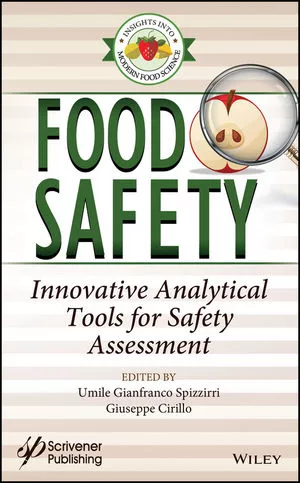
    Food Safety: Innovative Analytical Tools for Safety Assessment

  • 9781498721776.jpg

    Handbook of Food Processing: Food Safety, Quality, and Manufacturing Processes

See More Products

Events

View AllSubmit An Event
  • May 15, 2025

    Town Hall: A Candid Dialogue on the Future of Food Safety

    On Demand: The 13th Annual Town Hall at the Food Safety Summit brings together top food safety leaders for an open and dynamic conversation about the most pressing challenges and opportunities in food safety today. 
  • May 11, 2026

    The Food Safety Summit

    Stay informed on the latest food safety trends, innovations, emerging challenges, and expert analysis. Leave the Summit with actionable insights ready to drive measurable improvements in your organization. Do not miss this opportunity to learn from experts about contamination control, food safety culture, regulations, sanitation, supply chain traceability, and so much more.
View AllSubmit An Event

Related Directories

  • Elanco Animal Health

    ELANCO (NYSE: ELAN) is a global animal health company serving customers in more than 90 countries. The Elanco Poultry team combines industry-leading products and services with their professional experience and collaboration skills to help customers remain confident of success in the ever-changing poultry industry. Our team includes consultants with extensive veterinary knowledge and experience. Our industry-leading products focus on food safety, intestinal integrity, bioprotection, and nutrition.
×

Never miss the latest news and trends driving the food safety industry

Newsletters | Website | eMagazine

JOIN TODAY!
  • RESOURCES
    • Advertise
    • Contact Us
    • Directories
    • Store
    • Want More
  • SIGN UP TODAY
    • Create Account
    • eMagazine
    • Newsletters
    • Customer Service
    • Manage Preferences
  • SERVICES
    • Marketing Services
    • Reprints
    • Market Research
    • List Rental
    • Survey/Respondent Access
  • STAY CONNECTED
    • LinkedIn
    • Facebook
    • Instagram
    • X (Twitter)
  • PRIVACY
    • PRIVACY POLICY
    • TERMS & CONDITIONS
    • DO NOT SELL MY PERSONAL INFORMATION
    • PRIVACY REQUEST
    • ACCESSIBILITY

Copyright ©2026. All Rights Reserved BNP Media.

Design, CMS, Hosting & Web Development :: ePublishing