Food Safety
search
Ask Food Safety AI
cart
facebook twitter linkedin instagram youtube
  • Sign In
  • Create Account
  • Sign Out
  • My Account
Food Safety
  • NEWS
    • Latest News
    • Sponsored Insights
    • Sponsored White Papers
  • PRODUCTS
  • TOPICS
    • Contamination Control
    • Food Types
    • Management
    • Process Control
    • Regulatory
    • Sanitation
    • Supply Chain
    • Testing and Analysis
  • PODCAST
  • EXCLUSIVES
    • Food Safety Five Newsreel
    • eBooks
    • FSM Distinguished Service Award
    • Interactive Product Spotlights
    • Videos
  • MORE
    • BUYER'S GUIDE
    • NEWSLETTERS >
      • Archive Issues
      • Subscribe to eNews
    • Store
    • ASK FSM AI
  • WEBINARS
  • FOOD SAFETY SUMMIT
  • FSM FEATURES
    • eMag Archives
    • FSM Features Collection
    • Editorial Advisory Board
    • Contact
    • Advertise
  • SIGN UP!
NewsManagementRegulatoryRisk AssessmentInternational Standards/Harmonization

EFSA Outlines Scientific Needs for Regulatory Preparedness, Risk Assessment

By Food Safety Magazine Editorial Team
lightbulb on a plate next to fork and knife representing food innovation ideas
Image credit: Magnific
September 30, 2026

On September 29, the European Food Safety Authority (EFSA) published a paper outlining the scientific capabilities and investments that will be necessary to keep pace with food system innovation, emerging risks, and changing EU policy, while enabling effective and efficient risk assessment.

The paper identified scientific needs across six interconnected pathways:

  1. Innovation and competitiveness
  2. Methodological and technical advances
  3. Sustainability and One Health
  4. Preparedness and rapid response
  5. Risk communication and social science
  6. Artificial intelligence (AI) and data.

The paper is intended to inform EFSA's forthcoming Strategy 2034 and discussions at the agency’s Safe Food, One Future Conference, taking place in fall 2027 in Parma, Italy.

Regulatory Challenges Arising from Food Innovation

EFSA highlighted several areas in which innovation is creating new regulatory science challenges, including cell culture-derived foods, precision fermentation, plant molecular farming, microbiome-based products, biopesticides, bacteriophages, new genomic techniques (NGTs), circular food and feed sources, novel food contact materials, and emerging agricultural systems.

Specific challenges described in the paper included evaluating cultured animal cell products, innovative feed additives, biopesticides, and novel recycled food contact materials and recycling technologies.

EFSA also pointed to scientific gaps involving allergenicity and protein safety, microbiomes, environmental risk assessment, and potential health risks associated with micro- and nanoplastics.

The agency said fit-for-purpose risk assessment methods will be needed to address novel products, advanced materials, emerging evidence streams, and scenarios involving multiple hazards.

Calls for Advances in NAMs, Exposure Science, and Probabilistic Risk Assessment

EFSA identified continued research and investment needs related to new approach methodologies (NAMs), which could support the transition away from animal testing. Although progress has been made, EFSA said single alternative methods are insufficient for comprehensive hazard assessment. Further work is needed on integrated testing batteries, toxicokinetic methods, quantitative adverse outcome pathways (qAOPs), omics, and the integration of new evidence and data types into regulatory risk assessment.

Looking for quick answers on food safety topics?
Try Ask FSM, our new smart AI search tool.
Ask FSM →

The paper also called for advances in exposure science, including better incorporation of human biomonitoring, aggregate exposure, exposome information, lifetime exposure modeling, and non-targeted screening.

Additionally, EFSA said probabilistic approaches could improve assessments of combined exposure to multiple chemicals and other complex exposure scenarios for which threshold-based approaches alone are insufficient.

One Health, Surveillance, and Climate-Related Food Safety Risks

EFSA identified One Health cooperation as another important component of future regulatory readiness. Areas requiring further investment included antimicrobial resistance (AMR), microbiomes, biomarkers of effect, animal welfare, vector-borne diseases, integrated monitoring and surveillance, environmental risk assessment, and climate change.

For example, EFSA called for expanded interoperable surveillance systems capable of integrating information across sectors and delivering information rapidly enough to facilitate alerts. The Authority also identified a need to better quantify climate change's effects on food safety, including impacts on aflatoxins and the spread of vector-borne diseases.

EFSA said future preparedness should increasingly move from reactive crisis response toward an anticipatory, systems-based model. Proposed capabilities included AI-enabled horizon scanning, machine learning and natural language processing, early warning systems, scenario-based foresight, predictive modeling, and digital twins for simulating food system vulnerabilities.

EFSA Envisions Human-Led, AI-Enabled Risk Assessment

AI and data were featured prominently in EFSA's vision for future regulatory science. The agency said it should move from largely document-based risk assessment toward a human-led, AI-enabled model in which scientific authority remains with EFSA experts, panels, staff, and accountable governance structures.

Under such a model, AI could support tasks including problem formulation, literature searches, evidence retrieval and screening, data extraction, critical appraisal, evidence synthesis, uncertainty analysis, dossier review, drafting, and quality checks. EFSA stressed that AI would support, rather than replace, scientific judgment.

EFSA also envisioned moving beyond PDF-based scientific opinions toward structured, machine-readable risk assessment packages containing evidence, data and model references, uncertainty information, traceability links, human review points, and reusable outputs.

The agency concluded that maintaining scientific excellence and regulatory readiness will require sustained research and innovation in methods, data infrastructure, specialist expertise, capacity building, partnerships, and research engagement. According to EFSA, integrating these capabilities could enable faster and more anticipatory scientific advice while maintaining scientific rigor, transparency, and public trust.


KEYWORDS: EFSA EU Europe

Share This Story

Fsm purple logo 200x200

The Food Safety Magazine editorial team comprises Bailee Henderson, Director of Content Strategy and news editor ✉, and Adrienne Blume, M.A., Director of Editorial and Industry Engagement.

Recommended Content

JOIN TODAY
to unlock your recommendations.

Already have an account? Sign In

  • people holding baby chicks

    Serovar Differences Matter: Utility of Deep Serotyping in Broiler Production and Processing

    This article discusses the significance of Salmonella in...
    Testing & Analysis
    By: Nikki Shariat Ph.D.
  • woman washing hands

    Building a Culture of Hygiene in the Food Processing Plant

    Everyone entering a food processing facility needs to...
    Management
    By: Richard F. Stier, M.S.
  • graphical representation of earth over dirt

    Climate Change and Emerging Risks to Food Safety: Building Climate Resilience

    This article examines the multifaceted threats to food...
    Management
    By: Maria Cristina Tirado Ph.D., D.V.M. and Shamini Albert Raj M.A.
Manage My Account
  • eMagazine Subscription
  • Subscribe to Newsletters
  • Manage My Preferences
  • Website Registration
  • Subscription Customer Service

More Videos

Sponsored Content

Sponsored Content is a special paid section where industry companies provide high quality, objective, non-commercial content around topics of interest to the Food Safety Magazine audience. All Sponsored Content is supplied by the advertising company and any opinions expressed in this article are those of the author and not necessarily reflect the views of Food Safety Magazine or its parent company, BNP Media. Interested in participating in our Sponsored Content section? Contact your local rep!

close
  • Top view portrait of two factory workers standing by conveyor belt during quality inspection at food production, copy space
    Sponsored byFlexXray

    Foreign Material By the Numbers: What the 2026 Benchmark Report Reveals

  • a conveyorized industrial metal detector system that appears to resemble a Loma Systems IQ4 Metal Detector setup with an integrated conveyor belt and control panel for food or package inspection.
    Sponsored byMettler Toledo

    Beyond Detection: How to Avoid Physical Contamination in Food Through a Smarter Inspection Strategy

  • The image displays a bottling plant production line, commonly used in the beverage industry for filling and packaging soft drinks.
    Sponsored byBIOIONIX

    Sustainability with ROI: A Beverage Producer Case Study in Water Savings

Popular Stories

Dr. Heidi Overton speaking at Senate hearing

In Senate Hearing, FDA Commissioner Nominee Says Lack of Resources Will Challenge GRAS Reform

The image displays a bottling plant production line, commonly used in the beverage industry for filling and packaging soft drinks.

Sustainability with ROI: A Beverage Producer Case Study in Water Savings

simple UK flag

UK FSA Board Decides to Advance Sweeping Food System Regulatory Reforms

allergens ebook

Events

October 6, 2026

Advances in Environmental Monitoring Science and Strategy

Live: October 6, 2026 at 2:00 pm EDT: This webinar will cover how environmental monitoring science and EMP strategies support sanitation verification and the safe production of food.

October 15, 2026

How to Prevent Physical Contamination in Food Production and Strengthen Compliance

Live: October 15, 2026 at 2:00 pm EDT: Attend this webinar to gain insight into how product inspection helps protect your brand, reduce recall risk, and support compliance.

View All

Products

Global Food Safety Microbial Interventions and Molecular Advancements

Global Food Safety Microbial Interventions and Molecular Advancements

See More Products

Related Articles

  • desk with a laptop showing dna strands, microscope, beakers holding colorful fluid

    EFSA Outlines Research Needs to Advance Risk Assessment: Gut Microbiome, Chemical Exposures, and More

    See More
  • cartoon illustration of doctors examining gut microbiome

    FAO Identifies Needs for Including Gut Microbiome Data in Food Chemical Safety Risk Assessment

    See More
  • electronic waste

    EFSA Cites Significant Data Gaps in Risk Assessment for Emerging Brominated Flame Retardants in Food

    See More

Related Products

See More Products
  • food safety.jpg

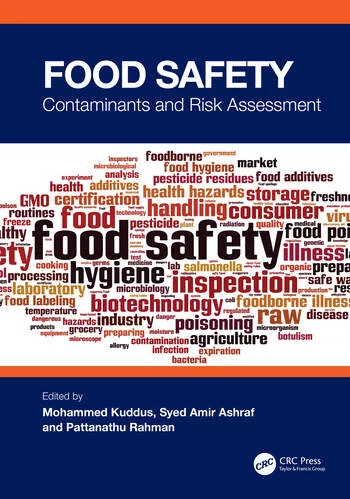
    Food Safety Contaminants and Risk Assessment

  • 1119160553.jpg

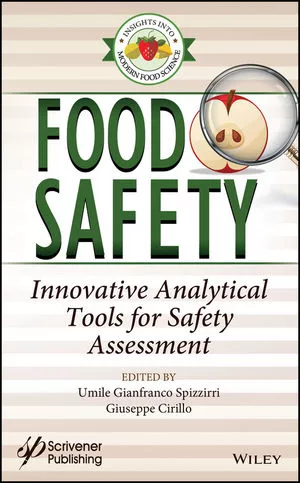
    Food Safety: Innovative Analytical Tools for Safety Assessment

  • 1119071127.jpg

    Food Safety, Risk Intelligence and Benchmarking

See More Products

Events

View AllSubmit An Event
  • May 6, 2026

    Allergen Uncertainty: Risk Assessment, Reference Doses, and Codex Management Guidance

    On Demand: Attendees will gain insight into the importance of preparing for the industry's shift from detection-based methods to risk-based allergen management.
  • March 31, 2026

    Regulatory Risk, Ingredient Safety, and GRAS: What Companies Need to Act on Now

    On Demand: From this webinar, attendees will recognize patterns in food policy affecting dietary guidelines, UPFs, state legislative actions, and expected GRAS reform.
View AllSubmit An Event

Related Directories

  • Weber Scientific

    Weber Scientific is a leading manufacturer and distributor of laboratory supplies and equipment to the food and beverage processing industries. Since 1959 we have specialized in supplying the quality control needs of product testing, both raw and finished, and for overall processing and facility quality assurance. At Weber, we make the acquisition of testing supplies as easy and affordable as possible. Our team of dedicated sales professionals are ready to assist all your needs.
  • Shimadzu Scientific Instrument

    Shimadzu’s extensive portfolio of innovative, proven products offers the speed and sensitivity to address specific laboratory workflows and enable a more efficient, productive laboratory. Whether you are testing for pesticides, PFAS, toxic metals, additives, or something else, Shimadzu can equip your laboratory with solutions that meet or exceed regulatory requirements.
  • Isolocity

    Isolocity offers cloud-based quality management software to streamline compliance for food safety and manufacturing. Key features include automated modules for audit management, document control, risk assessment, corrective actions, supplier management, training tracking, and product traceability, ensuring seamless adherence to global regulatory standards.
×

Never miss the latest news and trends driving the food safety industry

Newsletters | Website | FSM Features Collection

JOIN TODAY!
  • RESOURCES
    • Advertise
    • Contact Us
    • Directories
    • Store
    • Want More
  • SIGN UP TODAY
    • Create Account
    • eMagazine
    • Newsletters
    • Customer Service
    • Manage Preferences
  • SERVICES
    • Marketing Services
    • Reprints
    • Market Research
    • List Rental
    • Survey/Respondent Access
  • STAY CONNECTED
    • LinkedIn
    • Facebook
    • Instagram
    • X (Twitter)
  • PRIVACY
    • PRIVACY POLICY
    • TERMS & CONDITIONS
    • DO NOT SELL MY PERSONAL INFORMATION
    • PRIVACY REQUEST
    • ACCESSIBILITY

Copyright ©2026. All Rights Reserved BNP Media, Inc. and BNP Media II, LLC.

Design, CMS, Hosting & Web Development :: ePublishing