In Senate Hearing, FDA Commissioner Nominee Says Lack of Resources Will Challenge GRAS Reform
Need to Know
- In a Senate hearing, nominee for FDA Commissioner, Dr. Heidi Overton, said the Human Foods Program would require additional resources to handle mandatory GRAS notifications under FDA’s proposed rule
- Senators raised concerns about workforce reductions affecting food inspections and foodborne illness outbreak response
- Dr. Overton pointed to foreign facility user fees as a potential solution to fund food safety activities and said FDA is currently hiring
- Amid concerns about declining federal funding for state food inspection partners, Dr. Overton said she would work with Congress to support state and local food facility inspections
- Dr. Overton suggested it may be appropriate to consider “a strong national standard” to preempt the growing number of state additive bans and food safety laws
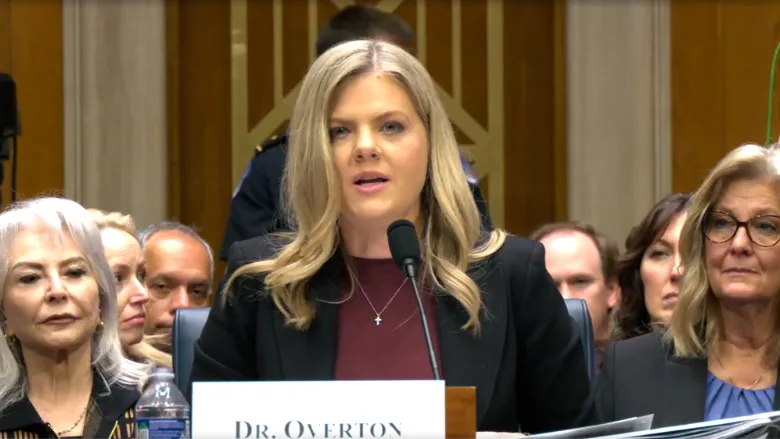
In a September 24 Senate Committee on Health, Education, Labor, and Pensions (HELP Committee) hearing of Heidi Overton, M.D., Ph.D., President Trump’s nominee for the next Commissioner of the U.S. Food and Drug Administration (FDA), Dr. Overton voiced concerns that the Human Foods Program (HFP) would require additional resources and staffing to achieve the ingredient safety review goals of Health Secretary Robert F. Kennedy Jr., among other food safety objectives.
As a board-certified public health and general medicine practitioner, Dr. Overton does not have a background in food policy or food safety. She has held roles in both Trump Administrations.
FDA’s Ability to Strengthen Food Additive Oversight Questioned
In August 2026, fulfilling a directive from Secretary Kennedy, FDA proposed a rule that would make significant changes to the “Generally Recognized as Safe” (GRAS) pathway, which has long been criticized as a “loophole” that allows new, potentially unsafe ingredients to enter the food supply without formal FDA review. At present, food manufacturers must compile certain evidence of a substance’s safety for its intended use before determining it to be GRAS and including it in their products, but notification to FDA of self-GRAS determination is voluntary. The proposed rule would make GRAS notifications mandatory (although companies could still market the self-determined GRAS substance without any further FDA review or formal approval). The purpose of mandatory notification would be to give FDA information needed for post-market oversight and to determine whether a purported GRAS use is actually a food additive use requiring premarket authorization.
During the confirmation hearing, referring to the proposed changes to the GRAS rule, Sen. Jim Banks (R-IN) asked Dr. Overton, “Does FDA have enough resources to do all the ingredient safety evaluations?” to which Dr. Overton replied, “To my understanding, the agency would need more resources in its Human Foods Program to properly be able to [process or review] all of those mandatory notifications.” She did not elaborate on potential solutions other than saying “I know there are proposals in Congress [to improve resources for HFP].”
Lack of Resources Hampering Additives Oversight is Not a New Problem
Dr. Overton is not the first FDA Commissioner nominee nor is this the first Administration to be held to the fire regarding food ingredient safety and oversight, and Dr. Overton’s concerns about an under-resourced FDA echo those of former Commissioner Jim Jones. FDA was facing pressure to strengthen ingredient oversight by consumer groups and the need to keep up with state laws even prior to the rise of Secretary Kennedy’s “Make America Healthy Again” (MAHA) movement.
Months before the Trump Administration took office and implemented sweeping reductions in force (RIFs), Mr. Jones had shared that FDA’s post-market chemical review efforts were “very under-resourced compared to what people hope [FDA] is able to do.” Mr. Jones ultimately resigned from FDA shortly after President Trump’s inauguration due to “indiscriminate” layoffs handed out at HFP that would render any efforts to address chemicals and additives in foods “fruitless.”
Addressing an Administration of RIFs and a Summer of Outbreaks
Senators also questioned Dr. Overton about how she planned to ensure food safety despite the Trump Administration RIFs affecting foodborne illness outbreak investigators and food facility inspectors, as well as cuts to funding for state inspection activities.
Looking for quick answers on food safety topics?
Try Ask FSM, our new smart AI search tool.
Ask FSM →
Sen. Patty Murray (D-WA) asserted that FDA’s HFP has “approximately 1,700 employees, which is 13 percent fewer than they had at the start of 2025.” Sen. Murray also urged Dr. Overton to be aware of and fully staff FDA’s Coordinated Outbreak Risk and Evaluation Network (CORE Network), which is responsible for foodborne illness outbreak response, given the high-profile outbreaks experienced this summer, such as the U.S.’s largest-ever cyclosporiasis outbreak. Dr. Overton was not able to identify the CORE Network as the team responsible for foodborne illness outbreak response when questioned.
Dr. Overton told Sen. Murray that she is committed to the food safety pillar of FDA, and pointed to an ask in the Congressional budget justification for more foreign facility user fees to fund inspections and address food safety issues.
She also said, “FDA, as publicly reported, is hiring to have the best people in the best positions to be able to deliver on its core missions. Food safety is one of those.”
Later in the hearing, Sen. Tim Kaine (D-VA) added to the record that, if confirmed, Dr. Overton would walk into an FDA that has lost 4,500 staffers, about 20 percent of its workforce, since the beginning of the Administration, and that the number of food inspectors currently employed by the federal government is at its lowest since 2005. He suggested these trends had something to do with the 16-fold increase in foodborne illness outbreaks reported in 2026 compared to 2025.
Diminished Federal and State Inspection Capacities
Sen. Murkowski (R-AK) raised concerns about the evaporating federal funds FDA has historically been able to give to states to conduct food processing facility inspections. At present, according to Sen. Murkowski, states carry out approximately 60 percent of food facility inspections nationwide (and the Administration is considering increasing states’ role in such inspections).
Dr. Overton said she would work with Congress to maintain funding for state–federal inspection contracts, again pointing to increasing foreign facility user fees as a potential solution for budget gaps.
On State Additive Laws and Potential Federal Preemption
Throughout 2026, federal preemption of the growing number of state laws to prohibit, restrict, or regulate food additives and ingredients has been proposed by legislators and heavily debated by Congress and stakeholders. When asked about her perspective on this issue by Sen. Banks, Dr. Overton suggested there may be a need to consider a “strong national standard” to ensure uniformity.