USDA-FSIS to Roll Out Listeria Environmental Sampling Program Nationwide at RTE Facilities
The U.S. Department of Agriculture’s Food Safety and Inspection Service (USDA-FSIS) has announced plans to expand environmental Listeria sampling at ready-to-eat (RTE) establishments nationwide, following a pilot program conducted in three FSIS districts.
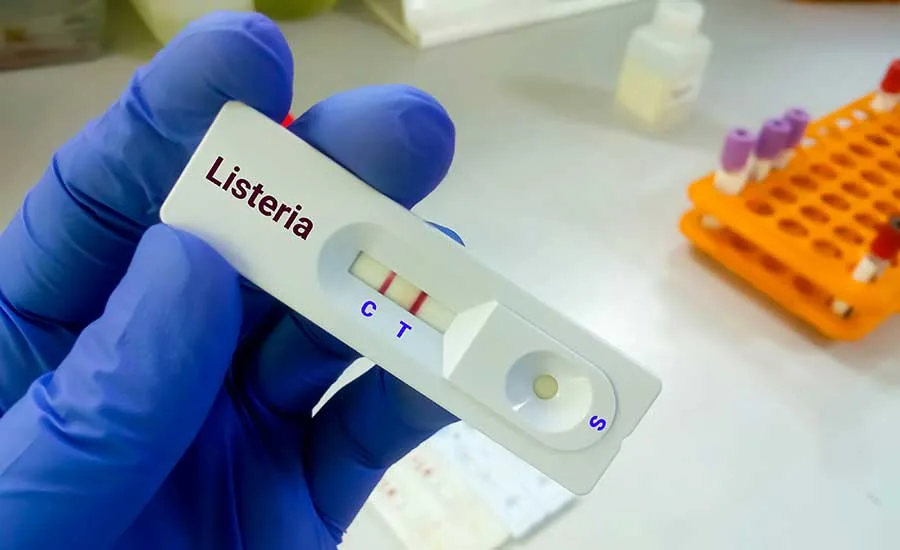
Under the piloted sampling approach, FSIS inspectors will collect two food-contact surface and two non-food-contact surface swabs alongside existing RTE post-lethality exposed product samples. The environmental swabs will be analyzed for Listeria monocytogenes (L. monocytogenes) and non-L. monocytogenes Listeria species.
The national implementation builds on a fiscal year 2026 pilot conducted in FSIS districts in Alameda, California; Chicago, Illinois; and Raleigh, North Carolina. FSIS said it developed the program after analyzing a year of data collected through several Listeria oversight initiatives implemented in response to listeriosis outbreaks linked to FSIS-regulated products in 2024.
The new sampling tasks will be incorporated into routine RTE product sampling, referred to as RTEPROD in the Public Health Information System (PHIS). According to FSIS, integrating environmental swabs into existing sampling will provide more information about conditions on and around processing lines without requiring additional product holds.
The agency said more frequent sampling of food contact and non-food contact surfaces is intended to help inspectors evaluate sanitation effectiveness, identify potential Listeria harborage sites, and detect risks earlier. The sampling is not intended to replace establishments’ own testing programs.
Expansion Follows Post-Boar’s Head Listeria Oversight Changes
The national rollout is the latest in a series of changes to FSIS’ oversight of Listeria in RTE facilities following the fatal 2024 listeriosis outbreak linked to Boar’s Head deli meats.
FSIS undertook an internal review of its Listeria Rule and inspection procedures after the outbreak, exposed a history of serious sanitation and hygiene noncompliances at Boar’s Head’s Jarratt, Virginia facility that went unresolved despite inspectors repeatedly noting violations.
Looking for quick answers on food safety topics?
Try Ask FSM, our new smart AI search tool.
Ask FSM →
In December 2024, FSIS announced several immediate changes, including broader Listeria species testing, additional inspector training, food safety assessments at RTE facilities, and regular verification of L. monocytogenes risk factors. Following its internal review, FSIS also said it was considering enhancements to its RTE sampling programs to better identify potential Listeria contamination and harborage, including exploration of a sampling program in which inspectors would collect swabs from food contact and non-food contact surfaces in RTE processing environments.
FSIS has since expanded its laboratory method to test for non-L. monocytogenes Listeria species in sampling projects that test RTE product, food contact surfaces, or environmental samples for L. monocytogenes.
National Sampling to Begin in January 2027
The newly announced national environmental sampling program implements the routine surface sampling approach FSIS had previously been exploring.
FSIS plans to phase in the expanded sampling across all nine of its districts beginning in January 2027. Inspection personnel responsible for collecting samples, as well as supervisors, will receive training on the new sampling approach.
The tentative implementation schedule is:
- January 2027: Alameda, California and Atlanta, Georgia Districts
- February 2027: Raleigh, North Carolina; Springdale, Arkansas; and Denver, Colorado Districts
- March 2027: Chicago, Illinois; Philadelphia, Pennsylvania; Des Moines, Iowa; and Dallas, Texas Districts
Each phase will include one district that participated in the fiscal year 2026 pilot program.
FSIS said the national program will use the same swabbing procedures, laboratory methods, reporting processes, and follow-up actions already employed under its Routine L. monocytogenes (RLm) and Intensified Verification Testing (IVT) programs.
The agency also plans to hold listening sessions with industry stakeholders and USDA-regulated establishments before and during implementation.