Food Safety
search
Ask Food Safety AI
cart
facebook twitter linkedin
  • Sign In
  • Create Account
  • Sign Out
  • My Account
Food Safety
  • NEWS
    • Latest News
    • White Papers
  • PRODUCTS
  • TOPICS
    • Contamination Control
    • Food Types
    • Management
    • Process Control
    • Regulatory
    • Sanitation
    • Supply Chain
    • Testing and Analysis
  • PODCAST
  • EXCLUSIVES
    • Food Safety Five Newsreel
    • eBooks
    • FSM Distinguished Service Award
    • Interactive Product Spotlights
    • Videos
  • BUYER'S GUIDE
  • MORE
    • NEWSLETTERS >
      • Archive Issues
      • Subscribe to eNews
    • Store
    • Sponsor Insights
    • ASK FSM AI
  • WEBINARS
  • FOOD SAFETY SUMMIT
  • EMAG
    • eMagazine
    • Archive Issues
    • Editorial Advisory Board
    • Contact
    • Advertise
  • SIGN UP!
NewsContamination ControlManagementInternationalRisk AssessmentChemical

FAO: Harmonization Needed in Food Safety Risk Assessments for Environmental Inhibitors

By Food Safety Magazine Editorial Team
hands open cupping soil
Image credit: Freepik
January 20, 2026

The Food and Agriculture Organization of the United Nations (FAO) recently published a report and accompanying technical paper on the food safety risks related to environmental inhibitors used in agri-food systems.

Environmental inhibitors are compounds used in agriculture to reduce non-carbon monoxide greenhouse gas emissions (i.e., methanogenesis inhibitors to reduce methane emissions from ruminants) or minimize nitrogen losses in soil. Although environmental inhibitors contribute to sustainability, their use requires measures to avoid potential food safety risks.

While several environmental inhibitors have received approval in various countries, regulatory frameworks governing their classification and usage differ significantly, resulting in varying data requirements for pre-market evaluation. In some markets, the sale and application of these inhibitors may occur without comprehensive regulatory oversight. Environmental inhibitors categorized as pesticides or veterinary drugs typically undergo rigorous pre-market safety assessments, which include establishing maximum residue limits (MRLs). Conversely, those classified as feed additives, fertilizer adjuvants or soil amendments may not be adequately evaluated for potential residue transfer to food products.

From a food safety perspective, regardless of what category of agricultural chemical an environmental inhibitor may be assigned to, any human health risk assessment must consider the potential residues of the compound or its metabolites in food crops and animal-derived foods. Even when environmental inhibitors are not applied directly to animals, their inadvertent uptake should be factored into the food safety assessment unless evidence indicates that the compound is not bioavailable or that any potential residues are toxicologically insignificant.

Suggested Framework for Food Safety Evaluation of Environmental Inhibitors

FAO suggests possible steps to evaluate the safety of environmental inhibitors:

  1. Determine if the substance has undergone a pre-market approval process for its specific use within a given jurisdiction, ideally preceded by a food safety risk assessment
  2. If the inhibitor has not been previously approved, potential food residues in crops and animal-derived food products should be assessed. This includes evaluating the likelihood of food residues in crops or animal-derived foodstuffs when used according to proposed label conditions.
  3. If the use of an environmental inhibitor is likely to result in food residues, the evaluation process could involve human exposure assessment(s) according to the Codex Alimentarius guidelines, possibly followed by a full risk assessment specific to human health if the residues in question meet the exclusion criteria of the guidelines.
  4. The food safety risk assessment of an environmental inhibitor could include standard aspects such as those related to the nature of chemical hazard and concentrations of residues considered safe for human health, and could lead to risk management recommendations, including, for example, the development of MRLs.

Overall, the lack of an internationally standardized classification for environmental inhibitors results in different data requirements and evaluation processes across various countries and regions, highlighting the need for a harmonized approach.


Looking for quick answers on food safety topics?
Try Ask FSM, our new smart AI search tool.
Ask FSM →


KEYWORDS: agricultural agrifood FAO report sustainability

Share This Story

Fsm purple logo 200x200

The Food Safety Magazine editorial team comprises Bailee Henderson, Digital Editor ✉; Adrienne Blume, M.A., Editorial Director; and Stacy Atchison, Publisher.

Recommended Content

JOIN TODAY
to unlock your recommendations.

Already have an account? Sign In

  • people holding baby chicks

    Serovar Differences Matter: Utility of Deep Serotyping in Broiler Production and Processing

    This article discusses the significance of Salmonella in...
    Meat/Poultry
    By: Nikki Shariat Ph.D.
  • woman washing hands

    Building a Culture of Hygiene in the Food Processing Plant

    Everyone entering a food processing facility needs to...
    Sanitation
    By: Richard F. Stier, M.S.
  • graphical representation of earth over dirt

    Climate Change and Emerging Risks to Food Safety: Building Climate Resilience

    This article examines the multifaceted threats to food...
    Best Practices
    By: Maria Cristina Tirado Ph.D., D.V.M. and Shamini Albert Raj M.A.
Manage My Account
  • eMagazine Subscription
  • Subscribe to Newsletters
  • Manage My Preferences
  • Website Registration
  • Subscription Customer Service

More Videos

Sponsored Content

Sponsored Content is a special paid section where industry companies provide high quality, objective, non-commercial content around topics of interest to the Food Safety Magazine audience. All Sponsored Content is supplied by the advertising company and any opinions expressed in this article are those of the author and not necessarily reflect the views of Food Safety Magazine or its parent company, BNP Media. Interested in participating in our Sponsored Content section? Contact your local rep!

close
  • Salmonella bacteria
    Sponsored byThermoFisher

    Food Microbiology Testing Methods: Salmonella species

  • a diagram explaining indicator organisms
    Sponsored byHygiena

    How Proactive Listeria Testing Helps Prevent Six- and Seven-Figure Recalls

  • woman grocery shopping
    Sponsored byCorbion

    Designing Safety Into Every Bite: Proactive Risk Mitigation for Refrigerated Foods

Popular Stories

brand new newborn drinking bottle

Florida Launches Food Contaminant Testing Program with Report on Metals in Infant Formula

illustration of colony of microorganisms under microscope

Food Safety Implications of Emerging Alternative Interventions for Salmonella Biofilms

cute baby in high chair feeding himself a bottle

‘Operation Stork Speed’ Expert Panel Highlights Infant Formula Safety Vulnerabilities

Events

January 27, 2026

Strategies for Reinforcing Food Safety Culture Among Temporary and Seasonal Staff

Live: January 27, 2026 at 2:00 pm EST: From this webinar, attendees will learn common areas where companies encounter challenges in their food defense strategies and how to address them.

May 11, 2026

The Food Safety Summit

Stay informed on the latest food safety trends, innovations, emerging challenges, and expert analysis. Leave the Summit with actionable insights ready to drive measurable improvements in your organization. Do not miss this opportunity to learn from experts about contamination control, food safety culture, regulations, sanitation, supply chain traceability, and so much more.

View All

Products

Global Food Safety Microbial Interventions and Molecular Advancements

Global Food Safety Microbial Interventions and Molecular Advancements

See More Products

Related Articles

  • a field of crops with windmills in the horizon

    FAO Examines Food Safety Implications of Environmental Inhibitors Used in Agrifood Production

    See More
  • farm landscape with cows in foreground and tractor and crops in background

    FAO to Hold Webinar on Food Safety Implications of Using Environmental Inhibitors in Agrifood Systems

    See More
  • four cattle behind barricade looking at camera

    New Toolbox From FAO: Conducting Risk Assessments for Veterinary Drug Residues in Food

    See More

Related Products

See More Products
  • food safety.jpg

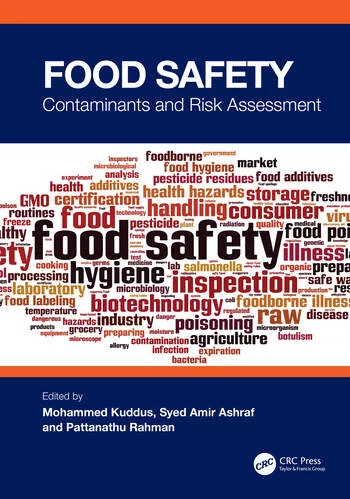
    Food Safety Contaminants and Risk Assessment

  • 1119071127.jpg

    Food Safety, Risk Intelligence and Benchmarking

  • 1119053595.jpg

    Food Safety for the 21st Century: Managing HACCP and Food Safety throughout the Global Supply Chain, 2E

See More Products

Related Directories

  • CDG Environmental

    CDG Solution 3000TM is a ready-to-use liquid chlorine dioxide product designed to control microorganisms over a wide spectrum of applications. Compared to traditional anti-microbials, CDG Solution 3000TM offers ease of application, safety in handling, and superior effectiveness. CDG Solution 3000 is a patented, EPA approved hard-surface disinfectant.
  • Food Safety and Quality Consultants LLC

    Food Safety and Quality Consultants, LLC (FSQC) is a professional full-service food safety and quality consulting firm offering a complete line of training, consulting, and auditing services to meet your needs. We will help you turn the complicated into compliance by making your food safety systems simple and effective!
×

Never miss the latest news and trends driving the food safety industry

Newsletters | Website | eMagazine

JOIN TODAY!
  • RESOURCES
    • Advertise
    • Contact Us
    • Directories
    • Store
    • Want More
  • SIGN UP TODAY
    • Create Account
    • eMagazine
    • Newsletters
    • Customer Service
    • Manage Preferences
  • SERVICES
    • Marketing Services
    • Reprints
    • Market Research
    • List Rental
    • Survey/Respondent Access
  • STAY CONNECTED
    • LinkedIn
    • Facebook
    • Instagram
    • X (Twitter)
  • PRIVACY
    • PRIVACY POLICY
    • TERMS & CONDITIONS
    • DO NOT SELL MY PERSONAL INFORMATION
    • PRIVACY REQUEST
    • ACCESSIBILITY

Copyright ©2026. All Rights Reserved BNP Media.

Design, CMS, Hosting & Web Development :: ePublishing