The Baby Food Protection Act aims to set enforceable limits for total arsenic, lead, cadmium, and mercury, as well as a state testing program and labeling requirements for manufacturers.
AB 1603 requires the California Department of Pesticide Regulation to indicate when pesticides contain PFAS ingredients in its online database and include use trends in annual reports.
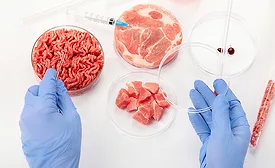
The 11th Circuit's Upside Foods decision has narrowed the path for federal preemption challenges to state cultivated meat bans, with significant implications for state regulation, interstate commerce, and food industry compliance.
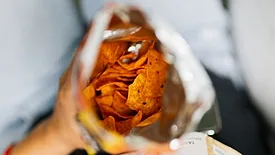
Modeled after the “USDA Organic” label, AB 2244 would create a voluntary certification program through which qualifying manufacturers could display a “Non-Ultraprocessed Certified” seal on food packaging. Manufacturers could apply to accredited certification agents for authorization to use the seal.
The broad preemption provision in the proposed FDA FRESH Act could dismantle state and local food safety laws without establishing equivalent federal requirements, potentially affecting labeling, contaminant regulations, foodservice/retail, manufacturing, permitting, inspections, and other areas.
The legislation comes ahead of an impending end-of-year deadline set in the FY 2026 appropriations bill that is expected to remove most currently marketed intoxicating, hemp-derived THC beverages from the legal market by the end of 2026 through the closure of a loophole created by the 2018 Farm Bill.
The Childhood Diabetes Reduction Act of 2025 would require health warning labels for certain foods and beverages, prohibit marketing of specified products to children, and expand federal nutrition research and education related to ultra-processed foods.
The Keep Food Containers Safe from PFAS Act (H.R. 9593) would amend the Federal Food, Drug, and Cosmetic Act to prohibit food packaging containing intentionally added per- and polyfluoroalkyl (PFAS) substances, a.k.a. “forever chemicals.”
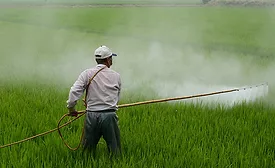
The Paraquat Prevention Act would cancel all EPA-registered uses of the herbicide and permanently prohibit its reregistration. More than 70 countries, including the EU and China, have banned the domestic use of paraquat, although China still manufactures and exports the chemical to the U.S.
As it stands, the bill would mandate that USDA provide guidance on HACCP plans to small and very small meat processors, require USDA and FDA to define “honey” and establish honey authenticity testing standards, and initiate other directives.