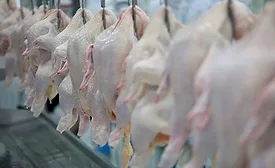
At the highest tested dose, every isolate, even those exhibiting antimicrobial resistance (AMR), underwent at least a 2-log reduction in viable cells. Modeling suggested that such a reduction could decrease public health risk of infection by up to 90 percent.
Published by the UK Food Standards Agency and Food Standards Scotland, this is the third package of guidance for businesses developing cell-cultivated food products, produced by the ongoing Cell-Cultivated Products Sandbox Program.
At the same time, poor hygiene ratings among inspected businesses remain low. The UK Food Standards Agency (FSA) has acknowledged a years-long inspection backlog and inspector workforce shortages, and is currently developing a modernized approach to food business regulation.
Food Standards Scotland (FSS) has outlined its plans to reduce foodborne illness over the next three years, prioritizing Campylobacter, Listeria monocytogenes, and Shiga toxin-producing Escherichia coli, as well as its related research objectives.
The “Future of Food Regulation” program now moves into a detailed design phase. Areas targeted for reform include food business registration, inspections and regulation of large food businesses, enforcement powers and guidance, and Food Hygiene Rating Scheme requirements.
The FSRN Pilots Award is a rapid call for relevant short-term projects with funding needs from £2,000 to £10,000. Cross-sector and cross-disciplinary projects are encouraged.
In an effort to address the “silent pandemic” of antimicrobial resistance (AMR), a recently concluded UK Animal and Plant Health Agency (APHA)–FAO project has helped partners across Africa and Asia to improve their AMR detection, analysis, and mitigation capabilities.
Three Salmonella Enteritidis outbreak clusters potentially associated with imported eggs, one of which is part of a broader EU-wide outbreak, are under investigation. There is no evidence implicating UK-produced eggs. UKHSA emphasized that the overall risk to the public is low.
In an analysis of a Listeria monocytogenes outbreak in which one person died, UKHSA highlighted investigation details, risk assessment and control measures, and the potential risks associated with home-delivered cook-chill meals.
A vehicle of illness has not yet been definitively confirmed, but according to UKHSA, epidemiological evidence points to egg consumption as the strongest food signal identified to date.