This episode of Food Safety Five discusses research on Listeria biofilms, including sanitizer efficacy and evolutionary insights, and on a persisting Escherichia coli strain in leafy greens. It also covers regulatory developments in the UK, Canada, and the UAE, as well as a potential U.S. ultra-processed foods (UPFs) definition.
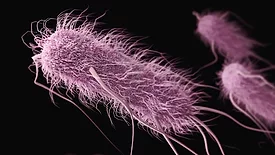
A UK-based study, led by Quadram Institute researchers, underscores the limitations of traditional enumeration methods for foodborne pathogen surveillance and highlights the need for whole genome sequencing (WGS) to better assess the food safety risk posed by commensal or opportunistic Escherichia coli lineages.
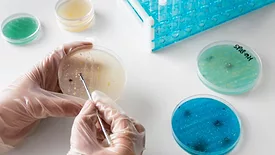
The FAO UK Reference Center for AMR has partnered with the Philippines to strengthen national laboratory capacity and harmonize antimicrobial susceptibility testing methods, involving representatives across the food and agriculture sectors.
The new Food Law Codes of Practice include several changes that allow local authorities to make better use of their resources through a modernized, risk-based, flexible approach.
This episode of Food Safety Five discusses a UK proposed ban on Bisphenol A (BPA) in food contact materials, as well as two studies with global relevance: a successful clinical trial for a novel Salmonella vaccine and research demonstrating how nanoplastics enter the edible parts of crops.
The UK Food Standards Agency (FSA) commissioned a review to assess the current state of allergen testing methodologies, with the goal of identifying gaps, harmonizing testing protocols, and supporting risk management strategies.
A recent survey of UK consumers by the UK Food Standards Agency (FSA) reveals high levels of public confidence in food safety and regulatory oversight, standing in stark contrast to the lack of faith being reported in surveys of U.S. consumers.
The UK Food Standards Agency (FSA) has proposed a ban on Bisphenol A, structurally similar analogues, and its derivatives in food contact materials (FCMs), aligning with recently passed EU regulations.
The UK Food Standards Agency (FSA) has reported on the outcomes of the recently concluded, £24 million Pathogen Surveillance in Agriculture, Food, and the Environment (PATH-SAFE) program, and announced that it will continue to build on the work of PATH-SAFE with a national Food Surveillance Program.
The proposal would make changes to six existing Statutory Rules to ensure that food and feed safety and standards requirements continue to be fully enforceable in Northern Ireland, and to correct some minor errors.