Researchers from the Helmholtz Center for Environmental Research and the Food Packaging Forum have proposed a panel of 15 high-throughput in vitro bioassays to screen chemicals for biological activity associated with cancer, brain-related harms, cardiovascular disease, and other disorders.
GeNi is intended to serve as a centralized hub for interlaboratory data, enabling participants to benchmark testing performance, identify best practices, improve data comparability, and support greater consistency in testing methods across industry.
The resource outlines the German Federal Institute for Risk Assessment’s (BfR’s) approach to risk assessment of NIAS in FCMs. It is primarily intended to support dossiers for new substances in Germany.
According to the researchers, 1,222 FCCs are already known to be hazardous to human health, and more than 13,000 lack sufficient data to determine safety. Until adequate data become available, they proposed grouping FCCs based on chemical structure to help identify substances that may pose similar hazards.
This episode of Food Safety Five discusses new research on avocado oil authenticity in processed foods, the effects of nanoplastics on bacterial biofilms in drinking water systems, factors influencing Listeria monocytogenes persistence on plastic food contact surfaces, and stress-adaptation traits that may help E. coli persist from farm to fork.
The findings suggest that pathogen persistence on plastic food contact surfaces is governed by the combined effects of material composition, engineered surface topography, and microbial ecology rather than any single factor.
Chemical migration and microplastics shedding from recycled plastic food contact materials pose potential food safety concerns. Biopolymer risks are also not yet fully understood. The Codex Alimentarius Commission is considering developing guidance on recycled materials used in food packaging.
A recent study evaluated the migration of non-intentionally added substances from biodegradable food contact materials (FCMs) under different conditions. The researchers underlined the importance of optimizing polymer blends and processing, and considering chemical analysis in FCM risk assessment.
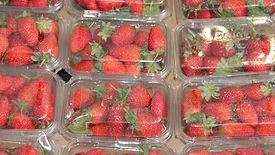
The Packaging and Packaging Waste Regulation (PPWR) limits PFAS in food packaging, bans single-use plastics for fruit and vegetables under a certain weight, and sets forth other changes, with compliance deadlines beginning as early as August 2026.
Following the EU ban on BPA in food contact materials (FCMs), which specified FCM manufacturing applications where other “hazardous” bisphenols may be used, EFSA issued a draft statement on related safety data requirements.