Higher Temperatures, Fat Content May Increase Chemical Migration from Biodegradable Food Packaging
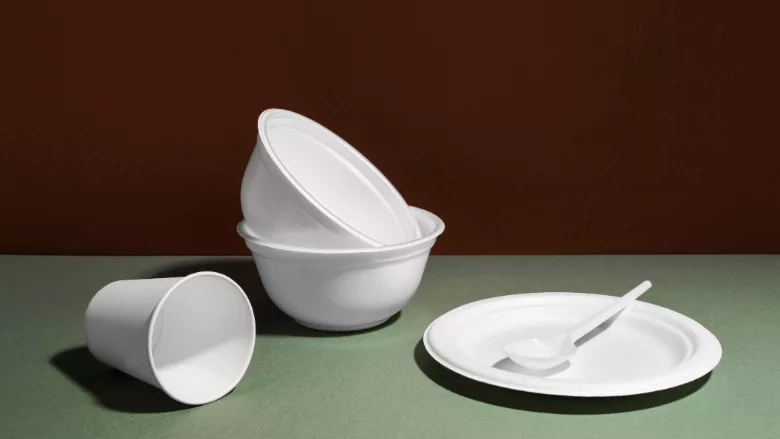
A recent study evaluated the migration of non-intentionally added substances from biodegradable food contact films made of polybutylene succinate (PBS), polylactic acid (PLA), and their blends.
The findings show that, although biopolymer blends may present a sustainable food packaging solution, the processing involved in their manufacture may facilitate the increased release of some compounds. Additionally, temperature and fat content may increase migration. The study’s authors underline the importance of comprehensive chemical analysis to inform the risk assessment of food contact materials (FCMs), especially for emerging biodegradable packaging.
Published in Food Packaging and Shelf Life, the study was conducted by researchers with Aarhus University’s Center for Innovative Food, Denmark; the University of Foggia, Italy; the University of Salerno, Italy; and the University of Valladolid’s InnograinLab, Spain.
Migration Influenced by Temperature, Simulant Type
Researchers conducted migration testing in accordance with EU Commission Regulation 10/2011, using 10 percent ethanol and 50 percent ethanol simulants, representing hydrophilic and lipophilic foods, respectively. Migration tests were conducted under various temperature conditions: 20 °C for ten days (representing freezing or refrigeration), 40 °C for ten days (representing long-term room temperature storage), and 70 °C for two hours or 100 °C for 15 minutes (representing heating).
Overall migration from the PBS- and PLA-based packaging materials into all tested food simulants remained below detection limits at 20 °C and 40 °C for ten days, but at 70 °C for two hours, measurable migration was observed. Still, all samples complied with the EU regulatory limit of 10 milligrams per square decimeter (mg/dm²).
Migration behavior differed by polymer type. PBS exhibited higher migration in lipophilic conditions, likely due to its chemical structure, while PLA showed greater migration in hydrophilic environments at high temperatures, consistent with its higher polarity. Conversely, PLA migration decreased in lipophilic conditions at higher temperatures. When PLA was incorporated into PBS, migration under hydrophilic conditions slightly increased while resulting in a slight decrease in the lipophilic simulant.
Blends Show Higher VOC Emissions
Using solid-phase microextraction coupled with gas chromatography-quadrupole time-of-flight mass spectrometry (SPME/GC-QTOF-MS), the researchers identified 17 volatile organic compounds (VOCs) emitted from the films, including aldehydes, ketones, esters, hydrocarbons, and alcohols. Some compounds were specific to either PBS or PLA, while others were present across all materials.
Looking for quick answers on food safety topics?
Try Ask FSM, our new smart AI search tool.
Ask FSM →
Notably, PBS/PLA blends released higher concentrations of certain VOCs compared to the pure polymers. The study attributed increased VOC emissions in blends to their processing, such as melt-compounding, which can accelerate polymer degradation.
Additionally, certain blend ratios (especially 70:30) released higher levels of VOCs, possibly caused by a heterogeneous microstructure that facilitates polymer degradation. This finding reinforces the importance of understanding and controlling blended biopolymer structures through compatibilization strategies and the careful selection of blend components and ratios.
Although most identified VOCs were classified as low toxicity, a small number were categorized as high-toxicity, specifically: propionic acid anhydride in the 70:30 PBS/PLA blend, 1-tridecyne in PLA, and 2-ethylhexyl chloroformate in PBS and PBS blends.
Oligomer Migration and Degradation Patterns
The study also detected two unidentified and 16 identified semi- and non-volatile compounds, including oligomers, using ultra-high-performance liquid chromatography coupled with quadrupole time-of-flight mass spectrometry (UHPLC-QTOF-MS). Of the compounds identified, 12 were classified as high-toxicity and two as low-toxicity based on their chemical structures.
Migration of these compounds was strongly influenced by temperature and, to a lesser extent, by simulant type. Higher temperatures significantly increased oligomer migration, with some compounds only detected under these conditions.
Interestingly, however, in some cases, compounds that migrated more in the lipophilic simulant at lower temperatures changed their behavior at 70 °C, where the highest release was found in the hydrophilic simulant. This is potentially due to the aqueous nature of the hydrophilic simulant providing a more favorable environment for ester bond cleavage via hydrolysis, compared to the less polar and less water-rich lipophilic simulant.
Implications for Food Packaging Safety
Overall, the findings highlight the importance of comprehensive evaluation of FCMs, especially emerging biodegradable FCMs. The researchers suggested that these materials may be more suitable for applications involving fresh produce rather than foods stored at higher temperatures or with high fat content.
Despite complying with EU regulatory FCM migration limits, the authors emphasized that regulatory thresholds alone may not fully capture potential risks associated with non-intentionally added substances. Biodegradable polymer blends, while promising for sustainable packaging, may exhibit increased release of certain compounds due to processing and material interactions. The researchers stress that further optimization of biopolymer processing is essential to reduce the potential release of contaminants from polymers into food.
The researchers concluded that comprehensive analytical approaches are necessary to support accurate risk assessment of food contact materials, particularly as the use of biodegradable polymers expands.