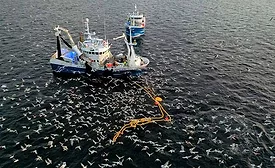
The free virtual event will take place on March 31 and will feature four European research and innovation initiatives to discuss how food security can be safeguarded by addressing fraud, crises, cyber threats, and chemical, biological and radiological (CBR) hazards across the food supply chain.
Expected to take effect by the end of 2027 after stakeholder consultations, the regulation, modeled after the EU’s Single-Use Plastics directive, would prohibit items like plastic cutlery, plates, and straws. Future phases would enforce further requirements for other articles.
Controls based on overly sensitive detection methods and focused on single outcomes may introduce unintended environmental and economic consequences. The researchers advocate for the holistic evaluation of food safety and sustainability risks within a “One Health” framework.
Unlike plastic, the mycelium- and cellulose-based material is biodegradable and free of chemicals of concern. It is likely safe for humans and the environment in the long term, as demonstrated by humanity’s history of consuming fungi.
In this episode of Food Safety Matters, we speak to food science and packaging expert Dr. Claire Sand about the regulatory, sustainability, and technical considerations for food companies regarding chemicals of concern in packaging, and what the future of food packaging might look like.
A new review by FAO researchers identifies how food loss and waste (FLW) can disseminate antibiotic resistance (AMR), as well as practices that can either mitigate or exacerbate AMR dissemination from FLW.
Environmental inhibitors are compounds used in agriculture to reduce greenhouse gas emissions from animals or minimize nitrogen losses in soil. A new FAO report highlights the need for a harmonized approach to risk assessment of these compounds and suggests a potential framework.
Tetra Pak has unveiled the first-ever use of its paper-based barrier technology for a juice packaging application by García Carrión. The Tetra Brik Aseptic Slim Leaf carton comprises 92 percent renewable materials and reduces carbon footprint by 43 percent.
Developed by an industry consortium led by Western Growers and the Canadian Produce Marketing Association, the Roadmap to Sustainable Fresh Produce Packaging offers pragmatic recommendations for transforming packaging practices, based in the holistic concept of “Functional Sustainability.”
The advancement not only supports the recycling of “forever chemical” polymers—which are used on cookware and food packaging, for example—but also boasts high recovery of fluorine, a finite resource.