Food Safety
search
Ask Food Safety AI
cart
facebook twitter linkedin instagram youtube
  • Sign In
  • Join Today
  • Sign Out
  • My Account
Food Safety
  • NEWS
    • Latest News
    • Food Safety Five Newsreel
  • PRODUCTS
  • TOPICS
    • Contamination Control
    • Food Types
    • Management
    • Process Control
    • Regulatory
    • Sanitation
    • Supply Chain
    • Testing and Analysis
  • PODCAST
  • EXCLUSIVES
    • eBooks
    • Sponsored Insights
    • Sponsored White Papers
    • FSM Distinguished Service Award
    • Interactive Product Spotlights
    • Videos
  • MORE
    • BUYER'S GUIDE
    • NEWSLETTERS >
      • Archive Issues
      • Subscribe to eNews
    • Store
    • ASK FSM AI
  • WEBINARS
  • FOOD SAFETY SUMMIT
  • FSM FEATURES
    • FSM Features Collection
    • eMag Archives
    • Editorial Advisory Board
    • Contact
    • Advertise
  • JOIN
NewsFood TypeRegulatorySupply ChainProduceFDAFSMAGrowers/GAPs

FDA Publishes FSMA Pre-Harvest Agricultural Water Final Rule
By Food Safety Magazine Editorial Team
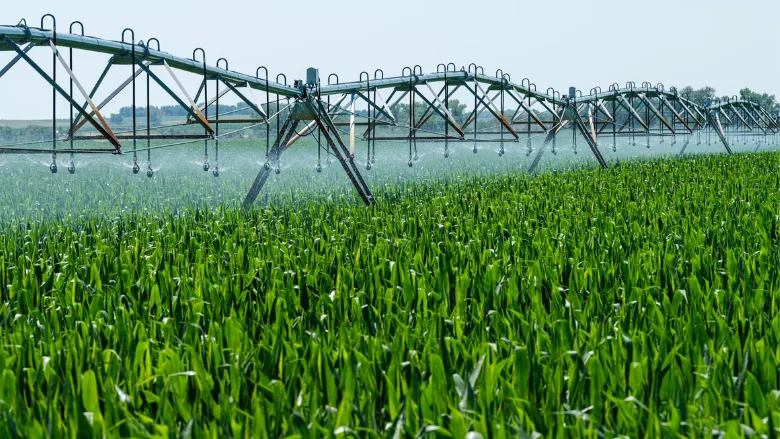
irrigation rig spraying water on cornfield
Image credit: Lumin Osity via Unsplash
May 2, 2024

The U.S. Food and Drug Administration (FDA) has published the long-anticipated Pre-Harvest Agricultural Water Final Rule, fulfilling Subpart E of the Food Safety Modernization Act (FSMA) Produce Safety Rule. The rule is intended to enhance the safety of water used for produce cultivation by setting requirements for systems-based, pre-harvest agricultural water assessments to inform hazard identification and risk management decision-making.

The dates for compliance (for non-sprout covered produce) with the final rule are: two years and nine months after the effective date of July 5, 2024 for very small farms, one year and nine months after the effective date for small farms, and nine months after the effective date for all other farms.

The Pre-Harvest Agricultural Water Final Rule assessments are used to identify conditions that are likely to introduce known or foreseeable hazards into or onto produce or food contact surfaces, and to determine whether, and how soon, corrective or mitigating measures must be implemented to minimize risks associated with pre-harvest agricultural water. Farms are required to conduct assessments of their pre-harvest agricultural water annually, and whenever a significant change occurs, to identify any conditions likely to introduce known or reasonably foreseeable hazards into or onto covered produce or food contact surfaces.

Requirements for harvest and post-harvest uses of agricultural water, as well as the agricultural water requirements for sprouts, have not changed. Sprouts are subject to specific pre-harvest agricultural water requirements, for which the compliance date has already passed.

Specifically, the final rule:

  • Establishes requirements for agricultural water assessments that evaluate a variety of factors that are key determinants of contamination risks associated with pre-harvest agricultural water, including an evaluation of the water system, water use practices, crop characteristics, environmental conditions, potential impacts on water from adjacent and nearby land, and other relevant factors
  • Includes testing pre-harvest agricultural water as part of an assessment in certain circumstances
  • Requires farms to implement effective mitigation measures within specific timeframes based on findings from assessments; hazards related to certain activities associated with adjacent and nearby land uses are subject to expedited mitigation
  • Adds new options for mitigation measures, providing farms with additional flexibility in responding to findings from their pre-harvest agricultural water assessments.

The new requirements reflect recent science, findings from investigations of several produce-related outbreaks, and feedback from a variety of stakeholders on the agricultural water requirements in the Produce Safety Rule, which were previously published in 2015. The new final rule will more comprehensively address known routes of microbial contamination that can lead to preventable foodborne illnesses.

Along with publication of the final rule, FDA also released a number of fact sheets, including one that provides an overview of agriculture water assessments and mitigation measures, and another that offers more details on factors for conducting these assessments. FDA also updated the Agriculture Water Assessment Builder. In the future, the agency is planning a webinar for all interested stakeholders, for which registration information will be provided in a forthcoming announcement.

To implement the Pre-Harvest Agricultural Water Final Rule and provide training, FDA intends to work closely with its partners including state regulators, the National Association of State Departments of Agriculture (NASDA), educators, and groups like the Produce Safety Alliance.

Looking for quick answers on food safety topics?
Try Ask FSM, our new smart AI search tool.
Ask FSM →

KEYWORDS: agricultural Pre-harvest Produce Safety Rule

Share This Story

Fsm purple logo 200x200

The Food Safety Magazine editorial team comprises Bailee Henderson, Director of Content Strategy and news editor ✉, and Adrienne Blume, M.A., Director of Editorial and Industry Engagement.

Recommended Content

JOIN TODAY
to unlock your recommendations.

Already have an account? Sign In

  • people holding baby chicks

    Serovar Differences Matter: Utility of Deep Serotyping in Broiler Production and Processing

    This article discusses the significance of Salmonella in...
    Microbiological Control
    By: Nikki Shariat Ph.D.
  • woman washing hands

    Building a Culture of Hygiene in the Food Processing Plant

    Everyone entering a food processing facility needs to...
    Training
    By: Richard F. Stier, M.S.
  • graphical representation of earth over dirt

    Climate Change and Emerging Risks to Food Safety: Building Climate Resilience

    This article examines the multifaceted threats to food...
    Contamination Control
    By: Maria Cristina Tirado Ph.D., D.V.M. and Shamini Albert Raj M.A.
Manage My Account
  • Join Food Safety Magazine
  • Manage My Preferences
  • Customer Service

More Videos

Sponsored Content

Sponsored Content is a special paid section where industry companies provide high quality, objective, non-commercial content around topics of interest to the Food Safety Magazine audience. All Sponsored Content is supplied by the advertising company and any opinions expressed in this article are those of the author and not necessarily reflect the views of Food Safety Magazine or its parent company, BNP Media. Interested in participating in our Sponsored Content section? Contact your local rep!

close
  • pre-packaged salads, noodles, and prepared meals stocked on multi-tier grocery store refrigerator shelves
    Sponsored byCorbion

    How Many Days of Shelf Life Are You Leaving on the Table?

  • Top view portrait of two factory workers standing by conveyor belt during quality inspection at food production, copy space
    Sponsored byFlexXray

    Foreign Material By the Numbers: What the 2026 Benchmark Report Reveals

  • a conveyorized industrial metal detector system that appears to resemble a Loma Systems IQ4 Metal Detector setup with an integrated conveyor belt and control panel for food or package inspection.
    Sponsored byMettler Toledo

    Beyond Detection: How to Avoid Physical Contamination in Food Through a Smarter Inspection Strategy

Popular Stories

supermarket freezers

Another Wave of Refrigerator Cyberattacks Sweeps European Grocery Stores, Causing More Food Losses

dino nuggets and ketchup

WHO Proposes Food Profiling Model to Inform Regulation of Ultra-Processed Foods

Cleaning floor drain during wet sanitation

Practical Guidelines for Choosing Between Dry and Wet Sanitation

allergens ebook

Events

November 12, 2026

From Data Overload to Actionable Food Safety Risk Intelligence

Live: November 12, 2026 at 11:00 am EST: This webinar explores how data integration, advanced analytics, and digital technologies can help transform disparate information into meaningful risk intelligence.

November 17, 2026

Are You Getting the Most from Your Food Safety Testing?

Live: November 17, 2026 at 11:00 am EST: Attend this webinar to explore practical ways food processors can modernize sanitation verification and microbiological testing while keeping workflows simple and effective.

December 2, 2026

Beyond Surface Clean: Tackling Biofilms and Persistent Pathogens

Live: December 2, 2026 at 11:00 am EST: Attend this webinar to understand why chlorine dioxide is not chlorine, and what “ultra-pure” means for residues, byproducts, and effectiveness.

View All

Products

Global Food Safety Microbial Interventions and Molecular Advancements

Global Food Safety Microbial Interventions and Molecular Advancements

See More Products

Related Articles

  • farm sprinkler with FDA logo overlay

    FDA to Hold Webinar on Agricultural Water Final Rule

    See More
  • sprinklers watering crops

    A Paradigm Shift in Water Safety: FDA Finalizes Pre-Harvest Agricultural Water Rule

    See More
  • dog eating food

    FDA Publishes Guidance on FSMA-Compliant Preventive Controls for Pet Food

    See More

Related Products

See More Products
  • 1119258073.jpg

    FSMA and Food Safety Systems: Understanding and Implementing the Rules

  • 1118474600.jpg

    Practical Food Safety: Contemporary Issues and Future Directions

  • Food-Forensics-3D.jpg

    Food Forensics Handbook Practice, Instrumentation, Case Studies

See More Products

Related Directories

  • Enviro Tech

    Enviro Tech (ET) – an Arxada company – is a leading manufacturer and supplier of innovative bromine technologies and peroxyacetic acid formulations, delivers wide-ranging solutions that optimize operational efficiencies for keeping food and water safe and environments clean. ET partners with distributors to provide a complete line of EPA and FDA approved products for a variety of industries including industrial water treatment, meat and poultry processing, food & beverage, agriculture, animal health, wastewater treatment and more. ET holds 41 EPA registrations, 15 FDA Food Contact Notifications, and 14 U.S. patents.
  • New Era Partners

    New Era Partners enables you to cut through the complexity of the FDA’s Food Traceability Rule and understand the operational impact so you can focus on compliance. Who better to help you navigate the rule than former FDA traceability expert Andy Kennedy and compliance expert Matt Regusci? We guide you in finding a path to compliance that best suits your operations.
  • MDB

    MDB is a specialized advisory firm focused on supply chain traceability, transparency, and sustainability for food, CPG, and pharmaceutical organizations. We support clients in navigating evolving regulatory requirements, including FSMA Rule 204, while building capabilities that enhance operational efficiency, risk management, and data-driven decision-making.
×

Never miss the latest news and trends shaping the food safety industry

Newsletters | Website | FSM Features Collection

JOIN TODAY!
  • RESOURCES
    • Advertise
    • Contact Us
    • Directories
    • Store
  • JOIN TODAY
    • Create Account
    • FSM Features Collection
    • Newsletters
    • Customer Service
    • Manage Preferences
  • SERVICES
    • Marketing Services
    • Reprints
    • Market Research
    • List Rental
    • Survey/Respondent Access
  • STAY CONNECTED
    • LinkedIn
    • Facebook
    • Instagram
    • X (Twitter)
    • YouTube
  • PRIVACY
    • PRIVACY POLICY
    • TERMS & CONDITIONS
    • DO NOT SELL MY PERSONAL INFORMATION
    • PRIVACY REQUEST
    • ACCESSIBILITY

Copyright ©2026. All Rights Reserved BNP Media, Inc. and BNP Media II, LLC.

Design, CMS, Hosting & Web Development :: ePublishing