Food Safety
search
Ask Food Safety AI
cart
facebook twitter linkedin instagram youtube
  • Sign In
  • Create Account
  • Sign Out
  • My Account
Food Safety
  • NEWS
    • Latest News
    • White Papers
  • PRODUCTS
  • TOPICS
    • Contamination Control
    • Food Types
    • Management
    • Process Control
    • Regulatory
    • Sanitation
    • Supply Chain
    • Testing and Analysis
  • PODCAST
  • EXCLUSIVES
    • Food Safety Five Newsreel
    • eBooks
    • FSM Distinguished Service Award
    • Interactive Product Spotlights
    • Videos
  • BUYER'S GUIDE
  • MORE
    • NEWSLETTERS >
      • Archive Issues
      • Subscribe to eNews
    • Store
    • Sponsor Insights
    • ASK FSM AI
  • WEBINARS
  • FOOD SAFETY SUMMIT
  • EMAG
    • eMagazine
    • Archive Issues
    • Editorial Advisory Board
    • Contact
    • Advertise
  • SIGN UP!
NewsContamination ControlManagementRecall/Crisis ManagementMicrobiological Control

Consumer Reports: Top 10 Riskiest Foods Based on Recalls, Foodborne Illness Outbreaks

peaches halved

Credit: Vlad Deep via Unsplash

April 4, 2023

Advocacy group Consumer Reports (CR) has compiled a list of the ten most high-risk foods, based on recall and foodborne illness outbreak data collected from federal food regulatory agencies.

For its analysis, CR used an in-house data extraction software to pull data from the U.S. Centers for Disease Control and Prevention (CDC), the U.S. Food and Drug Administration (FDA), and the U.S. Department of Agriculture (USDA). CR included data on food recalls and foodborne illness outbreaks occurring from January 2017–December 2022, focusing on incidents linked to a microbiological origin. To rank the risk posed by the foods identified in its analysis, CR considered 1) the number of recalls and/or outbreaks caused by a certain food items, 2) the number of illnesses and deaths associated with specific foodborne disease outbreaks, as well as the number of states in which such outbreaks occurred, and 3) the amount of a certain food item affected by relevant recalls and outbreaks.

Listed in descending order, the top 10 foods linked to serious recalls and outbreaks in the U.S. during 2017–2022 as identified by CR, are:

1. Leafy Greens

  • Most often contaminated with Escherichia coli or Listeria monocytogenes
  • Caused 11 deaths and 614 illnesses
  • Implicated in 50 recalls/outbreaks
  • A total of 4,390,638 cases of product were recalled.

Read about FDA’s 2020 Leafy Greens Shiga Toxin-Producing E. Coli (STEC) Action Plan.

2. Deli Cheeses and Meats

  • Most often contaminated with Salmonella or L. monocytogenes
  • Caused seven deaths and 409 illnesses
  • Implicated in 122 recalls/outbreaks
  • A total of 16,925,594 pounds (lbs.) of product was recalled

3. Ground Beef

  • Most often contaminated with E. coli or Salmonella
  • Caused two deaths and 643 illnesses
  • Implicated in 22 recalls/outbreaks
  • A total of 13,744,438 pounds (lbs.) of product was recalled.

Read a recent CDC analysis identifying ground beef contaminated with Salmonella to be a significant cause of foodborne illnesses in the U.S.

4. Onions

  • Most often contaminated with Salmonella
  • Caused no deaths and 2,167 illnesses
  • Implicated in 13 recalls/outbreaks
  • A total of 78,015,814 lbs. of product was recalled.

Read about FDA’s commodity-specific prevention strategy for salmonellosis associated with bulb onions.

5. Turkey

  • Most often contaminated with Salmonella 
  • Caused one death and 398 illnesses
  • Implicated in four recalls/outbreaks
  • A total of 389,650 lbs. of product was recalled.

6. Chicken

  • Most often contaminated with Salmonella
  • Caused two deaths and 190 illnesses
  • Implicated in four recalls/outbreaks
  • A total of 195,061 lbs. of product was recalled.

Read about USDA’s Food Safety and Inspection Services’ (FSIS’) Proposed Regulatory Framework to Reduce Salmonella Illnesses Attributable to Poultry.

7. Papayas

  • Most often contaminated with Salmonella
  • Caused two deaths and 332 illnesses
  • Implicated in 12 recalls/outbreaks
  • A total of 600,974 lbs. of product was recalled.

8. Peaches

  • Most often contaminated with Salmonella
  • Caused no deaths and 101 illnesses
  • Implicated in six recalls/outbreaks
  • A total of 113,062,324 lbs. of product was recalled.

9. Cantaloupe

  • Most often contaminated with Salmonella
  • Caused no deaths and 302 illnesses
  • Implicated in four recalls/outbreaks
  • A total of 279,205 “retail units” and 946 gallon tubs of cut product were recalled.

10. Flour

  • Most often contaminated with E. coli or Salmonella
  • Caused 0 deaths and 44 illnesses
  • Implicated in 22 recalls/outbreaks
  • Amount recalled was unavailable.

CR excluded specific high-risk commodities from its analysis and report for various reasons. For example, raw milk products were omitted because, while raw milk is known to often be contaminated with bacteria, relatively few people drink it. And sprouts, which were linked to 50 outbreaks between 1996 and 2018, were not included because many large food retailers, have stopped carrying sprouts, and because an FDA draft guidance for reducing food safety hazards in sprouts may have also reduced the number of recalls and outbreaks associated with the products.

Looking for quick answers on food safety topics?
Try Ask FSM, our new smart AI search tool.
Ask FSM →


KEYWORDS: Consumer Reports foodborne illnesses recalls study

Share This Story

Recommended Content

JOIN TODAY
to unlock your recommendations.

Already have an account? Sign In

  • people holding baby chicks

    Serovar Differences Matter: Utility of Deep Serotyping in Broiler Production and Processing

    This article discusses the significance of Salmonella in...
    Food Type
    By: Nikki Shariat Ph.D.
  • woman washing hands

    Building a Culture of Hygiene in the Food Processing Plant

    Everyone entering a food processing facility needs to...
    Management
    By: Richard F. Stier, M.S.
  • graphical representation of earth over dirt

    Climate Change and Emerging Risks to Food Safety: Building Climate Resilience

    This article examines the multifaceted threats to food...
    Management
    By: Maria Cristina Tirado Ph.D., D.V.M. and Shamini Albert Raj M.A.
Manage My Account
  • eMagazine Subscription
  • Subscribe to Newsletters
  • Manage My Preferences
  • Website Registration
  • Subscription Customer Service

More Videos

Sponsored Content

Sponsored Content is a special paid section where industry companies provide high quality, objective, non-commercial content around topics of interest to the Food Safety Magazine audience. All Sponsored Content is supplied by the advertising company and any opinions expressed in this article are those of the author and not necessarily reflect the views of Food Safety Magazine or its parent company, BNP Media. Interested in participating in our Sponsored Content section? Contact your local rep!

close
  • NEVIFIT 3 Compartment BPA-FREE
    Sponsored byCorbion

    The Risks of Ready-to-Eat: Five Ways to Protect Today's Prepared Meals

  • a group of workers in a food production facility
    Sponsored bySkillUp by Registrar Corp

    How to Build a Better Training Program: Data and Insights from the Global Food Safety Training Survey

  • the use of dual-energy X-ray food inspection technology to identify foreign contaminants.
    Sponsored byEagle by METTLER TOLEDO

    Precision Inspection Starts with the Right X-ray Detector

Popular Stories

clover hill dairy recalled cheese products

Eight Sick, One Dead in Three-Year Listeria Outbreak Linked to Soft Cheese

diverse friends eating meal together

Global Foodborne Disease Burden Comparable to Malaria, Per Updated WHO Estimates

baby having a bottle fed by his moms

After Infant Botulism Outbreak, FDA Shares Root Cause Analysis Findings from ByHeart Formula Plants

Events

June 16, 2026

Sustainable Food Contact Materials: Where Regulation Meets Analytical Testing

Live: June 16, 2026 at 11:00 am EDT: This webinar explores how sustainability regulations are changing food contact material requirements, including packaging compliance, unintended substances, and per- and polyfluoroalkyl substances.

June 17, 2026

Living HACCP: Practical Steps for Implementation

Live: June 17, 2026, at 12:00 pm EDT: From this webinar, attendees will understand how social norms shape the way hazards are understood, how decisions are made, and how well risks are understood and acted on across companies.

June 25, 2026

Rethinking Food Safety: Eliminating Biofilm and Building a Smarter Food Safety System

Live: June 25, 2026 at 2:00 pm EDT: Join this webinar to explore a modern approach to decontamination that goes beyond surface-level cleaning to combat biofilm and persistent pathogens.

View All

Products

Global Food Safety Microbial Interventions and Molecular Advancements

Global Food Safety Microbial Interventions and Molecular Advancements

See More Products

Related Articles

  • various laboratory test tubes for detecting the presence of Listeria bacteria.

    The Signal to Start: How the FDA CORE Signals and Surveillance Team Evaluates and Identifies Foodborne Illness Outbreaks

    See More
  • According to CPSI Reports of Foodborne-Illness Outbreaks Decline by 40%

    See More
  • codex

    Codex Publishes Guidance on Managing Microbiological Foodborne Illness Outbreaks

    See More

Related Products

See More Products
  • food-safety-making.jpg

    Food Safety: Making Foods Safe and Free From Pathogens

  • 9781138070912.jpg

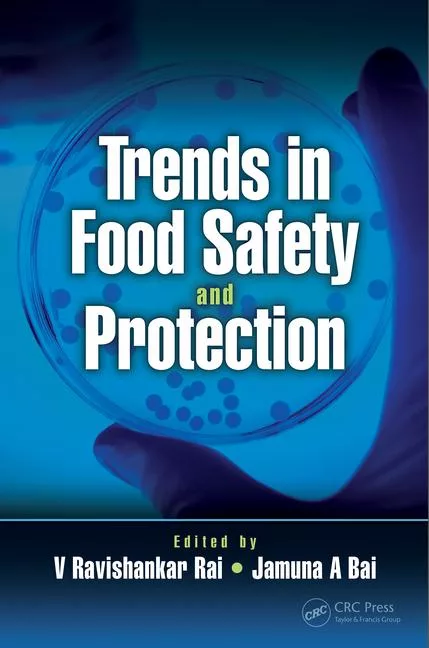
    Trends in Food Safety and Protection

  • 9781138198463.jpg

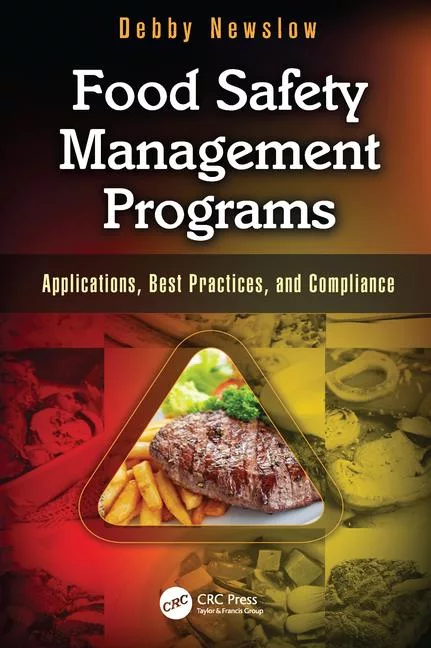
    Food Safety Management Programs: Applications, Best Practices, and Compliance

See More Products

Related Directories

  • Food Safety News

    Food Safety News advances public health by delivering timely, accurate, and comprehensive coverage of foodborne illness outbreaks, recalls, and regulatory developments that impact the safety of our global food supply.
  • Instant Recall LLC

    Instant Recall automates best practice workflows, data analysis and regulatory reporting for mock recalls, product holds, withdrawals, and recalls for the food industry. Learn why the food industry consistently chooses us as the shared solution for food recall preparedness, recall communications execution, and cost recovery!
×

Never miss the latest news and trends driving the food safety industry

Newsletters | Website | eMagazine

JOIN TODAY!
  • RESOURCES
    • Advertise
    • Contact Us
    • Directories
    • Store
    • Want More
  • SIGN UP TODAY
    • Create Account
    • eMagazine
    • Newsletters
    • Customer Service
    • Manage Preferences
  • SERVICES
    • Marketing Services
    • Reprints
    • Market Research
    • List Rental
    • Survey/Respondent Access
  • STAY CONNECTED
    • LinkedIn
    • Facebook
    • Instagram
    • X (Twitter)
  • PRIVACY
    • PRIVACY POLICY
    • TERMS & CONDITIONS
    • DO NOT SELL MY PERSONAL INFORMATION
    • PRIVACY REQUEST
    • ACCESSIBILITY

Copyright ©2026. All Rights Reserved BNP Media, Inc. and BNP Media II, LLC.

Design, CMS, Hosting & Web Development :: ePublishing