Food Safety
search
Ask Food Safety AI
cart
facebook twitter linkedin instagram youtube
  • Sign In
  • Create Account
  • Sign Out
  • My Account
Food Safety
  • NEWS
    • Latest News
    • White Papers
  • PRODUCTS
  • TOPICS
    • Contamination Control
    • Food Types
    • Management
    • Process Control
    • Regulatory
    • Sanitation
    • Supply Chain
    • Testing and Analysis
  • PODCAST
  • EXCLUSIVES
    • Food Safety Five Newsreel
    • eBooks
    • FSM Distinguished Service Award
    • Interactive Product Spotlights
    • Videos
  • BUYER'S GUIDE
  • MORE
    • NEWSLETTERS >
      • Archive Issues
      • Subscribe to eNews
    • Store
    • Sponsor Insights
    • ASK FSM AI
  • WEBINARS
  • FOOD SAFETY SUMMIT
  • EMAG
    • eMagazine
    • Archive Issues
    • Editorial Advisory Board
    • Contact
    • Advertise
  • SIGN UP!
NewsContamination ControlFood TypeRegulatoryMicrobiological ControlMeat/PoultryUSDA

Consumer Reports Identifies ‘Most Contaminated’ U.S. Poultry Plants Based on Salmonella Testing
By Food Safety Magazine Editorial Team
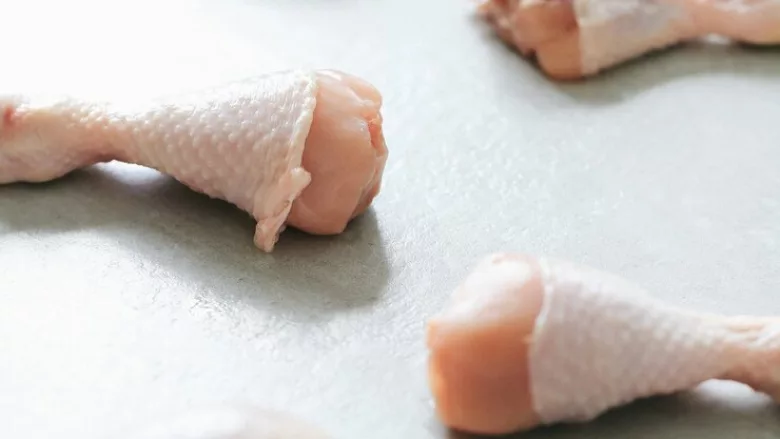
raw chicken drumsticks

Image credit: azerbaijan_stockers via Freepik

March 19, 2025

Consumer Reports recently released a report revealing the “most contaminated” poultry plants in the U.S., based on an analysis of Salmonella testing data from the U.S. Department of Agriculture’s Food Safety and Inspection Service (USDA-FSIS).

USDA-FSIS classifies poultry plants into three categories based on the results of Salmonella test results, from best to worst:

  • Category 1: Plants that have achieved 50 percent or less of the maximum allowable Salmonella-positive test results during the most recent one-year period
  • Category 2: Plants that meet the maximum allowable Salmonella-positive test results during the most recent one-year period, but have some results exceeding 50 percent
  • Category 3: Plants with results that exceed the maximum allowable Salmonella-positive test results during the most recent one-year period.

The majority of plants included in Consumer Reports’ “most contaminated” list have fallen under Category 3 within the last six months. Additionally, the plants listed by Consumer Reports are described in terms of the products they produce. Plants that produce “young chicken carcasses” or “young turkey carcasses” are slaughter, cleaning, and evisceration establishments; and plants that produce “chicken parts” or “comminuted chicken parts” conduct processing and preparation. Some establishments conduct all steps of poultry production, from slaughter to preparation.

The report lists more than 50 “most contaminated” poultry plants, featuring some well-known name brands like Cargill, Tyson Foods, Perdue Foods, Butterball, and H-E-B. The full list can be read here.

USDA-FSIS' Efforts to Crack Down on Salmonella in Raw Poultry

Cracking down on Salmonella in poultry has been a priority of USDA-FSIS in recent years. In July 2024, USDA-FSIS published an advance copy of its long-awaited regulatory framework for Salmonella in raw poultry products, setting an enforceable final product standard for the pathogen at certain levels—at which point it is determined to be an “adulterant”—and focusing on five serotypes of public health significance. The framework also requires Salmonella testing and monitoring in facilities. The ultimate goal of the new regulatory framework is to reduce human cases of salmonellosis attributable to poultry products, because, although FSIS’ current Salmonella verification sampling program has been effective in reducing the proportion of poultry products contaminated with the pathogen, it has not translated into a reduction in foodborne illness.

However, as of February 2025, Republican legislators, backed by poultry lobbyists, are trying to stop USDA-FSIS’ ability to implement its proposed regulatory framework for Salmonella in raw poultry products by blocking the agency’s access to federal funds.

Looking for quick answers on food safety topics?
Try Ask FSM, our new smart AI search tool.
Ask FSM →


KEYWORDS: Consumer Reports report Salmonella

Share This Story

Fsm purple logo 200x200

The Food Safety Magazine editorial team comprises Bailee Henderson, Digital Editor ✉ and Adrienne Blume, M.A., Editorial Director.

Recommended Content

JOIN TODAY
to unlock your recommendations.

Already have an account? Sign In

  • people holding baby chicks

    Serovar Differences Matter: Utility of Deep Serotyping in Broiler Production and Processing

    This article discusses the significance of Salmonella in...
    Testing & Analysis
    By: Nikki Shariat Ph.D.
  • woman washing hands

    Building a Culture of Hygiene in the Food Processing Plant

    Everyone entering a food processing facility needs to...
    Training
    By: Richard F. Stier, M.S.
  • graphical representation of earth over dirt

    Climate Change and Emerging Risks to Food Safety: Building Climate Resilience

    This article examines the multifaceted threats to food...
    Management
    By: Maria Cristina Tirado Ph.D., D.V.M. and Shamini Albert Raj M.A.
Manage My Account
  • eMagazine Subscription
  • Subscribe to Newsletters
  • Manage My Preferences
  • Website Registration
  • Subscription Customer Service

More Videos

Sponsored Content

Sponsored Content is a special paid section where industry companies provide high quality, objective, non-commercial content around topics of interest to the Food Safety Magazine audience. All Sponsored Content is supplied by the advertising company and any opinions expressed in this article are those of the author and not necessarily reflect the views of Food Safety Magazine or its parent company, BNP Media. Interested in participating in our Sponsored Content section? Contact your local rep!

close
  • NEVIFIT 3 Compartment BPA-FREE
    Sponsored byCorbion

    The Risks of Ready-to-Eat: Five Ways to Protect Today's Prepared Meals

  • a group of workers in a food production facility
    Sponsored bySkillUp by Registrar Corp

    How to Build a Better Training Program: Data and Insights from the Global Food Safety Training Survey

  • the use of dual-energy X-ray food inspection technology to identify foreign contaminants.
    Sponsored byEagle by METTLER TOLEDO

    Precision Inspection Starts with the Right X-ray Detector

Popular Stories

green powder/moringa in wooden mortar

FDA Opens Third Salmonella–Moringa Outbreak Investigation of the Year

FoodSafetyMattersFinal-900x550-(002).jpg

Ep. 218. Dr. Brady Carter: Water Activity, Shelf-Life Validation, and Food Safety Controls

fermented meat

Study is First to Analyze Trends in Foodborne Illness Outbreaks Linked to Non-Dairy Fermented Products

a practical guide to spoilage investigation webinar

Events

June 3, 2026

How to Build a Better Food Safety Training Program

Live: June 3, 2026 at 2:00 pm EDT: Join this webinar to learn how AI is impacting food safety training, and how you can leverage AI in your programs.

June 4, 2026

Building a Stronger Food Safety Program in a Changing GFSI Landscape

Live: June 4, 2026 at 11:00 am EDT: Attend this webinar to understand how GFSI requirements are evolving and what those changes signal for quality programs at food and beverage facilities.

June 10, 2026

A Practical Guide to Spoilage Investigation and Prevention

Live: June 10, 2026 at 11:00 am EDT: Join this webinar to learn how to identify spoilage root causes, reduce risk, and apply data-driven strategies for prevention.

View All

Products

Global Food Safety Microbial Interventions and Molecular Advancements

Global Food Safety Microbial Interventions and Molecular Advancements

See More Products

Related Articles

  • peaches halved

    Consumer Reports: Top 10 Riskiest Foods Based on Recalls, Foodborne Illness Outbreaks

    See More
  • COVID-19 Hits U.S. Meat and Poultry Plants

    See More
  • raw chicken halves

    Consumer Reports Calls USDA’s Proposed Regulatory Framework for Salmonella in Poultry ‘Too Lax’

    See More

Related Products

See More Products
  • 9781498721776.jpg

    Handbook of Food Processing: Food Safety, Quality, and Manufacturing Processes

  • Food-Forensics-3D.jpg

    Food Forensics Handbook Practice, Instrumentation, Case Studies

  • 1118396308.jpg

    High Throughput Analysis for Food Safety

See More Products

Related Directories

  • PATLITE (U.S.A.) Corp.

    Since 1947, PATLITE has offered state-of-the-art equipment for the process and industrial automation industries. Innovative and durable design, backed by years of industry experience and a strong commitment to safety and security, has made PATLITE the world's best known manufacturer of visual and audible signaling devices.
×

Never miss the latest news and trends driving the food safety industry

Newsletters | Website | eMagazine

JOIN TODAY!
  • RESOURCES
    • Advertise
    • Contact Us
    • Directories
    • Store
    • Want More
  • SIGN UP TODAY
    • Create Account
    • eMagazine
    • Newsletters
    • Customer Service
    • Manage Preferences
  • SERVICES
    • Marketing Services
    • Reprints
    • Market Research
    • List Rental
    • Survey/Respondent Access
  • STAY CONNECTED
    • LinkedIn
    • Facebook
    • Instagram
    • X (Twitter)
  • PRIVACY
    • PRIVACY POLICY
    • TERMS & CONDITIONS
    • DO NOT SELL MY PERSONAL INFORMATION
    • PRIVACY REQUEST
    • ACCESSIBILITY

Copyright ©2026. All Rights Reserved BNP Media, Inc. and BNP Media II, LLC.

Design, CMS, Hosting & Web Development :: ePublishing