Food Safety
search
Ask Food Safety AI
cart
facebook twitter linkedin instagram youtube
  • Sign In
  • Create Account
  • Sign Out
  • My Account
Food Safety
  • NEWS
    • Latest News
    • Sponsored Insights
    • Sponsored White Papers
  • PRODUCTS
  • TOPICS
    • Contamination Control
    • Food Types
    • Management
    • Process Control
    • Regulatory
    • Sanitation
    • Supply Chain
    • Testing and Analysis
  • PODCAST
  • EXCLUSIVES
    • Food Safety Five Newsreel
    • eBooks
    • FSM Distinguished Service Award
    • Interactive Product Spotlights
    • Videos
  • BUYER'S GUIDE
  • MORE
    • NEWSLETTERS >
      • Archive Issues
      • Subscribe to eNews
    • Store
    • ASK FSM AI
  • WEBINARS
  • FOOD SAFETY SUMMIT
  • EMAG
    • eMagazine
    • Archive Issues
    • Editorial Advisory Board
    • Contact
    • Advertise
  • SIGN UP!
NewsContamination ControlFood TypeRegulatoryMicrobiological ControlMeat/PoultryUSDA

House Bill Aims to Block USDA From Implementing Stricter Standards for Salmonella in Raw Poultry
By Bailee Henderson
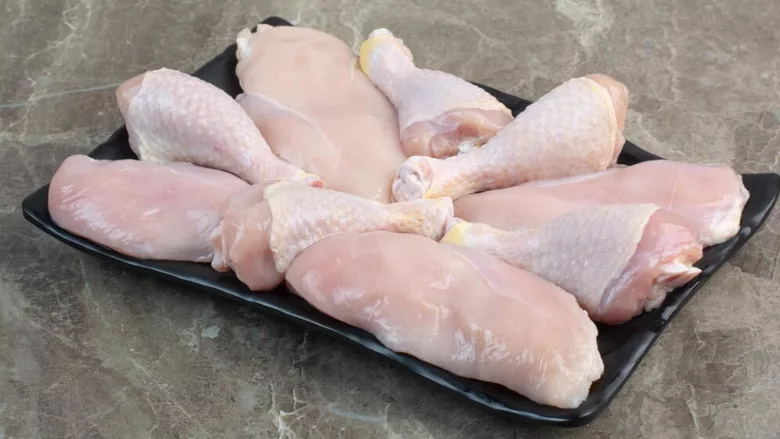
raw chicken breasts and drumsticks

Image credit: azerbaijan_stockers via Freepik

February 12, 2025

A bill introduced to the U.S. House of Representatives aims to prohibit the U.S. Department of Agriculture (USDA) from using federal funds to implement its proposed regulatory framework for Salmonella in raw poultry products. House Resolution (HR) 690 is sponsored by Representatives Tracey Mann (R-KS) and Steve Womack (R-AK), and its currently under review by the House Committee on Agriculture.

Rep. Mann is Chairman of the House Agriculture Committee’s Subcommittee on Livestock, Dairy, and Poultry, and Rep. Womack co-chairs the Congressional Chicken Caucus, which advocates on behalf of the poultry industry. A statement about the legislation from Rep. Mann’s office called USDA’s regulatory framework a “Biden-era regulation that could put producers out of business and drive up costs for consumers,” and claims the proposed rule is “not based in science nor indicates a major impact on consumer health,” calling it “nonsense.”

HR 690 is supported by the National Chicken Council (NCC), which has previously called USDA’s proposal “unnecessary,” arguing that it will “raise costs for producers and consumers, and will lead to an extraordinary amount of food waste with no impact on public health.” NCC expressed additional concerns about the impacts of the proposed framework, including holding raw chicken while waiting for test results shortening product shelf life, the health and welfare of birds being worsened by disrupted product and bird flow, the rule underestimating the financial burden to industry, and the rule's lack of prescriptive guidance to industry on how the requirements should be executed.

However, consumer advocates and public health stakeholders do not agree with Reps. Mann and Womack or NCC. Groups that have voiced support for USDA’s proposal to strengthen its regulatory oversight of Salmonella in raw poultry include Stop Foodborne Illness, Consumer Reports, and the Consumer Federation of America, among others, claiming that the rule will be beneficial to consumers and public health by reducing the national salmonellosis burden attributable to poultry, which has not substantially reduced, despite a reduction in the proportion of products contaminated with Salmonella at processing plants.

For an in-depth discussion about the ways in which FSIS was assessing the efficacy of its proposed framework for regulating Salmonella and the decision-making involved in its development, listen to this October 2024 bonus episode of the Food Safety Matters podcast with former USDA Under Secretary for Food Safety Emilio Esteban, Ph.D. and former U.S. Deputy Under Secretary for Food Safety Sandra Eskin, J.D.

Scientific Advice Informing USDA-FSIS’ Proposed Rule and the Goal to Reduce Foodborne Illness

The regulatory framework proposed by USDA’s Food Safety and Inspection Service (USDA-FSIS) would set an enforceable final product standard for Salmonella at certain levels with a focus on five serotypes of public health significance, deeming the pathogen to be an “adulterant” when it exceeds certain levels in raw poultry. The framework would also require Salmonella testing and monitoring in facilities. As part of its strengthened regulatory approach to Salmonella in raw poultry, in April 2024, FSIS finalized a determination declaring Salmonella an adulterant in raw, breaded and stuffed, not-ready-to-eat (not RTE) chicken products at levels exceeding 1 colony forming unit per gram (CFU/g).

FSIS’ goal for the regulatory framework is to reduce human cases of salmonellosis attributable to poultry products, because, although FSIS’ current Salmonella verification sampling program has been effective in reducing the proportion of poultry products contaminated with the pathogen, it has not translated into a reduction in foodborne illness. While FSIS is focused on the reduction of foodborne illness attributable to raw poultry, Rep. Mann’s office claims that the proposed rule “disregards data from USDA that found Salmonella outbreaks have decreased 60 percent since 2020 and that more than 97 percent of whole chickens tested negative for Salmonella as recently as 2022.”

Looking for quick answers on food safety topics?
Try Ask FSM, our new smart AI search tool.
Ask FSM →

HR 690 is contrary to the recommendations of the U.S. Government Accountability Office (GAO), which has called into question the efficacy of national food safety oversight in several reports published at the beginning of 2025. Notably, in a February report, GAO underlined that USDA-FSIS has missed a goal to reduce Salmonella on poultry with consequences for foodborne illness by a large margin. According to the most recent progress report, although the agency aimed to reduce the proportion of poultry samples with Salmonella serotypes commonly associated with human illness by 4 percent, the proportion of such samples have increased by 22 percent.

Additionally, USDA-FSIS’ proposed framework considers scientific advice from the National Advisory Committee on Microbiological Criteria for Foods (NACMCF), which involved an extensive review of the scientific evidence on Salmonella control in the U.S. and abroad, foodborne illness surveillance data, quantitative microbial risk assessments, and microbiological testing of indicator organisms vs. Salmonella on poultry throughout the farm‐to‐fork continuum. According to NACMCF, which has acknowledged the overall reduction of Salmonella in poultry products, “there has not been a concomitant reduction in overall Salmonella illnesses nor in the proportion attributed to poultry from outbreak data.” Regarding the proportion of salmonellosis cases attributed to poultry, of the estimated over 1 million cases of foodborne salmonellosis acquired annually in the U.S, over 24 percent are attributed to consumption of chicken and turkey products, per NACMCF.

Support for—and Arguments to Strengthen—the Proposed Rule

USDA-FSIS’ regulatory approach is supported by consumer protection groups like Consumer Reports, with the group advocating for even stricter enforceable product standards. In a comment letter submitted in response to FSIS’ Salmonella framework for raw poultry products, Consumer Reports stated, “We strongly support FSIS taking action to set enforceable product standards for Salmonella for various poultry products, which will improve public health by dramatically reducing the presence of dangerous Salmonella in poultry and the number of foodborne illnesses that result from consumption of these products.” The group went on to call the rule “too lax,” and asked the agency to consider setting the same enforceable product standards for all raw poultry products as it did for raw, breaded and stuffed, NRTE chicken products.

Similarly, in a November 2024 letter to former FSIS official Dr. Emilio Esteban, Stop Foodborne Illness wrote “USDA’s Salmonella proposal represents an important milestone in setting enforceable safety standards and applying them where they matter to consumers: on poultry products themselves, rather than on the poultry processing establishments. Nevertheless, the rule is too narrow in its protections for consumers because it includes enforceable standards for just three of the many pathogenic serotypes of Salmonella and addresses only 43 percent of poultry-related Salmonella illnesses.”


KEYWORDS: foodborne illness legislation Salmonella

Share This Story

Baileehendersonmay23

Bailee Henderson is the Director of Content Strategy for Food Safety Magazine. In the day-to-day, she covers industry-relevant current events, regulatory affairs, and scientific developments. She also produces the Food Safety Five Newsreel and edits the twice-weekly Food Safety Digest newsletter. Notably, Bailee's coverage for Food Safety Magazine has been featured in national televised news segments including CBS Sunday Morning and MSNBC's Rachel Maddow Show. She can be reached at hendersonb@bnpmedia.com.

Recommended Content

JOIN TODAY
to unlock your recommendations.

Already have an account? Sign In

  • people holding baby chicks

    Serovar Differences Matter: Utility of Deep Serotyping in Broiler Production and Processing

    This article discusses the significance of Salmonella in...
    Microbiological Control
    By: Nikki Shariat Ph.D.
  • woman washing hands

    Building a Culture of Hygiene in the Food Processing Plant

    Everyone entering a food processing facility needs to...
    Management
    By: Richard F. Stier, M.S.
  • graphical representation of earth over dirt

    Climate Change and Emerging Risks to Food Safety: Building Climate Resilience

    This article examines the multifaceted threats to food...
    International
    By: Maria Cristina Tirado Ph.D., D.V.M. and Shamini Albert Raj M.A.
Manage My Account
  • eMagazine Subscription
  • Subscribe to Newsletters
  • Manage My Preferences
  • Website Registration
  • Subscription Customer Service

More Videos

Sponsored Content

Sponsored Content is a special paid section where industry companies provide high quality, objective, non-commercial content around topics of interest to the Food Safety Magazine audience. All Sponsored Content is supplied by the advertising company and any opinions expressed in this article are those of the author and not necessarily reflect the views of Food Safety Magazine or its parent company, BNP Media. Interested in participating in our Sponsored Content section? Contact your local rep!

close
  • Man In Warehouse
    Sponsored byRentokil

    Mitigating Hidden Rodent Risks in Food Facilities

  • an industrial manufacturing or processing facility
    Sponsored bybioMérieux

    Get Ahead of Spoilage in Food Manufacturing with Metagenomics for Preventive Monitoring

  • an automated industrial production line used in a modern food factory
    Sponsored byIFC

    A Formula for Food Processing Pest Management

Popular Stories

dozen white eggs

Nearly 100 Sick in Multistate Salmonella Outbreak, Millions of Eggs Recalled

Business people shaking hands with FDA logo overlay

FDA to Centralize Administrative Functions, Generalize Inspectors

packaged sesame seed buns

FDA's Allergen Agenda Is Expanding: Thresholds, Gluten Cross-Contact, and What Food Companies Should Watch for Next

building a skilled workforce ebook

Events

August 6, 2026

Beyond Sanitation: Understanding the Hidden System Conditions That Allow Pathogens to Persist

Live: August 6, 2026 at 2:00 pm EDT: Attend this webinar to learn strategies for strengthening environmental control programs through a layered approach to pathogen management.

August 11, 2026

Beyond Sanitization: Reducing Contamination Risk Without Raising Operating Cost

Live: August 11, 2026 at 2:00 pm EDT: Attend this webinar to learn why ambient air is the largest and most overlooked contamination zone in food processing, and what it costs you between scheduled cleans.

August 25, 2026

Don’t Wing It: Bird Control for Food Processing Facilities

Live: August 25, 2026 at 2:00 pm EDT: This webinar will cover why managing bird activity should be a priority for your business, the complexities involved in effective bird control, and proactive strategies to help protect your facility.

View All

Products

Global Food Safety Microbial Interventions and Molecular Advancements

Global Food Safety Microbial Interventions and Molecular Advancements

See More Products

Related Articles

  • raw chicken drumstick in bowl on table

    USDA-FSIS Publishes Proposed Regulatory Framework for Salmonella in Raw Poultry

    See More
  • raw chicken parts

    USDA-FSIS Announces Pilot Program to Evaluate Salmonella Control Strategies in Raw Poultry Establishments

    See More
  • raw chicken cutlets

    USDA-FSIS Releases New Guidelines on Controlling Salmonella and Campylobacter in Raw Poultry

    See More

Related Products

See More Products
  • 1119258073.jpg

    FSMA and Food Safety Systems: Understanding and Implementing the Rules

  • food-safety-making.jpg

    Food Safety: Making Foods Safe and Free From Pathogens

  • 1119160553.jpg

    Food Safety: Innovative Analytical Tools for Safety Assessment

See More Products

Events

View AllSubmit An Event
  • May 12, 2026

    Leveraging AI for Food Safety: From Strategy to Impact

    On Demand: This dynamic workshop brings together leaders from industry, academia, and government to demonstrate how AI can be practically applied in food safety—from data strategy to daily execution.
  • September 2, 2026

    From Crisis to Control: A Listeria Elimination Journey in Food Manufacturing

    Live: September 2, 2026 at 2:00 pm EDT: This webinar shares a real-world case study of a food processing facility that solved a persistent Listeria challenge after standard protocols fell short.
View AllSubmit An Event

Related Directories

  • Seafood Collaborators LLC

    Food insecurity, malnutrition, and a growing population mean it’s more important than ever to grow the supply of safe, quality, responsibly produced healthy proteins like seafood. In today's complex supply chains, ever-stricter standards, regulations, and global initiatives are proliferating. Seafood businesses around the world need help navigating this confusing landscape from experts that have been in their shoes. Our team transforms challenges into solutions, combining practical approaches to compliance and operational improvements with strategies to help drive clients' financial success. Decades of cross-functional, global expertise enable us to offer proven effective solutions across the seafood value chain in training, food safety, quality, regulatory, supply chain risk analysis, responsible sourcing, audits, operational improvement, certification pre-assessments/gap analysis, ESG/CSR programs and more.
  • Gold Standard Diagnostics

    Gold Standard Diagnostics develops and markets rapid test kits and analyzers for a wide range of food contaminants including allergens, pathogens, patulin and mycotoxins, glyphosate and pesticides, VDRs, GMOs and more. Get accurate results in minutes on-site with Gold Standard Diagnostics test kits.
×

Never miss the latest news and trends driving the food safety industry

Newsletters | Website | eMagazine

JOIN TODAY!
  • RESOURCES
    • Advertise
    • Contact Us
    • Directories
    • Store
    • Want More
  • SIGN UP TODAY
    • Create Account
    • eMagazine
    • Newsletters
    • Customer Service
    • Manage Preferences
  • SERVICES
    • Marketing Services
    • Reprints
    • Market Research
    • List Rental
    • Survey/Respondent Access
  • STAY CONNECTED
    • LinkedIn
    • Facebook
    • Instagram
    • X (Twitter)
  • PRIVACY
    • PRIVACY POLICY
    • TERMS & CONDITIONS
    • DO NOT SELL MY PERSONAL INFORMATION
    • PRIVACY REQUEST
    • ACCESSIBILITY

Copyright ©2026. All Rights Reserved BNP Media, Inc. and BNP Media II, LLC.

Design, CMS, Hosting & Web Development :: ePublishing