Food Safety
search
Ask Food Safety AI
cart
facebook twitter linkedin instagram youtube
  • Sign In
  • Create Account
  • Sign Out
  • My Account
Food Safety
  • NEWS
    • Latest News
    • Sponsored Insights
    • Sponsored White Papers
  • PRODUCTS
  • TOPICS
    • Contamination Control
    • Food Types
    • Management
    • Process Control
    • Regulatory
    • Sanitation
    • Supply Chain
    • Testing and Analysis
  • PODCAST
  • EXCLUSIVES
    • Food Safety Five Newsreel
    • eBooks
    • FSM Distinguished Service Award
    • Interactive Product Spotlights
    • Videos
  • BUYER'S GUIDE
  • MORE
    • NEWSLETTERS >
      • Archive Issues
      • Subscribe to eNews
    • Store
    • ASK FSM AI
  • WEBINARS
  • FOOD SAFETY SUMMIT
  • EMAG
    • eMagazine
    • Archive Issues
    • Editorial Advisory Board
    • Contact
    • Advertise
  • SIGN UP!
NewsContamination ControlFood TypeMicrobiological ControlDairy/Eggs

FAO, WHO Report on Food Safety of Water Reuse in Dairy Industry
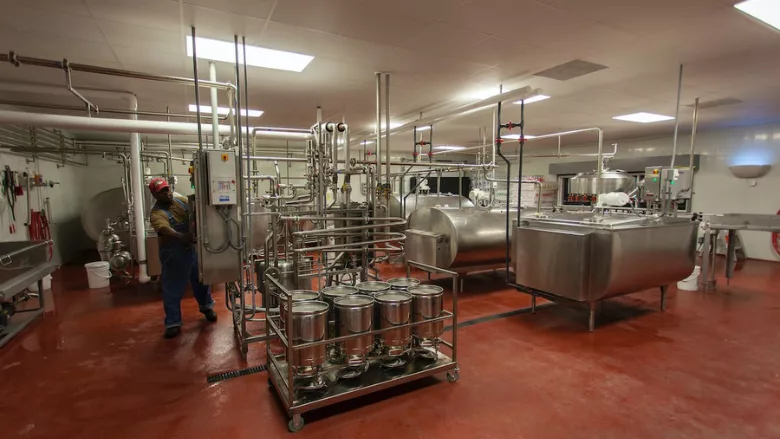
milk processing facility

Credit: Mark Stebnicki via Pexels

February 14, 2023

The Food and Agriculture Organization of the United Nations (FAO) and the World Health Organization (WHO) recently published a report that provides guidance for the dairy industry on food-safe sourcing, use, and reuse of fit-for-purpose water.

The report is based on a Joint FAO/WHO Expert Meeting on Microbiological Risk Assessment (JEMRA) session that was convened online from June 14–July 2, 2021 in support of the Codex Alimentarius Commission’s work to develop guidelines for the safe use and reuse of water in food production.

The report gives an overview of potential sources of reusable water in dairy processing and considerations for its application. Examples of water types that could potentially be sourced for reuse include water that:

  • Was part of a dairy product
  • Has come into a dairy operation in the form of drinking water and is recirculated until it is no longer suitable as drinking water
  • Has been used for cleaning purposes in the food processing operation or other parts of a facility
  • Is part of a dairy operation’s effluent.

Whether reuse water is designated as not-for-food-contact or for-food-contact will determine if a reconditioning process is required prior to application. The report underlines that every water reuse scenario—such as the combination of reusable water source and reuse water application, including specifics like recovery, reconditioning, storage, and distribution—must be thoroughly reviewed to ensure food safety of the final product. Dairy operations should refer to the relevant regulatory requirements when designing and operating a water reuse scenario. The ability to control potential hazards should also be taken into consideration, and water reuse and control should consider specific conditions, such as:

  • The microbial status of the water source
  • The microbiological requirements associated with the reuse water application to ensure food safety of the final product
  • The microbiological efficacy of the reuse water generation system, which is related to the combination of the technologies, equipment, and infrastructure employed for water recovery, reconditioning, and storage
  • The need to consistently control the reuse water generation system and the application of the reuse water produced in the day-to-day operation
  • The role of microbial testing for validation and verification in designing and managing reuse water generation and use, as well as the ability to apply appropriate testing approaches.

Additionally, when assessing potential microbiological hazards and establishing appropriate controls for reuse water generation and use, FAO suggests taking into account:

  • The microbial hazards present in the possible reusable water sources, as well as hazards associated with other parts of the operation that could contaminate a reuse water supply after it has been produced
  • Nutrients present in a reuse water supply after recovery and reconditioning that may foster the growth of spoilage organisms or microbiological hazards
  • Whether reuse water that has been recycled or recirculated multiple times in a specific process operation is leading to or has resulted in biofilm formation
  • Whether any particular measure for preservation of the product or for control of microbial growth is required over the set shelf-life of the reuse water supply
  • The need to have available a back-up fit-for-purpose water supply, such as a drinking water source, that can be used in case the reuse water generation system is not under control or has failed.

The report highlights similarities between food safety controls and the management water supply generation, such as the importance of following a risk- and evidence-based approach. Hazard control plans for a reuse water generation process should be based on several steps derived from hazard analysis or risk assessment that:

  • Identifies the known or potential hazards that a reusable water supply might have acquired through its earlier application
  • Identifies hazards possibly contaminating the water in the course of reuse water generation, storage, and use
  • Assesses the potential risk that any identified hazards, based on the likelihood of their occurrence and concentration in the reuse water, may pose to consumer safety through the food being produced in the dairy operation.

Also important is the validation of recovery, purification, or antimicrobial treatment conditions for each water reuse scenario. During operation, the reuse water generation process should be monitored daily, including timely verification of its microbiological status. The report suggests the use of third-party contractors if necessary.

Overall, the report recommends that food business operators tailor each water reuse scenario to the specific conditions of its particular food operation, taking into account: the purpose of water reuse, available sources of reusable water, the reuse water generation system and underlying processes, storage and shelf-life of reuse water supplies, the approach to managing reuse water generation and application, and the skills and expertise available to manage day-by-day the implemented water reuse scenario at the operational scale.

Finally, the report identifies knowledge gaps that exist and capacities and capabilities that need to be addressed, especially in low resource settings:

  • The understanding of the types and levels of microbial, physical, and chemical hazards potentially present in reusable water sources within dairy operations, as well as the ability to conduct appropriate risk assessment and hazard analysis for a particular water reuse scenario
  • The ability to assess the effectiveness of individual or combined technologies for recovery and reconditioning of reusable water supplies and for mitigating relevant hazards
  • The validation of recovery, reconditioning, shelf-life/storage, and application technologies, as well as the operational management during full scale operation
  • The establishment and the use of microbiological parameters for verification of operational control, and for validation and verification of water reuse operations
  • The deployment of suitable or alternative technologies for recovering and reconditioning water in dairy operations that have limited resources, capabilities, and technical infrastructure.

The report encourages the sharing of data, knowledge, evidence, expertise, and other resources between international stakeholders, especially the sharing of experiences in setting up effective reuse water generation systems and fit-for-purpose applications of reuse water supplies in small to large dairy production and processing facilities.

Looking for quick answers on food safety topics?
Try Ask FSM, our new smart AI search tool.
Ask FSM →


KEYWORDS: Dairy FAO JEMRA microbial control Water Reconditioning WHO

Share This Story

Recommended Content

JOIN TODAY
to unlock your recommendations.

Already have an account? Sign In

  • people holding baby chicks

    Serovar Differences Matter: Utility of Deep Serotyping in Broiler Production and Processing

    This article discusses the significance of Salmonella in...
    Methods
    By: Nikki Shariat Ph.D.
  • woman washing hands

    Building a Culture of Hygiene in the Food Processing Plant

    Everyone entering a food processing facility needs to...
    Facilities
    By: Richard F. Stier, M.S.
  • graphical representation of earth over dirt

    Climate Change and Emerging Risks to Food Safety: Building Climate Resilience

    This article examines the multifaceted threats to food...
    Best Practices
    By: Shamini Albert Raj M.A. and Maria Cristina Tirado Ph.D., D.V.M.
Manage My Account
  • eMagazine Subscription
  • Subscribe to Newsletters
  • Manage My Preferences
  • Website Registration
  • Subscription Customer Service

More Videos

Sponsored Content

Sponsored Content is a special paid section where industry companies provide high quality, objective, non-commercial content around topics of interest to the Food Safety Magazine audience. All Sponsored Content is supplied by the advertising company and any opinions expressed in this article are those of the author and not necessarily reflect the views of Food Safety Magazine or its parent company, BNP Media. Interested in participating in our Sponsored Content section? Contact your local rep!

close
  • an automated industrial production line used in a modern food factory
    Sponsored byIFC

    A Formula for Food Processing Pest Management

  • fly
    Sponsored byOrkin Commercial

    Fly Control in Food Processing Facilities: Managing Seasonal Food Safety Risks

  • Darkling Beetle
    Sponsored byElanco Animal Health

    Integrated Pest Management: Protecting Poultry Operations as Seasons Change

Popular Stories

Cyclospora cayetanensis oocysts

Foodborne Parasite Cyclospora Sickens Hundreds Across U.S.

naturally colored cupcakes with sprinkles

Natural vs. Artificial Ingredients in Baking: What Food Manufacturers and Consumers Need to Know

spoon of whitish brown sweetener

JECFA Evaluates Safety of Certain Food Additives; Monk Fruit Presents Potential Concern

building a skilled workforce ebook

Events

July 21, 2026

Using AI Responsibly in Food Safety Management Systems

Live: July 21, 2026 at 2:00 pm EDT: This webinar will provide participants with guidance on how to effectively use generative artificial intelligence (AI) tools to develop key components of a food safety management system (FSMS).

August 6, 2026

Beyond Sanitation: Understanding the Hidden System Conditions That Allow Pathogens to Persist

Live: August 6, 2026 at 2:00 pm EDT: Attend this webinar to learn strategies for strengthening environmental control programs through a layered approach to pathogen management.

August 11, 2026

Beyond Sanitization: Reducing Contamination Risk Without Raising Operating Cost

Live: August 11, 2026 at 2:00 pm EDT: Attend this webinar to learn why ambient air is the largest and most overlooked contamination zone in food processing, and what it costs you between scheduled cleans.

View All

Products

Global Food Safety Microbial Interventions and Molecular Advancements

Global Food Safety Microbial Interventions and Molecular Advancements

See More Products

Related Articles

  • man on a commercial fishing boat

    FAO, WHO Report on Safe Use, Reuse of Water in Fish Industry

    See More
  • cheese making

    FAO, WHO Report on STEC Controls for Meat and Dairy, Listeria in RTE Foods

    See More
  • sprouts

    FAO, WHO Report on Microbial Control of Seeds for Sprouting

    See More

Related Products

See More Products
  • 9781498721776.jpg

    Handbook of Food Processing: Food Safety, Quality, and Manufacturing Processes

  • 9781138070912.jpg

    Trends in Food Safety and Protection

  • 1119053595.jpg

    Food Safety for the 21st Century: Managing HACCP and Food Safety throughout the Global Supply Chain, 2E

See More Products

Related Directories

  • Saldesia "Goddess of Food Safety"

    Saldesia is a distributor of Food Safety products and solutions. We are focused on supplying the Quality, Production, Safety and Sanitation departments. Product lines include Color Coded, Metal Detectable, Antimicrobial Flooring & Mats, Workwear, Footwear, Spray Nozzles, and more!
  • We R Food Safety Inc.

    Scalable, affordable and fully customizable software designed by industry experts and backed by a world-class team of consultants and support personnel. Our proprietary software modernizes your food safety systems, provides your staff real-time data and visibility. We have the ability to construct custom reporting providing you information that is important to your business.
  • Food Safety News

    Food Safety News advances public health by delivering timely, accurate, and comprehensive coverage of foodborne illness outbreaks, recalls, and regulatory developments that impact the safety of our global food supply.
×

Never miss the latest news and trends driving the food safety industry

Newsletters | Website | eMagazine

JOIN TODAY!
  • RESOURCES
    • Advertise
    • Contact Us
    • Directories
    • Store
    • Want More
  • SIGN UP TODAY
    • Create Account
    • eMagazine
    • Newsletters
    • Customer Service
    • Manage Preferences
  • SERVICES
    • Marketing Services
    • Reprints
    • Market Research
    • List Rental
    • Survey/Respondent Access
  • STAY CONNECTED
    • LinkedIn
    • Facebook
    • Instagram
    • X (Twitter)
  • PRIVACY
    • PRIVACY POLICY
    • TERMS & CONDITIONS
    • DO NOT SELL MY PERSONAL INFORMATION
    • PRIVACY REQUEST
    • ACCESSIBILITY

Copyright ©2026. All Rights Reserved BNP Media, Inc. and BNP Media II, LLC.

Design, CMS, Hosting & Web Development :: ePublishing