Food Safety
search
Ask Food Safety AI
cart
facebook twitter linkedin
  • Sign In
  • Create Account
  • Sign Out
  • My Account
Food Safety
  • NEWS
    • Latest News
    • White Papers
  • PRODUCTS
  • TOPICS
    • Contamination Control
    • Food Types
    • Management
    • Process Control
    • Regulatory
    • Sanitation
    • Supply Chain
    • Testing and Analysis
  • PODCAST
  • EXCLUSIVES
    • Food Safety Five Newsreel
    • eBooks
    • FSM Distinguished Service Award
    • Interactive Product Spotlights
    • Videos
  • BUYER'S GUIDE
  • MORE
    • ENEWSLETTER >
      • Archive Issues
      • Subscribe to eNews
    • Store
    • Sponsor Insights
    • ASK FSM AI
  • WEBINARS
  • FOOD SAFETY SUMMIT
  • EMAG
    • eMagazine
    • Archive Issues
    • Editorial Advisory Board
    • Contact
    • Advertise
  • SIGN UP!
NewsContamination ControlFood TypeMicrobiologicalProduce

Study Examines What STEC Dormancy During Lettuce Cooling, Transport Could Mean for Food Safety
By Bailee Henderson
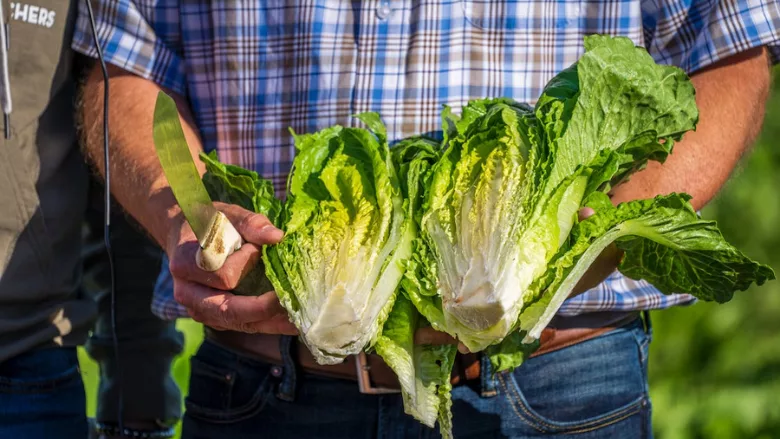
farmer holding romaine lettuce

Credit: Mark Stebnicki (nc-farm-bureau-mark) via Pexels

November 17, 2022

A Michigan State University researcher is working to characterize the physiological changes that occur in Shiga toxin-producing Escherichia coli O157:H7 (STEC) bacteria that is present on romaine lettuce during postharvest cooling and refrigerated transport to processors, which could affect the pathogen’s virulence and detectability characteristics. The end goal of the research, which is being funded by the Center for Produce Safety, is to develop an easily accessible online tool for industry that identifies practices to mitigate the risks of STEC transmission via romaine lettuce.

While several researchers have examined STEC on romaine lettuce in the field and during postharvest washing at processors, little is known about potential changes in the microorganism’s physiology during postharvest cooling and refrigerated transport to processors. Compared to the growing season and processing, the time romaine spends in coolers and refrigerated transport after harvest is relatively small. However, knowledge about what happens during the short period of time would be valuable information for industry.

The first two parts of the project, which involved systematically reviewing published literature on the subject and identifying data gaps, have been completed, and such information will be used to develop the basis of a risk model. Laboratory experiments that simulate the cooling and transportation of romaine are also underway. The researchers sought industry input to simulate conditions in the lab that reflect the real world, and used more than 5,000 harvest temperature data points shared by industry to inform their laboratory conditions.

In their laboratory experiments, the researchers are inoculating lettuce with strains of STEC, including strains from outbreaks that occurred in the U.S. in 2018, 2019, and 2020. After inoculating multiple lettuce plants with the pathogen, the researchers put the lettuce in a growth chamber for a day. The researchers then cut the romaine and placed it in a cooler to simulate harvest and cold storage. Each day over a five-day period, the researchers pulled samples and assayed the samples for STEC.

A noteworthy finding has been that of STEC’s dormancy. When under stress, some microbes, including STEC, transition to a dormant state known as “persister cells.” With a slowed metabolism, persisters do not reproduce but may still cause disease. When the stressor is removed, the cells’ metabolism returns to normal.

Another form of dormancy is “viable but nonculturable” (VBNC), which refers to cells that cannot be cultured on agar medium, preventing the use of common pathogen detection methods. As part of the project, the researchers plan to examine whether cold storage impacts STEC’s transition to persister and VBNC states.

It is unknown whether being in the persister state impacts pathogen detection. The researchers plan to purposely force cells into the persister state and determine whether they are detectable by common industry methods.

The study’s results will be used to fill gaps in the researchers’ developing risk assessment model, which will focus on practices to reduce STEC risk during the short window between romaine harvest and preprocessing. The researchers speculate whether there are modifications that could be made to harvesting and cooling practices that reduce the risk of STEC contamination, such as shifting harvest time or bringing lettuce to the cooling center more quickly.

Looking for quick answers on food safety topics?
Try Ask FSM, our new smart AI search tool.
Ask FSM →


KEYWORDS: Center for Produce Safety cooling E. coli lettuce postharvest romaine STEC study

Share This Story

Baileehendersonmay23

Bailee Henderson is the Digital Editor of Food Safety Magazine. She can be reached at hendersonb@bnpmedia.com.

Recommended Content

JOIN TODAY
to unlock your recommendations.

Already have an account? Sign In

  • people holding baby chicks

    Serovar Differences Matter: Utility of Deep Serotyping in Broiler Production and Processing

    This article discusses the significance of Salmonella in...
    Food Type
    By: Nikki Shariat Ph.D.
  • woman washing hands

    Building a Culture of Hygiene in the Food Processing Plant

    Everyone entering a food processing facility needs to...
    Training
    By: Richard F. Stier, M.S.
  • graphical representation of earth over dirt

    Climate Change and Emerging Risks to Food Safety: Building Climate Resilience

    This article examines the multifaceted threats to food...
    Risk Assessment
    By: Maria Cristina Tirado Ph.D., D.V.M. and Shamini Albert Raj M.A.
Manage My Account
  • eMagazine Subscription
  • Subscribe to eNewsletter
  • Manage My Preferences
  • Website Registration
  • Subscription Customer Service

More Videos

Sponsored Content

Sponsored Content is a special paid section where industry companies provide high quality, objective, non-commercial content around topics of interest to the Food Safety Magazine audience. All Sponsored Content is supplied by the advertising company and any opinions expressed in this article are those of the author and not necessarily reflect the views of Food Safety Magazine or its parent company, BNP Media. Interested in participating in our Sponsored Content section? Contact your local rep!

close
  • Salmonella bacteria
    Sponsored byThermoFisher

    Food Microbiology Testing Methods: Salmonella species

  • a diagram explaining indicator organisms
    Sponsored byHygiena

    How Proactive Listeria Testing Helps Prevent Six- and Seven-Figure Recalls

  • woman grocery shopping
    Sponsored byCorbion

    Designing Safety Into Every Bite: Proactive Risk Mitigation for Refrigerated Foods

Popular Stories

NRTE breaded stuffed chicken

USDA Indefinitely Delays Enforcement of Salmonella as Adulterant in Raw Breaded, Stuffed Chicken

digital map of europe

EU Publishes Food Fraud Tool Mapping Thousands of Cases Since 2016

non-conforming product

How to Handle Non-Conforming Product

Events

December 11, 2025

How to Develop and Implement an Effective Food Defense Strategy

Live: December 11, 2025 at 2:00 pm EDT: From this webinar, attendees will learn common areas where companies encounter challenges in their food defense strategies and how to address them.

May 11, 2026

The Food Safety Summit

Stay informed on the latest food safety trends, innovations, emerging challenges, and expert analysis. Leave the Summit with actionable insights ready to drive measurable improvements in your organization. Do not miss this opportunity to learn from experts about contamination control, food safety culture, regulations, sanitation, supply chain traceability, and so much more.

View All

Products

Global Food Safety Microbial Interventions and Molecular Advancements

Global Food Safety Microbial Interventions and Molecular Advancements

See More Products

Related Articles

  • healthy foods drugs stethoscope clipboard

    What the Final MAHA Report Could Mean for Food Safety

    See More
  • FSM podcast

    Ep. 176. Sarah Brew: What Does the Overturning of the 1984 Chevron Ruling Mean for Food Safety?

    See More
  • White House Says Food Safety Cuts Could Mean More Foodborne Illnesses

    See More

Related Products

See More Products
  • 1119053595.jpg

    Food Safety for the 21st Century: Managing HACCP and Food Safety throughout the Global Supply Chain, 2E

  • 1119160553.jpg

    Food Safety: Innovative Analytical Tools for Safety Assessment

  • 1118396308.jpg

    High Throughput Analysis for Food Safety

See More Products

Events

View AllSubmit An Event
  • March 11, 2025

    Change Management of Food Safety Culture: Effective Strategies for Achieving Greatness

    On Demand: During this webinar, attendees will gain practical knowledge on successful food safety culture change programs and transformation journeys from real-world experiences, enabling attendees to navigate challenges and achieve lasting improvements in their FSC initiatives.
View AllSubmit An Event
×

Never miss the latest news and trends driving the food safety industry

eNewsletter | Website | eMagazine

JOIN TODAY!
  • RESOURCES
    • Advertise
    • Contact Us
    • Directories
    • Store
    • Want More
  • SIGN UP TODAY
    • Create Account
    • eMagazine
    • eNewsletter
    • Customer Service
    • Manage Preferences
  • SERVICES
    • Marketing Services
    • Reprints
    • Market Research
    • List Rental
    • Survey/Respondent Access
  • STAY CONNECTED
    • LinkedIn
    • Facebook
    • Instagram
    • X (Twitter)
  • PRIVACY
    • PRIVACY POLICY
    • TERMS & CONDITIONS
    • DO NOT SELL MY PERSONAL INFORMATION
    • PRIVACY REQUEST
    • ACCESSIBILITY

Copyright ©2025. All Rights Reserved BNP Media.

Design, CMS, Hosting & Web Development :: ePublishing