Researchers Identify Needs for Adoption of Digital Food Safety Tools in U.S. Dairy Industry
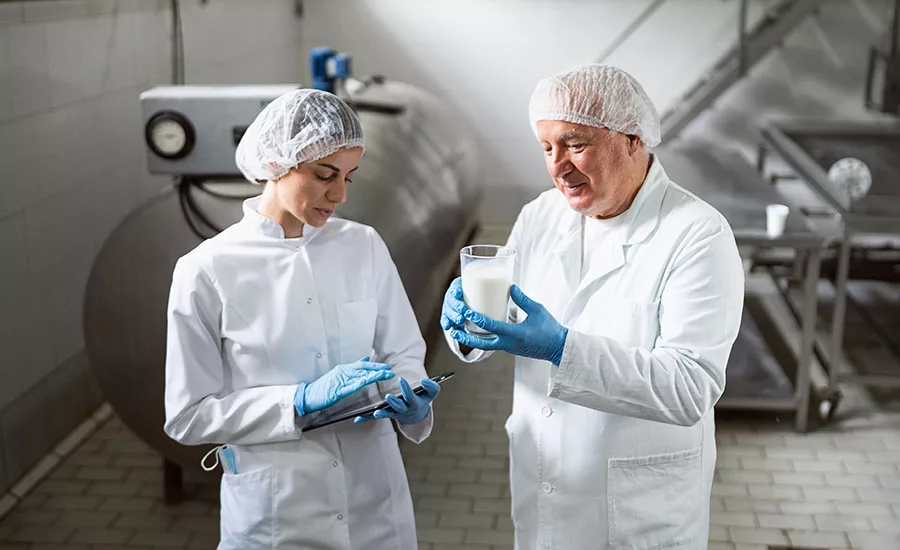
Digital tools have the potential to improve food safety and quality management in the U.S. dairy sector, but adoption remains uneven and is strongly influenced by company size, according to the findings of a recent survey published in JDS Communications. The study was authored by Jun Su, Ph.D. student, and Professor Martin Wiedmann, Ph.D., D.V.M. in the Cornell University Department of Food Science.
To assess industry needs, the researchers interviewed 23 food safety and quality professionals from 18 dairy companies across the U.S., representing diverse company sizes and roles.
Uneven Adoption Linked to Company Size
The researchers found that digital tool adoption varied significantly by company size. Larger companies were more likely to use advanced digital systems, including predictive modeling platforms, laboratory information management systems (LIMS), and supplier management software. Some also reported using artificial intelligence (AI) to generate predictive insights and optimize operations.
In contrast, smaller firms often relied on paper-based systems or spreadsheets. Of the 18 companies included in the survey, ten reported continued dependence on paper-based processes, particularly among those with fewer than 1,000 employees.
Regulatory Pressure Driving Digitalization
Interviewees indicated that evolving regulatory requirements are accelerating digital adoption. Participants cited the U.S. Food and Drug Administration’s (FDA’s) Food Traceability Rule, fulfilling Section 204(d) of the Food Safety Modernization Act (FSMA 204), as a key driver.
Managers from larger firms said the rule’s requirements have prompted multi-year digitalization efforts, including implementing systems that aggregate data, automate reporting, and support compliance. The researchers noted that regulatory pressures are encouraging companies to modernize systems and align food safety practices with government standards.
Return on Investment Shapes Adoption Decisions
The study found that financial considerations play a central role in determining which digital tools are adopted. Companies prioritized tools that demonstrate a clear and tangible return on investment (ROI), especially in low-margin segments such as fluid milk production.
Looking for quick answers on food safety topics?
Try Ask FSM, our new smart AI search tool.
Ask FSM →
Some participants reported avoiding commercial software due to cost concerns, relying instead on manual tracking systems. The researchers concluded that adoption is more likely when digital tools contribute to efficiency, compliance, or profitability.
Need for Data Integration and Centralization
Participants identified fragmented data systems as a major challenge. Many reported working with disconnected platforms requiring manual data entry and transfers, increasing the risk of errors and inefficiencies.
Interviewees emphasized the need for integrated systems that serve as a “single source of truth,” enabling streamlined workflows, accurate reporting, and improved decision-making. The researchers noted that centralized data systems are also foundational for effective AI applications.
Demand for Environmental Monitoring Program Tools
The study highlighted a clear need for digital tools that support environmental monitoring programs (EMPs). Several companies, all with more than 1,000 employees, reported using commercial EMP software for scheduling, mapping, and data analysis.
Participants said these tools help track environmental sampling data, identify high-risk areas, and support compliance with zero-tolerance policies for pathogens such as Listeria monocytogenes in ready-to-eat (RTE) foods.
Implications for Industry and Technology Development
Overall, the findings suggest that digital transformation in the dairy industry is progressing but remains inconsistent. Larger firms are more advanced in adopting integrated and predictive technologies, while smaller companies face financial and technical barriers.
The researchers concluded that future digital tool development should focus on demonstrating ROI, enabling data integration, and supporting critical functions such as environmental monitoring, while addressing the needs of companies at different stages of digital maturity.