Pork Slaughterhouse Salmonella Isolates Remain Highly Susceptible to Common QAC Sanitizer Despite Resistance Genes
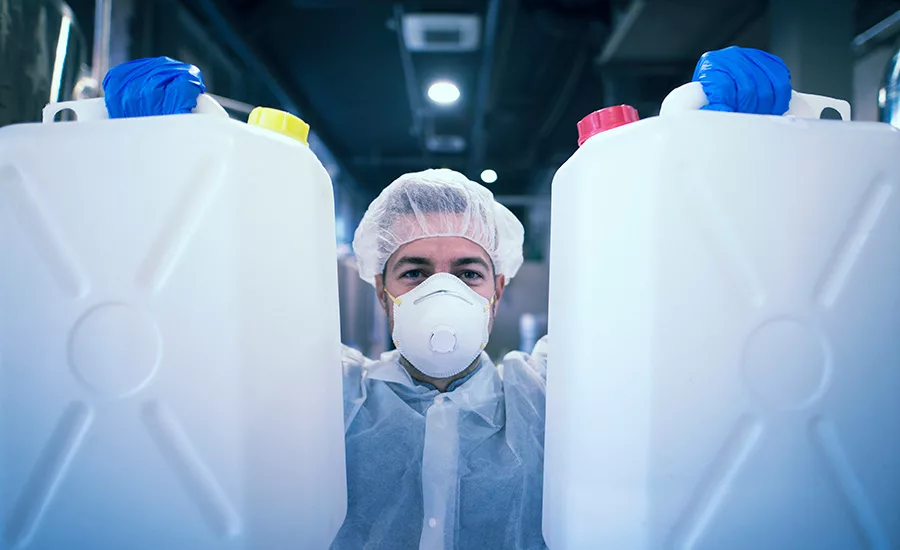
A recent study examining Salmonella isolates from pig carcasses has found that the bacteria remained susceptible to a commonly used quaternary ammonium compound (QAC) disinfectant formulation, even when some isolates carried genes associated with reduced susceptibility to such biocides.
Non-typhoidal Salmonella is among the most common foodborne pathogens globally, and pork products represent a significant transmission vehicle alongside eggs and poultry. In food processing environments such as slaughterhouses, the persistence of Salmonella is sometimes attributed to resistance to disinfectants used during sanitation.
To better understand this risk, researchers evaluated 44 non-typhoidal Salmonella isolates collected from pig carcasses from a Portuguese slaughterhouse for both the presence of QAC resistance genes and susceptibility to a commercial QAC-based disinfectant. The study also aimed to assess whether these genetic markers could contribute to environmental persistence within pork processing facilities.
The study, published in MDPI's Veterinary Medicine, was led by researchers at the University of Lisbon.
Resistance Genes Detected in Some Isolates
Using polymerase chain reaction (PCR) analysis, the researchers screened the isolates for three genes associated with QAC resistance: qacE, qacEΔ1, and qacF, which are known to encode efflux pumps that can reduce bacterial susceptibility to disinfectants.
The study found that 31.8 percent of isolates carried the qacEΔ1 gene, either alone or combined with other resistance genes. The qacF gene was detected in 29.5 percent of isolates, while qacE was not identified in any samples.
A total of 15.9 percent of the isolates contained both qacEΔ1 and qacF. The qacEΔ1 gene was notably associated with S. Derby, while qacF appeared more frequently among S. Rissen isolates.
Looking for quick answers on food safety topics?
Try Ask FSM, our new smart AI search tool.
Ask FSM →
Disinfectant Still Effective Even at Lower Concentrations
Despite the detection of resistance-associated genes, laboratory testing showed that the isolates were susceptible to the studied QAC disinfectant formulation.
Researchers selected 12 isolates for biocide susceptibility testing against eight concentrations of the QAC formulation, including levels significantly below the manufacturer’s recommended in-use concentration.
All isolates were found to be susceptible at 0.1 percent concentration—approximately 70 milligrams per liter (mg/L) of benzalkonium chloride (BKC)—a level 10 times lower than the minimum recommended in-use concentration.
The findings suggest that, under the experimental conditions tested, the presence of QAC resistance genes does not necessarily translate into reduced susceptibility to the disinfectant formulation.
Implications for Sanitation in Pork Processing
According to the researchers, the results indicate that the persistence of Salmonella in food processing environments should not be attributed solely to disinfectant resistance.
Instead, they emphasize that effective control of Salmonella in slaughterhouses and other processing environments relies on the correct implementation of cleaning and disinfection protocols, along with strong hygiene practices to prevent cross-contamination.
The researchers noted that further studies are needed to clarify the functional role of QAC resistance genes in Salmonella and their potential impact on disinfectant susceptibility under different conditions.