Food Safety
search
Ask Food Safety AI
cart
facebook twitter linkedin
  • Sign In
  • Create Account
  • Sign Out
  • My Account
Food Safety
  • NEWS
    • Latest News
    • White Papers
  • PRODUCTS
  • TOPICS
    • Contamination Control
    • Food Types
    • Management
    • Process Control
    • Regulatory
    • Sanitation
    • Supply Chain
    • Testing and Analysis
  • PODCAST
  • EXCLUSIVES
    • Food Safety Five Newsreel
    • eBooks
    • FSM Distinguished Service Award
    • Interactive Product Spotlights
    • Videos
  • BUYER'S GUIDE
  • MORE
    • ENEWSLETTER >
      • Archive Issues
      • Subscribe to eNews
    • Store
    • Sponsor Insights
    • ASK FSM AI
  • WEBINARS
  • FOOD SAFETY SUMMIT
  • EMAG
    • eMagazine
    • Archive Issues
    • Editorial Advisory Board
    • Contact
    • Advertise
  • SIGN UP!
NewsSupply ChainFoodservice/Retail

Fast Food Employee Survey Reveals Serious Food Safety Problems, Pressures to Work While Sick

By Food Safety Magazine Editorial Team
fast food drive thru
Image credit: RDNE Stock Project via Pexels
October 29, 2025

Nearly half of fast food workers reported witnessing at least one serious food safety problem at their workplace in the past year, according to a new survey conducted by the Consumer Federation of America (CFA) and the California Fast Food Workers Union (CFFWU). Examples of serious food safety issues include sewer water flooding, rodent and pest infestations, not having proper time or facilities for handwashing, cross-contamination and food temperature abuse, and the serving of expired or spoiled food to customers.

Moreover, respondents said they are likely to experience retaliation for speaking up about food safety issues, and that they face pressures from management to work while sick.

The survey was conducted in July 2025 with 338 workers at more than 200 fast food locations across California.

Serious Food Safety Problems Observed by Fast Food Workers

The survey revealed that serious food safety issues are frequently observed at fast food establishments by employees, with 47 percent of respondents saying that they saw at least one serious food safety problem at their fast food jobs in the past year. A third (34 percent) of respondents said they saw two or more serious food safety problems at work in the last year. Regarding specific food safety issues:

  • 29 percent of respondents reported seeing sewage/sewer water flooding while the store was open
  • 24 percent saw evidence of pests or vermin, such as droppings or bites on food or food packaging
  • 24 percent said they lack access to a working toilet or warm water for handwashing, and/or were not given enough time for thorough handwashing
  • 21 percent saw cross-contamination and/or foods not being stored at proper temperatures
  • 16 percent saw expired, rotten, or moldy food served to customers.

Among those who reported seeing issues with pests and vermin, sewer water flooding, toilets and handwashing, or cross-contamination and food storage temperatures, 53 percent said management did not address the problem(s) in a timely manner. Of those 53 percent of respondents, 82 percent said management did not fix the problem because they did not take it seriously, said it was not important, or said it was too expensive to fix.

Significantly, more than one-third (37 percent) of respondents who reported food safety issues at work or asked for changes to improve food safety said they experienced retaliation for doing so.

Restaurant Inspection Records Support Survey’s Findings

A review of restaurant inspection and closure records for California fast food brands by CFFWU supports the survey’s findings. Focusing on 20 of the largest fast food franchises in California’s 12 largest counties, the review analyzed available health department records dated 2022–2025. Across all brands and counties reviewed, nearly 250 incidents were identified that involved major health violations and/or closures at fast food restaurants. Many of the incidents involved multiple major violations of health and safety laws, and over 75 percent of these incidents resulted in restaurant closures ordered by local health officials.

CFA and CFFWU say that the incidents identified in the review likely represent only a small fraction of actual health violations, due to “complaint gaps” and low numbers of inspections due to inadequate enforcement.

Fast Food Workers Face the Pressure to Work While Sick

In addition to the observation of serious food safety problems, another key issue reported by survey respondents include the pressure to work while exhibiting symptoms of infectious illnesses—despite the spread of pathogens by sick employees being a leading cause of foodborne illness originating at restaurants. According to the U.S. Centers for Disease Control and Prevention’s (CDC’s) latest estimates, most viral foodborne illness outbreaks are caused by contamination from ill food workers at foodservice establishments.

Per the present survey, in the past year:

  • 60 percent of respondents said they or a coworker have worked while exhibiting symptoms of communicable illness, such as vomiting, diarrhea, fever, sore throat, or cough
  • 47 percent reported to work even though they were sick
  • 97 percent of those who said they reported to work while sick said they did so because of pressure from management, fears of retaliation, not being able to find coverage, or being unable to afford to miss work.

Recommendations to Improve Fast Food Safety

In their report, CFA and CFFWU propose several recommendations to improve food safety at fast food establishments, including:

  • Bringing fast food employers into compliance with relevant food safety and occupational safety regulations
  • Strengthened enforcement of public health and workplace safety laws, including full staffing of relevant local and state departments
  • Bolstering mechanisms to protect workers from retaliation for reporting hazards and refusing to work while sick
  • Training and education for fast food workers on what to do if their employers ignore food safety hazards or pressure sick employees to work, as well as how to access paid sick leave.

Looking for quick answers on food safety topics?
Try Ask FSM, our new smart AI search tool.
Ask FSM →


KEYWORDS: California Consumer Federation of America employee health restaurants survey

Share This Story

Fsm purple logo 200x200

The Food Safety Magazine editorial team comprises Bailee Henderson, Digital Editor ✉; Adrienne Blume, M.A., Editorial Director; and Stacy Atchison, Publisher.

Recommended Content

JOIN TODAY
to unlock your recommendations.

Already have an account? Sign In

  • people holding baby chicks

    Serovar Differences Matter: Utility of Deep Serotyping in Broiler Production and Processing

    This article discusses the significance of Salmonella in...
    Methods
    By: Nikki Shariat Ph.D.
  • woman washing hands

    Building a Culture of Hygiene in the Food Processing Plant

    Everyone entering a food processing facility needs to...
    Food Prep/Handling
    By: Richard F. Stier, M.S.
  • graphical representation of earth over dirt

    Climate Change and Emerging Risks to Food Safety: Building Climate Resilience

    This article examines the multifaceted threats to food...
    Risk Assessment
    By: Maria Cristina Tirado Ph.D., D.V.M. and Shamini Albert Raj M.A.
Manage My Account
  • eMagazine Subscription
  • Subscribe to eNewsletter
  • Manage My Preferences
  • Website Registration
  • Subscription Customer Service

More Videos

Sponsored Content

Sponsored Content is a special paid section where industry companies provide high quality, objective, non-commercial content around topics of interest to the Food Safety Magazine audience. All Sponsored Content is supplied by the advertising company and any opinions expressed in this article are those of the author and not necessarily reflect the views of Food Safety Magazine or its parent company, BNP Media. Interested in participating in our Sponsored Content section? Contact your local rep!

close
  • Salmonella bacteria
    Sponsored byThermoFisher

    Food Microbiology Testing Methods: Salmonella species

  • a diagram explaining indicator organisms
    Sponsored byHygiena

    How Proactive Listeria Testing Helps Prevent Six- and Seven-Figure Recalls

  • woman grocery shopping
    Sponsored byCorbion

    Designing Safety Into Every Bite: Proactive Risk Mitigation for Refrigerated Foods

Popular Stories

food Safety Assurance

eBook | Food Safety Assurance for Dairy and Low-Moisture Foods

hospital patient

Foodborne Illness Outbreaks and Serious Listeria Infections Rising in EU

baby eating bottle

Coalition Urges RFK Jr. to Fix Infant Formula Oversight Problems that Allowed Infant Botulism Outbreak

Events

May 11, 2026

The Food Safety Summit

Stay informed on the latest food safety trends, innovations, emerging challenges, and expert analysis. Leave the Summit with actionable insights ready to drive measurable improvements in your organization. Do not miss this opportunity to learn from experts about contamination control, food safety culture, regulations, sanitation, supply chain traceability, and so much more.

View All

Products

Global Food Safety Microbial Interventions and Molecular Advancements

Global Food Safety Microbial Interventions and Molecular Advancements

See More Products

Related Articles

  • flour in a sifter on wood surface

    Industry Survey Reveals Key Challenges to Ensuring Low-Moisture Food Safety

    See More
  • buffet of food

    FSA Survey Reveals Possible Food Safety Regulatory Changes in UK, Assesses Public Opinion

    See More
  • digital illustration of a globe growing off a branch like fruit

    FAO Illustrates Approach to Ensuring Food Safety While Moving Toward Circular Agri-Food Systems

    See More

Related Products

See More Products
  • 1119053595.jpg

    Food Safety for the 21st Century: Managing HACCP and Food Safety throughout the Global Supply Chain, 2E

  • 9781498721776.jpg

    Handbook of Food Processing: Food Safety, Quality, and Manufacturing Processes

  • 1119160553.jpg

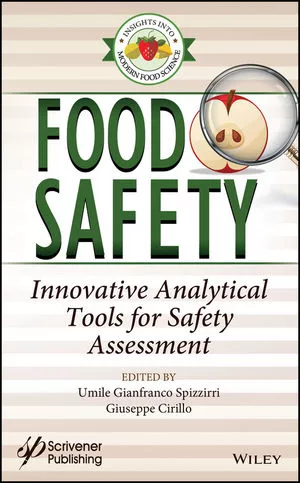
    Food Safety: Innovative Analytical Tools for Safety Assessment

See More Products

Related Directories

  • WorkForge

    WorkForge is reshaping the landscape of learning and development in the food manufacturing industry. Our comprehensive solution provides a centralized hub for off-the-shelf and customizable content, an advanced Learning Management System (LMS), and expert consulting services. WorkForge creates bespoke learning experiences where employees can access tailored training at their convenience, promoting universal learning across diverse environments and devices.
×

Never miss the latest news and trends driving the food safety industry

eNewsletter | Website | eMagazine

JOIN TODAY!
  • RESOURCES
    • Advertise
    • Contact Us
    • Directories
    • Store
    • Want More
  • SIGN UP TODAY
    • Create Account
    • eMagazine
    • eNewsletter
    • Customer Service
    • Manage Preferences
  • SERVICES
    • Marketing Services
    • Reprints
    • Market Research
    • List Rental
    • Survey/Respondent Access
  • STAY CONNECTED
    • LinkedIn
    • Facebook
    • Instagram
    • X (Twitter)
  • PRIVACY
    • PRIVACY POLICY
    • TERMS & CONDITIONS
    • DO NOT SELL MY PERSONAL INFORMATION
    • PRIVACY REQUEST
    • ACCESSIBILITY

Copyright ©2025. All Rights Reserved BNP Media.

Design, CMS, Hosting & Web Development :: ePublishing