Food Safety
search
Ask Food Safety AI
cart
facebook twitter linkedin
  • Sign In
  • Create Account
  • Sign Out
  • My Account
Food Safety
  • NEWS
    • Latest News
    • White Papers
  • PRODUCTS
  • TOPICS
    • Contamination Control
    • Food Types
    • Management
    • Process Control
    • Regulatory
    • Sanitation
    • Supply Chain
    • Testing and Analysis
  • PODCAST
  • EXCLUSIVES
    • Food Safety Five Newsreel
    • eBooks
    • FSM Distinguished Service Award
    • Interactive Product Spotlights
    • Videos
  • BUYER'S GUIDE
  • MORE
    • ENEWSLETTER >
      • Archive Issues
      • Subscribe to eNews
    • Store
    • Sponsor Insights
    • ASK FSM AI
  • WEBINARS
  • FOOD SAFETY SUMMIT
  • EMAG
    • eMagazine
    • Archive Issues
    • Editorial Advisory Board
    • Contact
    • Advertise
  • SIGN UP!
NewsContamination ControlFood TypeAllergensAlternative ProteinsPlant-Based

Researchers Characterize Potential Toxicological, Allergenic Effects of Emerging Protein Sources
By Bailee Henderson
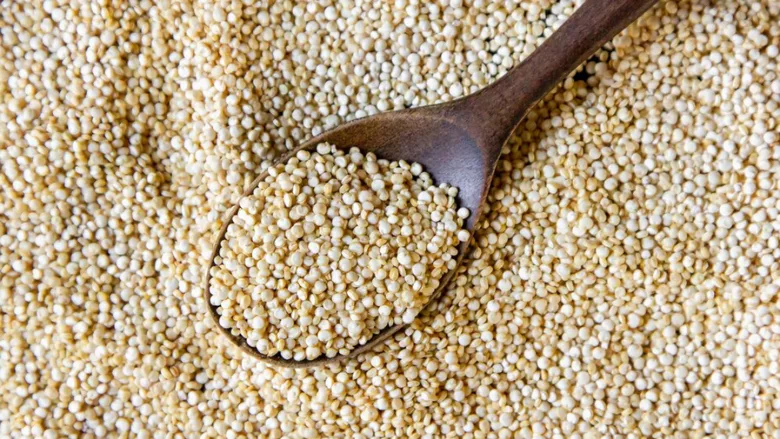
dry quinoa and a wooden spoon

Image credit: KamranAydinov via Freepik

February 12, 2025

Researchers from Wageningen University and Research (WUR) have characterized the toxicological effects and allergenic potential of emerging alternative protein sources in a recent review.

The review looked at alternative protein sources currently being explored for their sustainability and their potential in meeting global protein demand. Specifically, the scope of the literature search included legumes (i.e., fava beans, mung beans, lentils, black gram, cowpea), quinoa, hemp, leaf proteins, microalgae, and duckweed. The literature showed that all of the protein sources investigated can contribute to adverse toxicological effects or allergic reactions in susceptible people, to some extent.

The presence of plant secondary metabolites—namely, antinutritional factors (ANFs), phytoestrogens, and oligosaccharides—were identified. The occurrences of secondary metabolites alone are not sufficient for establishing any level of toxicity or risk, and at low doses, some of these compounds are even considered active ingredients with beneficial effects. Still, others, like pyrimidine glycosides, are toxic for certain populations (e.g., those with favism, a type of hemolytic anemia associated with the ingestion of fava beans), even at low doses. The researchers noted that the occurrences of secondary metabolites for emerging protein sources are not significantly different from those observed in well-established protein sources, like soybeans.

Some toxicological threshold values for the leaf protein Moringa, duckweeds, and microalgae have already been established. Additionally, microalgae grown under stressful conditions can be cytotoxic for mammals and can accumulate toxic elements from the environment, which can then be transferred to aquatic animals.

Regarding allergenicity, all of the protein sources investigated have the potential to cause allergic reactions in multiple ways. Except for quinoa and duckweed, allergens or allergen-like proteins are intrinsic to all of the protein sources included in the review. However, only the allergens in lentils, mung beans, and hemp seeds are included in the classification system established by the World Health Organization (WHO)/International Union of Immunological Societies (IUIS) Allergen Nomenclature Subcommittee. None of the protein sources investigated are regulated priority allergens in the EU or U.S., meaning that their potential presence does not have to be indicated on food allergen labels, and the use of precautionary allergen labeling (PAL) is not standardized.

Moreover, the potential of cross-reactivity (when the immune system reacts to a substance because it is similar to another substance to which the body is already allergic) was found for all protein sources, either with regulated or non-regulated allergens.

Importantly, the researchers highlighted the existing knowledge gaps about how the emerging alternative proteins are processed, or how processing may affect the safety of final products. They underline the need for further research into the effective elimination of toxic plant secondary metabolites and allergens during processing, while not introducing processing contaminants and while maintaining digestibility and functionality.

The study, published in Comprehensive Reviews in Food Science and Food Safety, was conducted by Matilde Milana, M.Sc., a Ph.D. Candidate at Wageningen Food Safety Research; Esther D. van Asselt, Ph.D., Senior Food Safety Scientist at Wageningen Food Safety Research; and Ine van der Fels-Klerx, Ph.D., Special Professor of Food Safety Economics and Principle Scientist and Project Manager at Wageningen Food Safety Research.


Looking for quick answers on food safety topics?
Try Ask FSM, our new smart AI search tool.
Ask FSM →


KEYWORDS: novel foods study Wageningen University

Share This Story

Baileehendersonmay23

Bailee Henderson is the Digital Editor of Food Safety Magazine. She can be reached at hendersonb@bnpmedia.com.

Recommended Content

JOIN TODAY
to unlock your recommendations.

Already have an account? Sign In

  • people holding baby chicks

    Serovar Differences Matter: Utility of Deep Serotyping in Broiler Production and Processing

    This article discusses the significance of Salmonella in...
    Testing & Analysis
    By: Nikki Shariat Ph.D.
  • woman washing hands

    Building a Culture of Hygiene in the Food Processing Plant

    Everyone entering a food processing facility needs to...
    Sanitation
    By: Richard F. Stier, M.S.
  • graphical representation of earth over dirt

    Climate Change and Emerging Risks to Food Safety: Building Climate Resilience

    This article examines the multifaceted threats to food...
    Best Practices
    By: Maria Cristina Tirado Ph.D., D.V.M. and Shamini Albert Raj M.A.
Manage My Account
  • eMagazine Subscription
  • Subscribe to eNewsletter
  • Manage My Preferences
  • Website Registration
  • Subscription Customer Service

More Videos

Sponsored Content

Sponsored Content is a special paid section where industry companies provide high quality, objective, non-commercial content around topics of interest to the Food Safety Magazine audience. All Sponsored Content is supplied by the advertising company and any opinions expressed in this article are those of the author and not necessarily reflect the views of Food Safety Magazine or its parent company, BNP Media. Interested in participating in our Sponsored Content section? Contact your local rep!

close
  • Salmonella bacteria
    Sponsored byThermoFisher

    Food Microbiology Testing Methods: Salmonella species

  • a diagram explaining indicator organisms
    Sponsored byHygiena

    How Proactive Listeria Testing Helps Prevent Six- and Seven-Figure Recalls

  • woman grocery shopping
    Sponsored byCorbion

    Designing Safety Into Every Bite: Proactive Risk Mitigation for Refrigerated Foods

Popular Stories

NRTE breaded stuffed chicken

USDA Indefinitely Delays Enforcement of Salmonella as Adulterant in Raw Breaded, Stuffed Chicken

non-conforming product

How to Handle Non-Conforming Product

spoonfuls of food ingredients

FDA’s Developing Rule to Tighten GRAS Oversight Moves to White House

Events

December 11, 2025

How to Develop and Implement an Effective Food Defense Strategy

Live: December 11, 2025 at 2:00 pm EDT: From this webinar, attendees will learn common areas where companies encounter challenges in their food defense strategies and how to address them.

May 11, 2026

The Food Safety Summit

Stay informed on the latest food safety trends, innovations, emerging challenges, and expert analysis. Leave the Summit with actionable insights ready to drive measurable improvements in your organization. Do not miss this opportunity to learn from experts about contamination control, food safety culture, regulations, sanitation, supply chain traceability, and so much more.

View All

Products

Global Food Safety Microbial Interventions and Molecular Advancements

Global Food Safety Microbial Interventions and Molecular Advancements

See More Products

Related Articles

  • Woman reading the warning label on a bottle of wine

    A 40-Year Hangover: Efforts to Revive 1980s Advocacy About the Potential Negative Effects of Alcohol Consumption

    See More
  • cola in a glass

    Researchers Say FDA Should Look Closer at Multigenerational Effects of Aspartame After Study Suggests Learning, Memory Deficits

    See More
  • bowl of cereal and milk

    Researchers Stress Importance of Monitoring Emerging Unregulated Mycotoxins in Food

    See More

Related Products

See More Products
  • 1444333348.jpg

    Handbook of Food Safety Engineering

  • 9781498721776.jpg

    Handbook of Food Processing: Food Safety, Quality, and Manufacturing Processes

  • 9781138070912.jpg

    Trends in Food Safety and Protection

See More Products

Related Directories

  • Creative Diagnostics

    Creative Diagnostics is a leading manufacturer and supplier of antibodies, small molecule conjugates and critical assay reagents for the analysis of food, feed, environmental and toxicological samples. Its product portfolio covers a wide range of analytes including mycotoxins, drug residues, pesticides, contaminants, food allergens, food pathogens and vitamins.
×

Never miss the latest news and trends driving the food safety industry

eNewsletter | Website | eMagazine

JOIN TODAY!
  • RESOURCES
    • Advertise
    • Contact Us
    • Directories
    • Store
    • Want More
  • SIGN UP TODAY
    • Create Account
    • eMagazine
    • eNewsletter
    • Customer Service
    • Manage Preferences
  • SERVICES
    • Marketing Services
    • Reprints
    • Market Research
    • List Rental
    • Survey/Respondent Access
  • STAY CONNECTED
    • LinkedIn
    • Facebook
    • Instagram
    • X (Twitter)
  • PRIVACY
    • PRIVACY POLICY
    • TERMS & CONDITIONS
    • DO NOT SELL MY PERSONAL INFORMATION
    • PRIVACY REQUEST
    • ACCESSIBILITY

Copyright ©2025. All Rights Reserved BNP Media.

Design, CMS, Hosting & Web Development :: ePublishing