Food Safety
search
Ask Food Safety AI
cart
facebook twitter linkedin instagram youtube
  • Sign In
  • Create Account
  • Sign Out
  • My Account
Food Safety
  • NEWS
    • Latest News
    • Food Safety Five Newsreel
  • PRODUCTS
  • TOPICS
    • Contamination Control
    • Food Types
    • Management
    • Process Control
    • Regulatory
    • Sanitation
    • Supply Chain
    • Testing and Analysis
  • PODCAST
  • EXCLUSIVES
    • eBooks
    • Sponsored Insights
    • Sponsored White Papers
    • FSM Distinguished Service Award
    • Interactive Product Spotlights
    • Videos
  • MORE
    • BUYER'S GUIDE
    • NEWSLETTERS >
      • Archive Issues
      • Subscribe to eNews
    • Store
    • ASK FSM AI
  • WEBINARS
  • FOOD SAFETY SUMMIT
  • FSM FEATURES
    • FSM Features Collection
    • eMag Archives
    • Editorial Advisory Board
    • Contact
    • Advertise
  • SIGN UP!
NewsContamination ControlFood TypeMicrobiological ControlProduceRefrigerated/Frozen

Survey Says Nine Percent of Consumers Do Not Cook Frozen Vegetables Before Eating
By Bailee Henderson
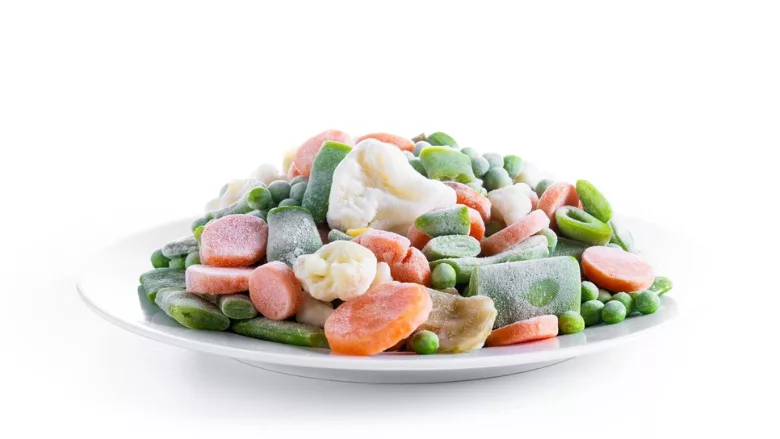
plate of frozen mixed vegetables

Image credit: chandlervid85 via Freepik

March 18, 2025

According to a recent consumer survey, nine percent of respondents reported eating prepackaged frozen vegetables raw, raising concern for foodborne illness and underlining the importance of preventive controls in frozen vegetable production. Additionally, 40 percent of respondents reported preparing frozen vegetables without following cooking instructions.

The study, published in the Journal of Food Protection, was conducted by researchers from the U.S. Centers for Disease Control and Prevention (CDC) and the Oak Ridge Institute for Science and Education.

According to estimates from the U.S. Interagency Food Safety Analytics Collaboration (IFSAC), vegetables are a significant source of foodborne illnesses; in 2020, 28.4 percent of Salmonella infections, 63.4 percent of E. coli O157 infections, and 29.3 percent of Listeria monocytogenes infections were attributed to seeded vegetables, sprouts, vegetable row crops, and other produce. Moreover, in 2016, a listeriosis outbreak was linked to frozen vegetables for the first time in the U.S., resulting in nine hospitalizations and three deaths.

Observations from outbreak investigations and previous studies have demonstrated that fresh and frozen raw vegetables can be contaminated with foodborne pathogens. Since freezing does not kill bacteria, it is important to follow cooking instructions for frozen vegetables to prevent foodborne illness. However, the literature around consumer practices and risk perception regarding frozen vegetable preparation is sparse. To fill this knowledge gap, the researchers collected survey responses from more than 3,500 people.

Of the 3,521 people who provided a response about their preparation of prepackaged frozen vegetables, 8.7 percent reported preparing or consuming them raw, 5.6 percent reported adding them directly to a blender to make smoothies or juices, 2.7 percent reported eating them raw-frozen, and 1.9 percent reported eating them thawed but uncooked. Additionally, 40.6 percent of respondents did not report following cooking instructions on the package.

Approximately one-third of respondents (34.1 percent) agreed with the statement “prepackaged frozen vegetables can be contaminated with germs (like Salmonella, E. coli, and Listeria) that can make people sick,” and only two-thirds (63.5 percent) of respondents agreed with the statement “prepackaged frozen vegetables need to be fully cooked before consuming them.” Interestingly, whether or not respondents agreed that frozen vegetables could be contaminated with “germs” was not associated with whether they only cook or ever consume them raw. However, agreement that prepackaged frozen vegetables need to be fully cooked before consuming them was associated with whether they only cook or ever consume them raw.

Based on their findings, the researchers stress the importance of preventive controls and processing steps, such as blanching, to reduce foodborne pathogen contamination of frozen vegetables before they reach the consumer.

Looking for quick answers on food safety topics?
Try Ask FSM, our new smart AI search tool.
Ask FSM →


KEYWORDS: CDC frozen vegetables study

Share This Story

1786925983615

Bailee Henderson is the Director of Content Strategy for Food Safety Magazine. In the day-to-day, she covers industry-relevant current events, regulatory affairs, and scientific developments. She also produces the Food Safety Five Newsreel, edits the twice-weekly Food Safety Digest newsletter, and manages the brand's social media channels. Notably, Bailee's coverage for Food Safety Magazine has been featured in national televised news segments including CBS Sunday Morning and MSNBC's Rachel Maddow Show. She can be reached at hendersonb@bnpmedia.com.

Recommended Content

JOIN TODAY
to unlock your recommendations.

Already have an account? Sign In

  • people holding baby chicks

    Serovar Differences Matter: Utility of Deep Serotyping in Broiler Production and Processing

    This article discusses the significance of Salmonella in...
    Microbiological Control
    By: Nikki Shariat Ph.D.
  • woman washing hands

    Building a Culture of Hygiene in the Food Processing Plant

    Everyone entering a food processing facility needs to...
    Personal Hygiene/Handwashing
    By: Richard F. Stier, M.S.
  • graphical representation of earth over dirt

    Climate Change and Emerging Risks to Food Safety: Building Climate Resilience

    This article examines the multifaceted threats to food...
    International
    By: Maria Cristina Tirado Ph.D., D.V.M. and Shamini Albert Raj M.A.
Manage My Account
  • eMagazine Subscription
  • Subscribe to Newsletters
  • Manage My Preferences
  • Website Registration
  • Subscription Customer Service

More Videos

Sponsored Content

Sponsored Content is a special paid section where industry companies provide high quality, objective, non-commercial content around topics of interest to the Food Safety Magazine audience. All Sponsored Content is supplied by the advertising company and any opinions expressed in this article are those of the author and not necessarily reflect the views of Food Safety Magazine or its parent company, BNP Media. Interested in participating in our Sponsored Content section? Contact your local rep!

close
  • Top view portrait of two factory workers standing by conveyor belt during quality inspection at food production, copy space
    Sponsored byFlexXray

    Foreign Material By the Numbers: What the 2026 Benchmark Report Reveals

  • a conveyorized industrial metal detector system that appears to resemble a Loma Systems IQ4 Metal Detector setup with an integrated conveyor belt and control panel for food or package inspection.
    Sponsored byMettler Toledo

    Beyond Detection: How to Avoid Physical Contamination in Food Through a Smarter Inspection Strategy

  • The image displays a bottling plant production line, commonly used in the beverage industry for filling and packaging soft drinks.
    Sponsored byBIOIONIX

    Sustainability with ROI: A Beverage Producer Case Study in Water Savings

Popular Stories

rangpur lime

Pathogens Found on Brazilian Citrus Fruit Present Emerging Food Safety Concerns

lightbulb on a plate next to fork and knife representing food innovation ideas

EFSA Outlines Scientific Needs for Regulatory Preparedness, Risk Assessment

farmland

California Enacts Law to Track Use of PFAS Pesticides

allergens ebook

Events

October 6, 2026

Advances in Environmental Monitoring Science and Strategy

Live: October 6, 2026 at 2:00 pm EDT: This webinar will cover how environmental monitoring science and EMP strategies support sanitation verification and the safe production of food.

October 15, 2026

How to Prevent Physical Contamination in Food Production and Strengthen Compliance

Live: October 15, 2026 at 2:00 pm EDT: Attend this webinar to gain insight into how product inspection helps protect your brand, reduce recall risk, and support compliance.

October 29, 2026

FDA Proposes Major GRAS Reform: What It Could Mean for Your Business

Live: October 29, 2026 at 2:00 pm EDT: Attend this webinar to examine potential implications for self-GRAS, Flavor and Extract Manufacturers Association (FEMA) GRAS, and food-contact substances.

View All

Products

Global Food Safety Microbial Interventions and Molecular Advancements

Global Food Safety Microbial Interventions and Molecular Advancements

See More Products

Related Articles

  • chicken-123rf copy 3.jpg

    USDA to Consumers: Do Not Wash Raw Poultry

    See More
  • crops being sprayed

    USDA Testing for 2023 Shows 99 Percent of Foods Do Not Exceed Pesticide Residue Tolerances

    See More
  • man holding barcode scanner in warehouse

    Survey Says 94 Percent of U.S. Adults Concerned About Frequency of Food Recalls

    See More

Related Products

See More Products
  • 9781498721776.jpg

    Handbook of Food Processing: Food Safety, Quality, and Manufacturing Processes

  • 1444333348.jpg

    Handbook of Food Safety Engineering

  • food-safety-making.jpg

    Food Safety: Making Foods Safe and Free From Pathogens

See More Products

Related Directories

  • On Target Packaging

    On Target Packaging is a production/maintenance servicer for combination and check weighers. We do not sell or process food, but provide service/repairs, and equipment for the food industry
  • Wawona Frozen Foods

    Wawona is a reliable provider of frozen peaches, plums, pears and strawberries to a wide variety of food manufacturers. Wawona’s “fresh frozen” processing provides industrial customers with ideal fruit ingredients to perform consistently and reliably. The frozen fruit also maintains its off-the-tree or -vine fresh flavors to ensure the highest customer satisfaction in products such as: Pies, cobblers, ice cream, jams and jellies, fruit fillings, fruit purees, fruit-flavored yogurt, smoothies, and juices.
×

Never miss the latest news and trends driving the food safety industry

Newsletters | Website | FSM Features Collection

JOIN TODAY!
  • RESOURCES
    • Advertise
    • Contact Us
    • Directories
    • Store
    • Want More
  • SIGN UP TODAY
    • Create Account
    • eMagazine
    • Newsletters
    • Customer Service
    • Manage Preferences
  • SERVICES
    • Marketing Services
    • Reprints
    • Market Research
    • List Rental
    • Survey/Respondent Access
  • STAY CONNECTED
    • LinkedIn
    • Facebook
    • Instagram
    • X (Twitter)
  • PRIVACY
    • PRIVACY POLICY
    • TERMS & CONDITIONS
    • DO NOT SELL MY PERSONAL INFORMATION
    • PRIVACY REQUEST
    • ACCESSIBILITY

Copyright ©2026. All Rights Reserved BNP Media, Inc. and BNP Media II, LLC.

Design, CMS, Hosting & Web Development :: ePublishing