In a new opinion, the European Food Safety Authority (EFSA) is proposing to modify the existing maximum residue limits (MRLs) for agricultural chemical chlormequat in oats, as well as in the products of food-producing animals.
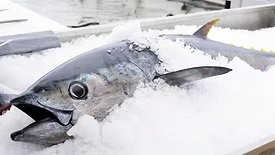
To combat food fraud and reduce instances of scombroid poisoning due to histamine contamination, a new European Commission draft regulation would tighten regulations for freezing tuna onboard vessels.
According to the New York Times and CBS News, some fired FDA food safety scientists and terminated FDA food safety labs are being reinstated, as well as several dozen inspectoral support staff, following mass layoffs handed down from the Trump Administration.
A recent study showed the high prevalence of Campylobacter in Nigeria with poultry as the primary reservoir, carrying significant food safety implications, and highlighting the importance of controlling the pathogen from a One Health perspective.
A study has validated and verified two gas-phase hydroxyl radical processes for inactivating Salmonella and several avian pathogens on poultry hatchery eggs without affecting the egg hatch rate or development of hatched chicks, providing a viable alternative to traditionally used, hazardous and toxic formaldehyde treatments.
USDA’s Food Safety and Inspection Service (USDA-FSIS) sampled and tested meat, chicken, and Siluriformes fish (catfish) for 16 per- and polyfluoroalkyl substances (PFAS), detecting “forever chemicals” in less than 0.2–0.3 percent of all sample types except wild-caught catfish, of which nearly half contained at least one PFAS.
In an April 25 speech, UK Food Standards Agency (FSA) Chief Executive Katie Pettifer described efforts FSA is taking to improve meat industry regulation, including supporting the adoption of new technologies, negotiating international trade agreements, addressing inspector and veterinarian workforce shortages, evaluating inspection charge discounts, and tackling food crime.
A study led by researchers from the University of Antwerp has found that ultra-processed plant-based foods contain high levels of organophosphorus flame retardants and plasticizers in comparison to their animal-based analogs, but a dietary exposure risk assessment did not raise a health concern for the adult population, including vegans.
The FoodSafe Hub Drain from FoodSafe Drains is hygienically designed for maximum sanitation and efficiency, and is ideal for food and beverage facilities with multiple entry lines.
Corbion has introduced a new, clean-label ingredient for mold inhibition in baked goods—Verdad Essence WH100—alongside an enhanced Natural Mold Inhibition Model to help bakers make informed formulation decisions.