Food Safety
search
Ask Food Safety AI
cart
facebook twitter linkedin
  • Sign In
  • Create Account
  • Sign Out
  • My Account
Food Safety
  • NEWS
    • Latest News
    • White Papers
  • PRODUCTS
  • TOPICS
    • Contamination Control
    • Food Types
    • Management
    • Process Control
    • Regulatory
    • Sanitation
    • Supply Chain
    • Testing and Analysis
  • PODCAST
  • EXCLUSIVES
    • Food Safety Five Newsreel
    • eBooks
    • FSM Distinguished Service Award
    • Interactive Product Spotlights
    • Videos
  • BUYER'S GUIDE
  • MORE
    • ENEWSLETTER >
      • Archive Issues
      • Subscribe to eNews
    • Store
    • Sponsor Insights
    • ASK FSM AI
  • WEBINARS
  • FOOD SAFETY SUMMIT
  • EMAG
    • eMagazine
    • Archive Issues
    • Editorial Advisory Board
    • Contact
    • Advertise
  • SIGN UP!
NewsContamination ControlRegulatoryChemical

EPA Revokes PFAS Drinking Water Limits, Leaving More Than 30 Million at Risk

By Food Safety Magazine Editorial Team
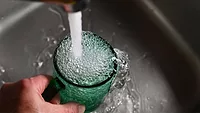
drinking water fountain

Image credit: taichi nakamura via Unsplash

July 22, 2025

The National Resources Defense Council (NRDC) has created a comprehensive map, based on U.S. Environmental Protection Agency (EPA) data, that shows the extent of “forever chemical” contamination in U.S. drinking water—revealing that more than 73 million people are being served by water systems with contamination above now-revoked EPA maximum limits for any one of six problematic per- and polyfluoroalkyl substances (PFAS). In May 2025, EPA announced plans to partially roll back the Biden-era maximum limits, rescinding the regulations for four of the chemicals and delaying the compliance date for the remaining two PFAS types. NRDC experts say their map demonstrates how rolling back these drinking water limits will leave millions of Americans unprotected.

More specifically, in April 2024, EPA issued the first-ever national, legally enforceable drinking water standard to protect Americans from exposure to harmful PFAS:  PFOA, PFOS, PFNA, PFHxS, and HFPO-DA (also known as GenX chemicals), as well as a limit for mixtures of any two or more of four PFAS: PFNA, PFHxS, PFBS, and GenX chemicals. These PFAS types are known to cause harm to human health and for their widespread environmental contamination.

On May 14, 2025, Trump-appointed EPA Administrator Lee Zeldin announced that the agency would be rescinding the regulations for PFNA, PFHxS, GenX chemicals, and PFBS. EPA also extended the compliance deadline for PFOA and PFOS from 2029 to 2031.

Exposure to PFAS has been linked to cancer, impacts to the liver and heart, and immune and developmental damage to infants and children. PFAS are often referred to as “forever chemicals” due to their inability to break down in the environment or the human body.

According to NRDC’s map, which visualizes data from EPA’s Fifth Unregulated Contaminant Monitoring Rule (UCMR5) testing program, more than 73 million people are being served by water systems with water that had at least one UCMR5 test sample above the EPA’s PFAS threshold. Of those 73 million Americans, 30 million are served by water systems with PFAS concentrations exceeding limits for one of the four PFAS that EPA plans to roll back.

Moreover, when additional, unregulated PFAS are considered, the data shows that nearly half of the people across the U.S. whose water was tested under UCMR5 are supplied by systems that detected some level of PFAS. UCMR5 testing is ongoing, and the number of Americans exposed to high levels of PFAS through their drinking water may increase as additional results are released. 

View NRDC’s map here.

Looking for quick answers on food safety topics?
Try Ask FSM, our new smart AI search tool.
Ask FSM →


KEYWORDS: EPA PFAS water water safety

Share This Story

Fsm purple logo 200x200

The Food Safety Magazine editorial team comprises Bailee Henderson, Digital Editor ✉; Adrienne Blume, M.A., Editorial Director; and Stacy Atchison, Publisher.

Recommended Content

JOIN TODAY
to unlock your recommendations.

Already have an account? Sign In

  • people holding baby chicks

    Serovar Differences Matter: Utility of Deep Serotyping in Broiler Production and Processing

    This article discusses the significance of Salmonella in...
    Contamination Control
    By: Nikki Shariat Ph.D.
  • woman washing hands

    Building a Culture of Hygiene in the Food Processing Plant

    Everyone entering a food processing facility needs to...
    Sanitation
    By: Richard F. Stier, M.S.
  • graphical representation of earth over dirt

    Climate Change and Emerging Risks to Food Safety: Building Climate Resilience

    This article examines the multifaceted threats to food...
    Contamination Control
    By: Maria Cristina Tirado Ph.D., D.V.M. and Shamini Albert Raj M.A.
Manage My Account
  • eMagazine Subscription
  • Subscribe to eNewsletter
  • Manage My Preferences
  • Website Registration
  • Subscription Customer Service

More Videos

Sponsored Content

Sponsored Content is a special paid section where industry companies provide high quality, objective, non-commercial content around topics of interest to the Food Safety Magazine audience. All Sponsored Content is supplied by the advertising company and any opinions expressed in this article are those of the author and not necessarily reflect the views of Food Safety Magazine or its parent company, BNP Media. Interested in participating in our Sponsored Content section? Contact your local rep!

close
  • Salmonella bacteria
    Sponsored byThermoFisher

    Food Microbiology Testing Methods: Salmonella species

  • a diagram explaining indicator organisms
    Sponsored byHygiena

    How Proactive Listeria Testing Helps Prevent Six- and Seven-Figure Recalls

  • woman grocery shopping
    Sponsored byCorbion

    Designing Safety Into Every Bite: Proactive Risk Mitigation for Refrigerated Foods

Popular Stories

NRTE breaded stuffed chicken

USDA Indefinitely Delays Enforcement of Salmonella as Adulterant in Raw Breaded, Stuffed Chicken

digital map of europe

EU Publishes Food Fraud Tool Mapping Thousands of Cases Since 2016

non-conforming product

How to Handle Non-Conforming Product

Events

December 11, 2025

How to Develop and Implement an Effective Food Defense Strategy

Live: December 11, 2025 at 2:00 pm EDT: From this webinar, attendees will learn common areas where companies encounter challenges in their food defense strategies and how to address them.

May 11, 2026

The Food Safety Summit

Stay informed on the latest food safety trends, innovations, emerging challenges, and expert analysis. Leave the Summit with actionable insights ready to drive measurable improvements in your organization. Do not miss this opportunity to learn from experts about contamination control, food safety culture, regulations, sanitation, supply chain traceability, and so much more.

View All

Products

Global Food Safety Microbial Interventions and Molecular Advancements

Global Food Safety Microbial Interventions and Molecular Advancements

See More Products

Related Articles

  • middle aged woman drinking bottled water outdoors

    FDA Testing Finds Bottled Water Samples Do Not Exceed EPA Limits for PFAS in Drinking Water

    See More
  • tap water

    French Food Safety Agency Finds PFAS in More Than 90 Percent of Drinking Water

    See More
  • glass of tap water getting filled in the kitchen sink

    California Bill Would Set State Drinking Water Limits for PFAS in Case EPA Standards are Weakened

    See More

Related Products

See More Products
  • food safety.jpg

    Food Safety Contaminants and Risk Assessment

  • 1119071127.jpg

    Food Safety, Risk Intelligence and Benchmarking

  • 9781138070912.jpg

    Trends in Food Safety and Protection

See More Products

Events

View AllSubmit An Event
  • October 30, 2025

    Preventing Foreign Material Contamination with the FM Maturity Model

    On Demand: From this webinar, attendees will learn best practices for prevention of FM contamination at the corporate and plant levels.
View AllSubmit An Event

Related Directories

  • Anatek Labs Inc.

    Anatek Labs, Inc is a full service environmental testing laboratory, with locations in Moscow, ID and Spokane, Yakima and Wenatchee, WA. Some of our services include testing for: pesticides, food pathogens, wastewater/soils, microbiology, compost, hazardous waste, PFC-PFAS, drinking water and more. Please visit our website for all tests and pricing.
×

Never miss the latest news and trends driving the food safety industry

eNewsletter | Website | eMagazine

JOIN TODAY!
  • RESOURCES
    • Advertise
    • Contact Us
    • Directories
    • Store
    • Want More
  • SIGN UP TODAY
    • Create Account
    • eMagazine
    • eNewsletter
    • Customer Service
    • Manage Preferences
  • SERVICES
    • Marketing Services
    • Reprints
    • Market Research
    • List Rental
    • Survey/Respondent Access
  • STAY CONNECTED
    • LinkedIn
    • Facebook
    • Instagram
    • X (Twitter)
  • PRIVACY
    • PRIVACY POLICY
    • TERMS & CONDITIONS
    • DO NOT SELL MY PERSONAL INFORMATION
    • PRIVACY REQUEST
    • ACCESSIBILITY

Copyright ©2025. All Rights Reserved BNP Media.

Design, CMS, Hosting & Web Development :: ePublishing