In this episode of Food Safety Matters, we speak to food regulatory legal expert Kathleen Sanzo, J.D. about the implications of FDA’s voluntary approach to phasing out synthetic food dyes from the U.S. food supply and how food companies can prepare.
EFSA established a provisional safe intake level for adults for CBD as a novel food while highlighting that data gaps continue to exist regarding possible effects of CBD on the liver and the endocrine, nervous, and reproductive systems.
The ready-to-use EZ-Check Listeria spp. Kit and EZ-Check Listeria monocytogenes Kit support Listeria detection in food product and environmental samples.
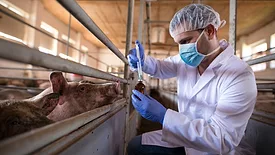
Food Standards Australia New Zealand (FSANZ) has published the findings of a national survey of antimicrobial resistance (AMR) in foodborne bacteria on raw beef, chicken, and pork meat at retail.
CalRecycle has issued a final draft of the Plastic Pollution Prevention and Packaging Producer Responsibility Act (SB 54), which establishes an extended producer responsibility (EPR) program to manage packaging and single-use plastic. Western Growers shared concerns about the produce industry’s ability to qualify for categorical exclusion.
As part of its efforts to encourage industry to phase out the use of petroleum-based synthetic food dyes, FDA is expanding the allowed uses of the label claim “no artificial colors” on food products and has approved a new naturally derived colorant for food.
The National Association of State Departments of Agriculture (NASDA) has set its federal policy priorities for 2026. Food safety-related issues are central to NASDA's 2026 advocacy work for the Farm Bill, animal diseases and traceability, and pesticides
The FAO/WHO Joint Expert Meeting on Microbiological Risk Assessment (JEMRA) has published a report on prevention and intervention measures for foodborne virus–commodity pairs of concern.
The researchers found that advanced, multi-step disinfection treatment significantly reduces the antibiotic resistance (AMR)-related food safety risks of wastewater reused for irrigation, while biological treated water remains a potential source of resistant bacteria contamination.
The Technical University of Denmark (DTU) National Food Institute is home to the new WHO Collaborating Center for Risk and Benefits of Foods and Diets.