Food Safety
search
Ask Food Safety AI
cart
facebook twitter linkedin instagram youtube
  • Sign In
  • Create Account
  • Sign Out
  • My Account
Food Safety
  • NEWS
    • Latest News
    • White Papers
  • PRODUCTS
  • TOPICS
    • Contamination Control
    • Food Types
    • Management
    • Process Control
    • Regulatory
    • Sanitation
    • Supply Chain
    • Testing and Analysis
  • PODCAST
  • EXCLUSIVES
    • Food Safety Five Newsreel
    • eBooks
    • FSM Distinguished Service Award
    • Interactive Product Spotlights
    • Videos
  • BUYER'S GUIDE
  • MORE
    • NEWSLETTERS >
      • Archive Issues
      • Subscribe to eNews
    • Store
    • Sponsor Insights
    • ASK FSM AI
  • WEBINARS
  • FOOD SAFETY SUMMIT
  • EMAG
    • eMagazine
    • Archive Issues
    • Editorial Advisory Board
    • Contact
    • Advertise
  • SIGN UP!
NewsRegulatorySupply ChainFDAImports/Exports

FDA Changes Import Entry Review Process for Regulated Goods, Effective August 4

By Food Safety Magazine Editorial Team
cargo ship at entry port at night

Image credit: Wiroj Sidhisoradej via Freepik

July 28, 2025

The U.S. Food and Drug Administration’s (FDA’s) Office of Inspections and Investigations (OII) Office of Import Operations (OIO) is changing its import entry review process for regulated goods from a geographic-based system to a national-based system.

Effective August 4, 2025, OIO will implement the Nationalized Entry Review (NER) program to address the increasing volume of imported FDA-regulated commodities driven by e-commerce growth, expanded trade volume, and supply chain complexities.  

The NER program implements a standardized, efficient, and technology-driven approach to import entry reviews across all ports of entry. FDA is transitioning from its current geographic location model to a national-based review system that will:  

  • Conduct entry admissibility reviews on a national basis versus the current port-by-port entry review approach
  • Utilize staff across multiple time zones for expanded coverage
  • Explore automation opportunities to streamline processes
  • Optimize resource allocation to focus on higher-risk products.

FDA says it will not change any other import processes or requirements. Industry must be aware of new communication protocols, effective August 4, which affects how industry contacts contact FDA regarding status of shipments under entry review that have not already gone to the field for assigned work. For entry status inquiries regarding:

  • Initial review status (e.g., pending review, documents requested, and etc.), contact NERInquiry@fda.hhs.gov
  • Field review status (e.g., pending exam/sampling, detained, refused, and etc.), contact the appropriate division at FDA Import Offices and Ports of Entry.

When contacting NERInquiry@fda.hhs.gov, the following guidelines apply:

  • Use this mailbox only for checking status of entries under initial review or providing entry documents
  • Email only one FDA mailbox at a time (sending out to multiple boxes may delay response)   
  • Use proper subject line formatting, including: Entry number (one entry number per email), commodity type [i.e., Animal Foods, Animal Drugs, Dietary Supplements, Food Related Products, Human Foods, Infant Formula, Medicated Feed, Multiple], and port code.

Check Import Trade Auxiliary Communications System (ITACS) for real-time entry status before contacting the NER team, and use ITACS whenever possible for faster processing.

Looking for quick answers on food safety topics?
Try Ask FSM, our new smart AI search tool.
Ask FSM →


KEYWORDS: OII

Share This Story

Fsm purple logo 200x200

The Food Safety Magazine editorial team comprises Bailee Henderson, Digital Editor ✉ and Adrienne Blume, M.A., Editorial Director.

Recommended Content

JOIN TODAY
to unlock your recommendations.

Already have an account? Sign In

  • people holding baby chicks

    Serovar Differences Matter: Utility of Deep Serotyping in Broiler Production and Processing

    This article discusses the significance of Salmonella in...
    Meat/Poultry
    By: Nikki Shariat Ph.D.
  • woman washing hands

    Building a Culture of Hygiene in the Food Processing Plant

    Everyone entering a food processing facility needs to...
    Facilities
    By: Richard F. Stier, M.S.
  • graphical representation of earth over dirt

    Climate Change and Emerging Risks to Food Safety: Building Climate Resilience

    This article examines the multifaceted threats to food...
    Management
    By: Maria Cristina Tirado Ph.D., D.V.M. and Shamini Albert Raj M.A.
Manage My Account
  • eMagazine Subscription
  • Subscribe to Newsletters
  • Manage My Preferences
  • Website Registration
  • Subscription Customer Service

More Videos

Sponsored Content

Sponsored Content is a special paid section where industry companies provide high quality, objective, non-commercial content around topics of interest to the Food Safety Magazine audience. All Sponsored Content is supplied by the advertising company and any opinions expressed in this article are those of the author and not necessarily reflect the views of Food Safety Magazine or its parent company, BNP Media. Interested in participating in our Sponsored Content section? Contact your local rep!

close
  • NEVIFIT 3 Compartment BPA-FREE
    Sponsored byCorbion

    The Risks of Ready-to-Eat: Five Ways to Protect Today's Prepared Meals

  • a group of workers in a food production facility
    Sponsored bySkillUp by Registrar Corp

    How to Build a Better Training Program: Data and Insights from the Global Food Safety Training Survey

  • the use of dual-energy X-ray food inspection technology to identify foreign contaminants.
    Sponsored byEagle by METTLER TOLEDO

    Precision Inspection Starts with the Right X-ray Detector

Popular Stories

green powder/moringa in wooden mortar

FDA Opens Third Salmonella–Moringa Outbreak Investigation of the Year

clover hill dairy recalled cheese products

Eight Sick, One Dead in Three-Year Listeria Outbreak Linked to Soft Cheese

fermented meat

Study is First to Analyze Trends in Foodborne Illness Outbreaks Linked to Non-Dairy Fermented Products

a practical guide to spoilage investigation webinar

Events

June 10, 2026

A Practical Guide to Spoilage Investigation and Prevention

Live: June 10, 2026 at 11:00 am EDT: Join this webinar to learn how to identify spoilage root causes, reduce risk, and apply data-driven strategies for prevention.

June 16, 2026

Sustainable Food Contact Materials: Where Regulation Meets Analytical Testing

Live: June 16, 2026 at 11:00 am EDT: This webinar explores how sustainability regulations are changing food contact material requirements, including packaging compliance, unintended substances, and per- and polyfluoroalkyl substances.

June 17, 2026

Living HACCP: Practical Steps for Implementation

Live: June 17, 2026, at 12:00 pm EDT: From this webinar, attendees will understand how social norms shape the way hazards are understood, how decisions are made, and how well risks are understood and acted on across companies.

View All

Products

Global Food Safety Microbial Interventions and Molecular Advancements

Global Food Safety Microbial Interventions and Molecular Advancements

See More Products

Related Articles

  • beakers containing multicolored liquids next to colorful candies

    FDA Outlines its Developing Systematic Post-Market Review Process for Chemicals in Food

    See More
  • Document Approved Stamp illustration

    UK FSA Working on Reforms to Approval Process for Regulated Food Products

    See More
  • glass beakers with clear liquid

    FDA Finalizes Systematic Post-Market Food Chemical Review Process

    See More

Related Products

See More Products
  • 0813808774.jpg

    Improving Import Food Safety

  • 1119053595.jpg

    Food Safety for the 21st Century: Managing HACCP and Food Safety throughout the Global Supply Chain, 2E

  • 1119160553.jpg

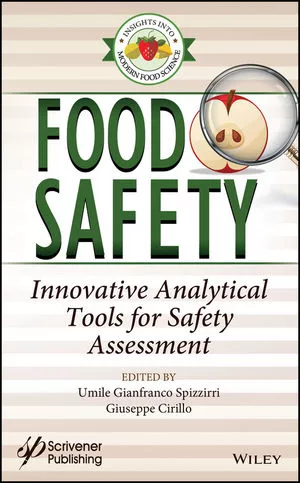
    Food Safety: Innovative Analytical Tools for Safety Assessment

See More Products

Events

View AllSubmit An Event
  • August 12, 2025

    Systematic Approach to Hazard Analysis: Considering Product- and Process-Specific Risks

    On Demand: From this webinar, attendees will learn where and why hazard analysis can fail, especially for high-risk products like leafy greens and meat/poultry.
View AllSubmit An Event

Related Directories

  • Hixson Architecture, Engineering & Process

    Hixson partners with some of the most well-recognized brands in the world on complex food and beverage, and science + technology projects. The members of Hixson’s 20 co-located technical disciplines – including building architecture and engineering, process engineering, and project management – seamlessly collaborate, delivering high-quality design solutions effectively and on-time.
×

Never miss the latest news and trends driving the food safety industry

Newsletters | Website | eMagazine

JOIN TODAY!
  • RESOURCES
    • Advertise
    • Contact Us
    • Directories
    • Store
    • Want More
  • SIGN UP TODAY
    • Create Account
    • eMagazine
    • Newsletters
    • Customer Service
    • Manage Preferences
  • SERVICES
    • Marketing Services
    • Reprints
    • Market Research
    • List Rental
    • Survey/Respondent Access
  • STAY CONNECTED
    • LinkedIn
    • Facebook
    • Instagram
    • X (Twitter)
  • PRIVACY
    • PRIVACY POLICY
    • TERMS & CONDITIONS
    • DO NOT SELL MY PERSONAL INFORMATION
    • PRIVACY REQUEST
    • ACCESSIBILITY

Copyright ©2026. All Rights Reserved BNP Media, Inc. and BNP Media II, LLC.

Design, CMS, Hosting & Web Development :: ePublishing