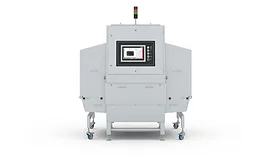
The system provides 1,000 millimeters of inspection coverage and supports belt speeds of up to 76 meters per minute. An optional integrated barcode reader enables inspection of mixed cases and supports multilane production environments.
The American Dairy Science Association (ADSA) event will be held on August 31–September 3, 2026 in Itasca, Illinois, under the theme “Dairy and the Environment: Challenges and Opportunities.”
L. monocytogenes is the fourth-leading foodborne illness-related cause of death in the U.S. Despite continued efforts, listeriosis incidence rates have not declined, prompting FDA to launch a series of public engagements to discuss best practices for managing the pathogen.
The label claim “STABILIZED” would indicate that a ready-to-eat (RTE) product had been formulated or processed to inhibit Listeria monocytogenes growth. The researchers advocate for formulation and process changes as listeriosis rates climb in Europe and stricter EU Listeria regulations come into effect.
A new European Commission report identified inconsistencies in how EU Member States conduct official controls for histamine (scombrotoxin) in fishery products, highlighting gaps in inspection procedures, staff training, and harmonization of testing methods.
According to the researchers, treating PFAS as a single class of contaminants may overlook important differences in how individual compounds move through water systems and respond to remediation. Treatment strategies should be designed based on molecular structure, especially chain length.
According to the Canadian Food Inspection Agency's (CFIA’s) 2024–2025Food Fraud Annual Report, CFIA tested 886 food samples for authenticity and conducted 362 label verifications. Olive oil had the lowest authenticity compliance rate.
The Danish Annual Report on Zoonoses summarizes trends in foodborne disease, zoonotic pathogens, and surveillance activities across humans, animals, food, and the environment.
New Zealand Food Safety has issued new guidance for verifying multi-site food businesses, establishing consistent onsite sampling recommendations for verifiers, intended to reduce costs and increase certainty for industry while ensuring food safety.