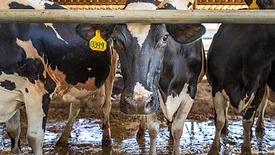
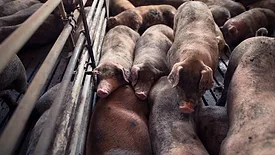
The Food and Agriculture Organization of the United Nations (FAO) has compiled a report on the exposure of humans and food-producing animals to endocrine-disrupting chemicals—such as PFAS, BPA, and phthalates, among others—between 2004 and 2024.
FAO has put out a call for experts and data to inform an upcoming series of FAO/WHO Joint Expert Meeting on Microbiological Risk Assessment (JEMRA) sessions, with the goal of generating updated advice about microbiological risk assessment for parasites in food.
As a result of Nevada state tracing and investigation following positive silo testing results under USDA’s National Milk Testing Strategy, USDA laboratories have confirmed through whole genome sequencing the first detection of a second genotype of Highly Pathogenic Avian Influenza H5N1 (HPAI H5N1) in dairy cattle.
The EU has adopted a new regulation requiring Member States to conduct whole genome sequencing (WGS) on the isolates of five important pathogens during the investigations of foodborne illness outbreaks, and sets data-sharing parameters.
Recently reintroduced to Congress, the bipartisan Protect Infant Formula From Contamination Act aims to strengthen FDA’s oversight of infant formula manufacturers by expanding certain authorities, allowing the agency to better ensure the safety and resiliency of the country’s infant formula supply.
Food Standards Australia New Zealand (FSANZ) has released two new resource documents: a new compilation of the Food Standards Code, and a guidance document on how the agency conducts dietary exposure assessments.
A new toolbox offered by FAO describes the risk assessment process used by the Joint FAO/WHO Expert Committee on Food Additives (JECFA) regarding veterinary drug residues in animal-derived food products consumed by humans. FAO will also host a virtual launch event in February.
A recent report published by the U.S. Government Accountability Office (GAO) highlighted the complex and fragmented oversight of the U.S. food supply, concluding that a national food safety strategy could help ensure federal agencies are working together to more successfully reduce foodborne illnesses.
Reintroduced to U.S. Congress on February 3, the Expanded Food Safety Investigation Act seeks to grant FDA the authority to collect microbial samples from concentrated animal feeding operations, also referred to as “factory farms,” during foodborne illness outbreak investigations.