An Oxford University researcher was awarded £5 million to develop a Campylobacter vaccine for livestock, which will be made possible by data gathered through a global metagenomic surveillance network that is established through collaboration with 19 partner countries.
A new report from the U.S. Government Accountability Office (GAO) concluded that USDA-FSIS’ work on several proposed standards for Salmonella and Campylobacter in meat and poultry has suffered, as the agency has focused on developing a regulatory framework for Salmonella in raw poultry.
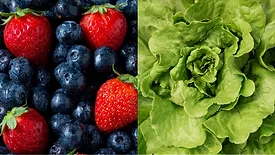
Funded by the Center for Produce Safety, researchers with the University of Barcelona and the Spanish Research Council are developing novel testing protocols for norovirus and hepatitis A on berries and leafy greens, enabling faster analysis and reducing false positives.
The Trump Administration has ordered U.S. public health agencies, such as CDC and FDA, to temporarily pause external communications, including scientific reports and health advisories, until further notice. Any messaging leaving an HHS agency must be approved by a presidential appointee.
The Canadian Food Inspection Agency (CFIA) recently conducted a targeted survey to assess the presence of phthalates in ready-to-eat (RTE) foods, vegetable fats, and vegetable oils, finding no detectable levels in 93 percent of samples.
Minnesota Senator Heather Gustafson has introduced SF 188, a bill that would require manufacturers of packaged foods to test their products for phthalates and disclose the results online.
Stop Foodborne Illness has announced that Sandra Eskin, who most recently served as USDA’s Deputy Under Secretary, where she oversaw the Food Safety and Inspection Service (FSIS), will assume the role of STOP’s CEO in February.