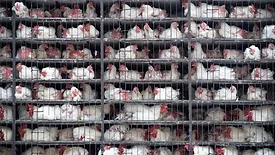
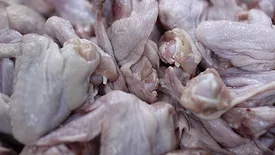
Hydrogen peroxide treatment, followed by catalase enzyme application to remove residual peroxide, significantly reduced Salmonella Typhimurium and Listeria monocytogenes on raw chicken wings while preserving the meat's overall color quality, although more research is needed on the effect on other organoleptic properties.
The Senate confirmed Erica Schwartz, M.D., J.D., M.P.H. as the new Director of CDC on August 5, making her the agency's first permanent leader in nearly a year. Dr. Schwartz previously served as Deputy Surgeon General during the first Trump administration and as Chief Medical Officer for the U.S. Coast Guard.
A new scientific review examines blue light-mediated photosensitization for antimicrobial intervention across various food sectors. The review notes the technology's promise as a nonthermal antimicrobial intervention for food safety and emphasizes the need for further studies to support scale-up across industry.
Two topics of increasing regulatory scrutiny—the "Generally Recognized as Safe" (GRAS) rule and a federal definition of ultra-processed food (UPFs)—have seen some movement at the U.S. Government's Office of Management and Budget, signaling progress on the Trump administration's food policy agenda.
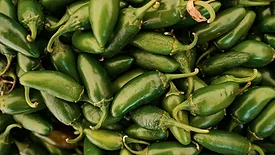
The fast-casual Mexican-style restaurant chain has pulled the jalapeños from its restaurants and replaced them with product from different growers, out of "an abundance of caution."
While New World screwworm (NWS) itself does not pose a food safety risk in edible meat or poultry products, residues from veterinary drugs used to treat and prevent infestations of NWS are potential chemical hazards.
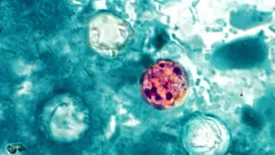
Michigan and Ohio recently updated their case counts in a massive Cyclosporacayetanensis outbreak, bringing state-reported totals for all 50 states to at least 21,775 cases. Michigan also reported two deaths tied to the outbreak.
USDA's Food Safety and Inspection Service (USDA-FSIS) has issued a revised directive outlining financial management procedures for state cooperative inspection programs. The directive replaced fiscal guidance that had been in effect since March 2004.
The Global Food Safety Initiative (GFSI) has appointed Elizabeth Andoh-Kesson as Director, marking the next phase of the organization's leadership following her tenure as Interim Director.
Transport cages are recognized as a potential source of cross-contamination in poultry slaughterhouses. The optimal washing water temperature and detergent concentration completely eliminated detectable Salmonella while greatly reducing indicator organisms. The identified parameters may improve food safety and operational efficiency.
 RSS
RSS




.webp?height=168&t=1661887788&width=275 "USDA FSIS logo")