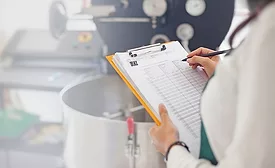
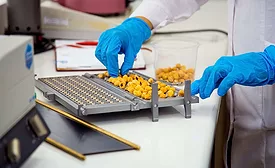
This article explores the applications of chemometrics in food safety, including contamination detection, fraud prevention, quality assessment, and regulatory compliance.
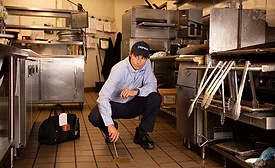
The key to achieving long-term pest management success is fostering a year-round, collaborative relationship between facility managers and a professional pest control partner to implement an integrated pest management (IPM) plan.
Advances in AI offer promising opportunities to strengthen food manufacturers' internal compliance efforts with FDA requirements. While FDA has issued written guidances on AI, primarily for drug and medical device companies, its direct application to food safety is still evolving.
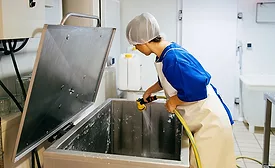
The hygienic design, sanitation, and maintenance of food processing equipment and the surrounding production facilities are of paramount importance for an effective food safety sanitation program. In this column, we share additional information from processors about their programs, as well as the challenges and obstacles they face in keeping their equipment and facilities in the best condition to ensure food safety.
Entities across the entire food and beverage supply chain need to be prepared for compliance with state-specific EPR and stewardship programs as well as recyclability and recycled content requirements for food packaging
Efforts are underway to create a patchwork of new state-specific extended producer responsibility (EPR) and stewardship programs, recycling requirements, and minimum post-consumer recycled (PCR) content requirements that apply to packaging materials used for food and beverage products. Entities across the entire food and beverage supply chain may be implicated and need to be prepared for compliance.
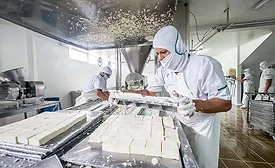
While most businesses in the food processing industry have detailed procedures, standards, and best practices to ensure food safety, Cut Fresh LLC has learned via experience that having a hands-on approach is what makes food safety achieve success, in addition to established procedures and practices.
A risk assessment is a systematic process used to identify, analyze, and address potential hazards that could compromise safety. It considers how likely a hazard is to occur and the severity of its consequences, leading to control measures that reduce risks to a safe level. These assessments should be dynamic, practical, action-oriented, and designed to foster true competence.
This article discusses the fundamentals of a retain sample program, which ensures that production samples from each lot of product are retained onsite. These retained samples allow the manufacturing company to evaluate any customer complaints, conduct quality checks, and provide samples to evaluate in the event of a recall.
 RSS
RSS